
For most machine shops and manufacturers, the single most valuable thing on the floor is also the single point of failure. The work routes through a handful of machines — the CNC, the press brake, the laser, the welding cell — and the day one of them stops, production stops with it. Every owner knows this in the abstract. Far fewer have decided, in advance, what actually happens in the hours after a critical machine goes down: who diagnoses it, whether the part is on the shelf or on backorder, who runs the displaced work, and whether anything keeps the orders moving while the machine is repaired.
That decision is business continuity planning, and for a shop built around its equipment it is one of the highest-leverage things an owner can do that costs nothing but forethought. This guide walks the operational side of it — the levers that shorten a shutdown — and how it pairs with the insurance that answers the financial side of an internal machine failure. It is qualitative by design: there is no universal downtime figure or dollar loss, because both depend entirely on your machines, your orders, and how central each machine is to your output.
Why one machine takes the whole shop down
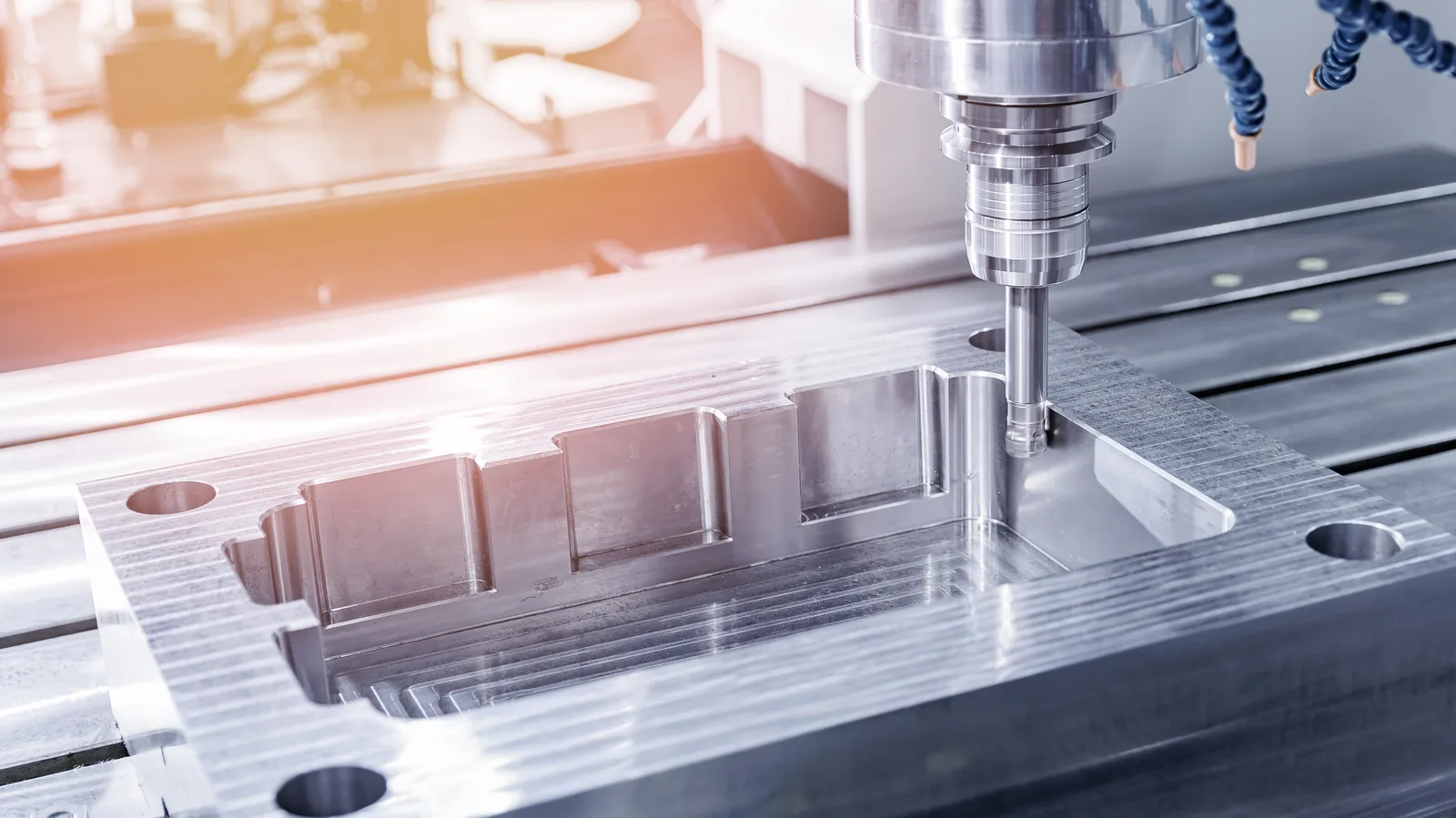
The reason a single failure is so disruptive is structural: for most shops, the machine is not a tool the business uses — the machine is the business. When the work that pays for everything runs through one critical CNC, press, or laser, that machine becomes a single point of failure, and the moment it stops, every job behind it stalls.
It is also more fragile than it looks. A modern machine tool pairs high-torque mechanical components — spindles, drives, hydraulics, ball screws — with sensitive electronic controllers and increasingly with network connectivity. Each of those is a distinct way the machine can fail: a worn bearing one month, a failed controller the next, a power surge the month after. None of those has anything to do with the fire-and-theft perils a property policy is built for; they are internal failures, and any one of them idles the line until it is repaired. The exposure that matters is not whether a critical machine will eventually go down — it will — but how long the shop is stopped when it does.
The continuity levers that shorten a shutdown
A continuity plan is the set of decisions that compress that downtime, made before the failure rather than during it. For a machine shop or manufacturer, the levers are concrete.
Redundancy and alternate routing. Where the work and the budget allow, a second machine capable of the same operation — or a routing that lets a job run on different equipment — means a single failure slows the shop instead of stopping it. Full redundancy is not always practical, but even partial overlap on the most critical operations changes a halt into a reroute.
Critical spares on the shelf. The longest part of many breakdowns is not the repair but the wait for a part. A high-wear or long-lead component sitting on backorder keeps the machine idle long after the technician is ready. Identifying, for each critical machine, the parts that are both failure-prone and slow to source — and stocking those — collapses that wait so the repair starts on diagnosis rather than on a shipment.
Cross-trained operators. The machine is not the only single point of failure; the person can be one too. When only one operator can run a critical machine or program a particular job, that machine is effectively down whenever that person is out. Training more than one operator on each critical machine means production does not hinge on any one individual, and it lets the shop shift people onto the work that has to move.
Supplier and outside-capacity backups. Knowing in advance which shops can take an overflow run, which suppliers can expedite a replacement, and where outside machine time can be rented turns a scramble into a phone call. The relationships are far easier to build before you need them than during a shutdown.
A written plan. None of the above helps if it lives only in the owner’s head. A short, written continuity plan — which machines are critical, where the spares are, who is cross-trained on what, who to call for outside capacity, and who owns each step when a machine fails — is what turns scattered preparation into a response the shop can actually execute under pressure.
None of this has to start as a binder. The most useful first move is simply to name your single points of failure: walk the floor, ask which machines the work cannot route around, and which jobs only one person can run. That short list is the whole plan in miniature, because it tells you exactly where the spares, the cross-training, and the backup capacity will pay off most. From there the plan grows with the shop — a new critical machine, a new key process, a new operator each become a line to update. Reviewing it once a year, and after any real near-miss, keeps it honest, so the plan reflects how the floor runs today rather than how it ran when you first wrote it down.
Where the insurance meets the plan
Continuity planning and insurance answer two halves of the same event, and they work best built together. The plan is the operational side — it shortens the downtime and keeps at least some work flowing. The coverage is the financial side — it answers the cost of the failure itself.
That coverage is equipment breakdown, the line written for the internal mechanical and electrical failure of a machine that a standard commercial property form excludes. Where property responds to external perils that strike a machine from the outside — fire, theft, wind — equipment breakdown responds to the machine failing on its own: a sudden mechanical breakdown, an electrical arc, a power surge, a motor burnout. And critically, where the form provides, it picks up the business income lost while the line is down and the extra expense of working around it — renting outside machine time, outsourcing the run, expediting a part. For a manufacturer whose output depends on one critical machine, that lost income is frequently the larger half of the loss, which is exactly why the coverage should be structured to how central each machine is to your output rather than left to a default. The full mechanics live on the manufacturing machine and equipment coverage page.
The two sides reinforce each other. A shop that carries the coverage but has no plan still eats a long shutdown while it waits on a part it never stocked. A shop with a sharp plan but no coverage shortens the downtime but still carries the financial hit alone. Run together — the plan compressing the downtime, the coverage absorbing the income loss and the repair — a critical machine failure becomes a managed event instead of a crisis.
Real-World Scenario: Two shops run the same critical CNC at the heart of their work, and on the same week the spindle drive on each fails — an internal breakdown, no fire, no outside cause. The first shop has the part it needs on the shelf, a second operator who can shift jobs onto an alternate machine, and a backup shop on call for the overflow it cannot absorb; the repair begins on diagnosis, some work reroutes, and the orders keep moving while the machine is down. The second shop discovers the drive is on backorder, finds that only the absent lead operator knew the job, and has no outside capacity lined up — so the whole board stops behind the one machine. Both carry equipment breakdown coverage, and both file a business-income claim. But the first shop’s loss is a delay measured against a plan, and the second shop’s is a shutdown measured against nothing.
The lesson is that resilience is built before the failure, not during it. A short continuity plan, the critical spares identified and stocked, the operators cross-trained, and the backup capacity lined up are what decide whether a breakdown is a delay or a shutdown — and the equipment breakdown and business-interruption coverage are what keep the financial side of it from landing on the shop alone. Those higher-limit and contract requirements that come with bigger customers run on the same readiness, a thread worth following into what insurance manufacturing customers require. When you want the coverage structured to how central each machine is to your output, start a quote. This is general education to sharpen your planning — the specific coverage and limits still belong to your machines, your orders, and how your shop actually runs, read against the real floor.