
States we serve · Indiana
Machine Shop and Manufacturing Insurance in Indiana
Coverage for Indiana automotive and mobility suppliers, semiconductor and life-science makers, defense contractors, and job shops — built on IOSHA, IC 34-20, and IDEM rules.
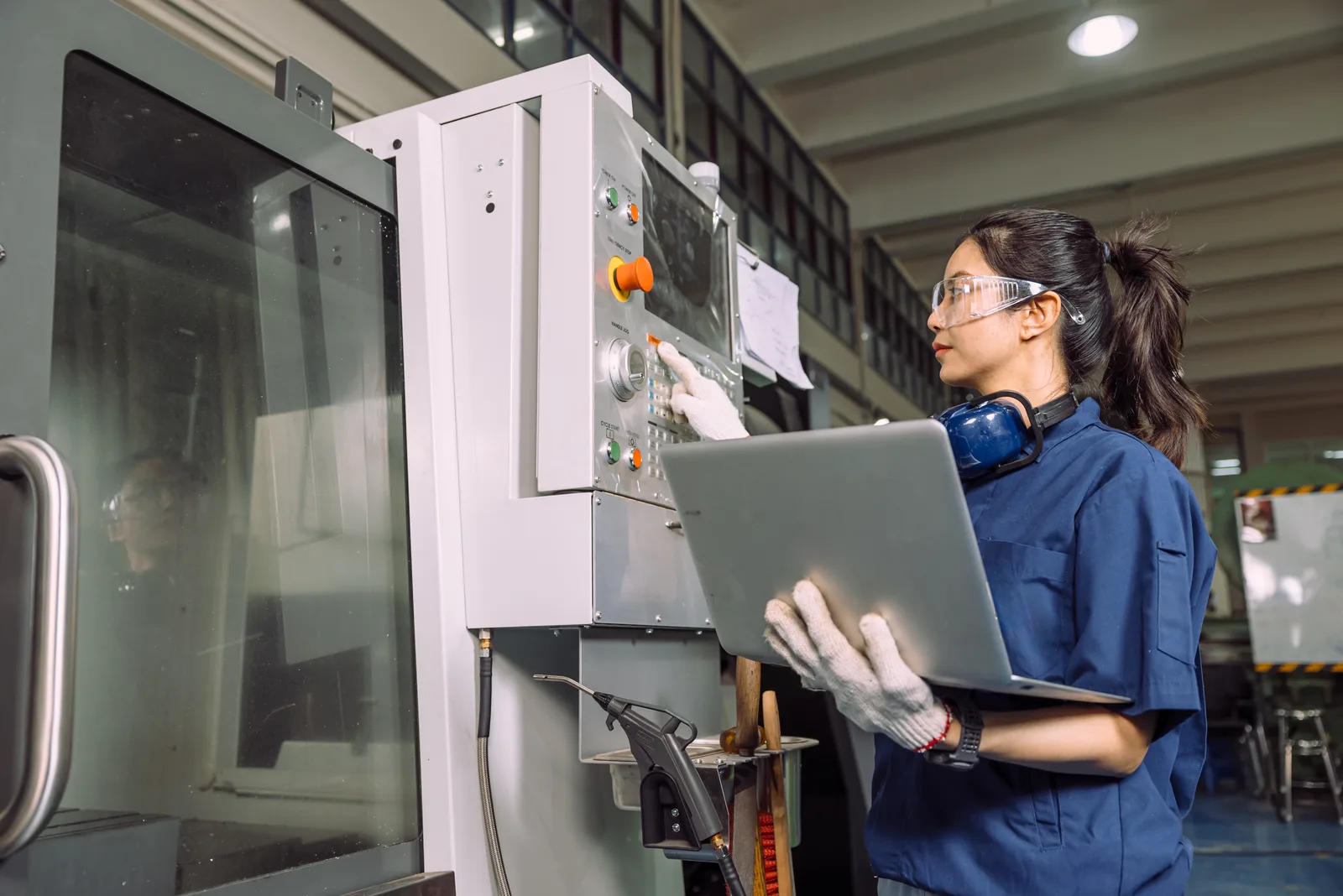

Indiana machine shops and manufacturers make up most of the businesses we write here: automotive and mobility suppliers, contract machinists and stampers, semiconductor and electronics producers, life-science and device makers, agricultural-bioscience processors, and defense contractors, along with the tool-and-die shops and fabricators that support them. A large share of Indiana manufacturing feeds vehicle and equipment assembly, and the terms those customers set often decide how the program is built.
Indiana adds four rules to the picture. The Indiana Occupational Safety and Health Administration (IOSHA) runs an OSHA-approved plan that applies to private-sector workplaces. Product liability actions are governed by IC 34-20-3-1(b), which sets a two-year limitation period and a ten-year repose period with a built-in extension. IC 34-20-2-3 generally keeps strict liability claims away from sellers that are not manufacturers. And the Indiana Department of Environmental Management (IDEM) runs air permitting, including New Source Review. Each rule gets its own section below.
How Indiana premiums are set
The raw data behind an Indiana quote is standard: payroll by class, machine and tooling values, building and inventory values, the end use of what you make, and several years of claims. The end use tends to decide the liability picture. A stamped bracket in a vehicle, an electronic module in a medical device, and a fitting in agricultural equipment carry different products exposure, because the harm a failure could cause is different.
From there, Indiana-specific pressures move the number. Automotive and mobility customers set supplier requirements that commonly include specific products limits, recall responsibility, additional-insured wording, and umbrella limits. The ten-year repose period, with its extension for late-accruing claims, sets an outer boundary on many product actions, which is useful but does not end the need for continuous coverage. The seller rule in IC 34-20-2-3 means a manufacturer should expect to be the target of strict liability claims. And your IOSHA inspection record is read on both comp and general liability. We quote from your operation, not a table; our article on the factors behind machine shop and manufacturing premiums covers the general picture.
Supplier tiering is a particular Indiana concern. A tier-two or tier-three supplier may never deal directly with a vehicle maker, yet the vehicle maker’s requirements often reach it through the tier-one customer’s purchase terms, sometimes with recall cost-sharing clauses that the smaller supplier did not negotiate. We read those flow-down terms carefully, because recall cost-sharing is a contract liability that a standard general liability policy does not cover, and it can be larger than any single injury claim. Where a customer insists on cost sharing, we look at product recall coverage written to respond to that contractual obligation, and at limits sized to the volume of parts you ship into a single vehicle program.
Mobility, semiconductors, life sciences, and defense
The Indiana Economic Development Corporation lists advanced manufacturing, mobility, semiconductors, life sciences, agbioscience, and defense among the state’s industries, and it notes that Indiana has always moved boldly in the automotive sector. Each of those industries asks something different of an insurance program.
Automotive and mobility suppliers need products coverage that fits their customers’ terms, and many need product recall coverage because a recall can cost far more than the parts involved. Semiconductor and electronics producers concentrate value in process equipment and controlled environments, so equipment breakdown and business income are central. Defense contractors carry contract flow-downs, security requirements, and often higher limits.
Life-science and device manufacturers work under the U.S. Food and Drug Administration. The agency requires establishments that make devices to register and list them under 21 CFR 807.20, and its quality management system rule in 21 CFR Part 820 governs how finished devices are made. That oversight makes products liability and recall coverage central to a device maker’s program, and a contract machinist supplying device makers should expect those requirements to reach it. Engineering-heavy suppliers in any of these sectors also carry design exposure, which is why manufacturers errors and omissions belongs in the discussion.
IOSHA inspects Indiana’s private workplaces
Indiana runs its own OSHA-approved State Plan covering the private sector. Federal OSHA’s Indiana State Plan page states that the plan applies to all private sector workplaces in the state, and the Indiana Occupational Safety and Health Administration (IOSHA) is part of the Indiana Department of Labor. For a private Indiana machine shop or plant, IOSHA is the agency that inspects and cites.
Because a State Plan must be at least as effective as federal OSHA, the federal machinery standards remain the baseline. Point-of-operation guarding and other machine guarding requirements appear in 29 CFR 1910.212, and hazardous-energy control during service and maintenance in 29 CFR 1910.147. Stamping presses, transfer lines, robotic cells, and CNC equipment all fall under those rules. Carriers ask about guarding and lockout because failures there cause the most serious injuries, and we collect your written programs and any IOSHA history before we go to market.
Buying Indiana workers compensation
Indiana workers compensation is written by private carriers in a competitive market, so classification and loss history drive the price. Press operators, machinists, assemblers, welders, maintenance technicians, and office staff each belong in their own class, and payroll assigned to the wrong class is corrected at the audit, often with an additional charge.
We review employers liability, the part of the comp policy that responds when a workplace injury becomes a lawsuit, and make sure it fits with the general liability program. The workers compensation page explains classification, and our article on lowering comp costs for manufacturers lists what underwriters credit. Indiana firms with employees working in Illinois, Ohio, Michigan, or Kentucky should report that payroll by state.
IC 34-20: two years, ten years, and the seller rule
Indiana’s product liability chapter, IC 34-20, sets its own clock. Under IC 34-20-3-1(b)(1), a product liability action based on negligence or strict liability in tort must be commenced within two (2) years after the cause of action accrues. And under IC 34-20-3-1(b)(2), the action must also be commenced within ten (10) years after delivery of the product to the initial user or consumer, with a qualifier: if the cause of action accrues at least eight (8) years but less than ten (10) years after that initial delivery, the action may be commenced within two (2) years after it accrues.
The same chapter limits who faces strict liability. Under IC 34-20-2-3, “A product liability action based on the doctrine of strict liability in tort may not be commenced or maintained against a seller of a product that is alleged to contain or possess a defective condition unreasonably dangerous to the user or consumer unless the seller is a manufacturer of the product or of the part of the product alleged to be defective.” A distributor or dealer that did not make the part is generally outside those claims, which leaves the manufacturer, including the maker of a defective component, as the natural defendant.
For an Indiana manufacturer, those rules argue for continuous products-completed operations coverage with limits matched to end use. The repose period gives an outer limit on many product actions, but the extension for late-accruing claims and the existence of other claim types mean coverage should not lapse on a fixed schedule. Occurrence forms pay under the policy in force when the injury happened; claims-made forms pay under the policy in force when the claim is first made, subject to a retroactive date, so a change of carrier or ownership calls for tail coverage. Our comparison of occurrence and claims-made coverage walks through the choice, and product recall versus product liability explains why automotive suppliers often carry both.
IDEM air permits and New Source Review
Air permits for Indiana manufacturers come from the Indiana Department of Environmental Management (IDEM), which notes that air permits are required for many businesses that have the potential to release waste gases or particles into the air, and which runs New Source Review for new and modified sources. Paint and coating lines, e-coat and plating operations, heat treating, foundry work, and boilers are the usual reasons an Indiana plant has to check its permit status before a project starts.
The pollution exposure itself sits outside most coverage. General liability and property forms exclude most pollution, so a release from a plating line, a spill to a drain, or an emissions event from your own process usually requires a dedicated pollution or environmental policy. For plants with finishing lines, that policy belongs in the core program. Underwriters for manufacturing insurance accounts with finishing or process equipment ask about IDEM permits, and a documented answer keeps the process short.
Laid side by side, the Indiana rules on this page and the program decisions they drive look like this.
Most Indiana programs also include commercial property for buildings, machinery, dies, and stock, including customer-owned tooling, and an umbrella for the limits that automotive and defense customers routinely require.
Indiana ports of entry and what they mean
We place Indiana shops and plants statewide. Each of the five locations below has a named feature that changes something in the program.
Indianapolis
CBP runs an Indianapolis port of entry. Manufacturers importing components or equipment through it need property terms that cover goods waiting to be installed, and transit coverage matched to the value of each shipment.
Fort Wayne
Fort Wayne has its own CBP port of entry. Suppliers shipping high-value parts to customers by air from there should schedule those shipments on inland marine coverage rather than rely on property coverage that ends at the dock.
Evansville
CBP’s Owensboro, Kentucky and Evansville, Indiana port office is in Evansville. Plants moving goods across the state line from there should confirm that their comp and liability policies list every state where work is done.
South Bend
South Bend International Airport is a CBP port of entry. Manufacturers flying in tooling or components need coverage that follows those goods from the airport to the plant floor without a gap.
Gary
Gary Chicago International Airport is a CBP port of entry. Plants near Gary that import through it and supply customers across the Illinois line should coordinate cargo terms with their customers’ receiving requirements.
We are licensed in Indiana and in 48 states overall. Suppliers with plants across state lines can also read our pages for Michigan, Ohio, Illinois, and Kentucky, or browse every state we cover.
Tier supplier, product maker, or both
Indiana businesses tend to sort into contract suppliers and product makers, and many are both. If most of your work is machining or stamping to a customer’s print, our page on machine shop insurance fits, with its emphasis on tooling, machine values, and floor exposures. When fabricating and welding make up most of the work, our page on metal fabrication shop insurance is the better fit. If you design and sell components, equipment, or devices under your own name, our page on manufacturing insurance goes further into products liability, recall, and errors and omissions. For a business that does both, we build one program and rate each side on its own basis. Customer-owned dies and fixtures deserve a line of their own in that program, since an Indiana stamper may hold tooling worth more than its own presses, and the purchase terms usually say who must insure it.
Indiana machine shop and manufacturing FAQs
Does IOSHA or federal OSHA cover Indiana manufacturers?
IOSHA. The Indiana State Plan applies to all private sector workplaces in the state, and IOSHA is part of the Indiana Department of Labor. Because a state plan must be at least as effective as federal OSHA, the federal machine guarding and hazardous-energy control standards still set the baseline, and those are the programs carriers ask to see.
What are the time limits for an Indiana product liability action?
IC 34-20-3-1(b) requires a product action based on negligence or strict liability to be commenced within two (2) years after it accrues and within ten (10) years after delivery to the initial user. If the claim accrues at least eight (8) but less than ten (10) years after delivery, it may be brought within two (2) years after accrual.
Can a distributor be sued in strict liability in Indiana?
Generally not, unless it is also a manufacturer. IC 34-20-2-3 bars a strict liability product action against a seller unless the seller is a manufacturer of the product or of the defective part. That leaves manufacturers, including component makers, as the usual strict liability defendants, so their products-completed operations limits carry real weight.
Should an Indiana auto supplier carry recall coverage?
Usually. A defective component can trigger a recall whose cost far exceeds the parts, and supplier agreements often pass recall costs down the tiers. General liability pays for injury or damage a defect causes, not for retrieving and replacing product. Product recall coverage fills that gap, and cost-sharing clauses in your contracts should be reviewed against it.
Does an Indiana plating or paint line need an IDEM permit?
Often. IDEM notes that air permits are required for many businesses with the potential to release waste gases or particles, and it runs New Source Review for new and modified sources. Plating, painting, and heat treating are common triggers. General liability and property forms exclude most pollution, so those lines also need a separate pollution policy.
Who writes comp for Indiana shops and plants?
Private insurance carriers do; Indiana has a competitive comp market. Your premium depends on class assignments and your claims record. We check that press operators, machinists, assemblers, welders, and office staff are each in the right class, and we make sure employers liability is in place for injuries that turn into lawsuits.
Request an Indiana supplier or manufacturer quote
Tell us whether your Indiana operation machines, stamps, assembles, or designs its own products, and who it ships to, and we will take it to carriers that write your class.