
States we serve · Illinois
Machine Shop and Manufacturing Insurance in Illinois
For Illinois contract machinists, food processors, life-science and microelectronics makers, and clean-energy manufacturers, written to federal OSHA, 735 ILCS, and IEPA permits.
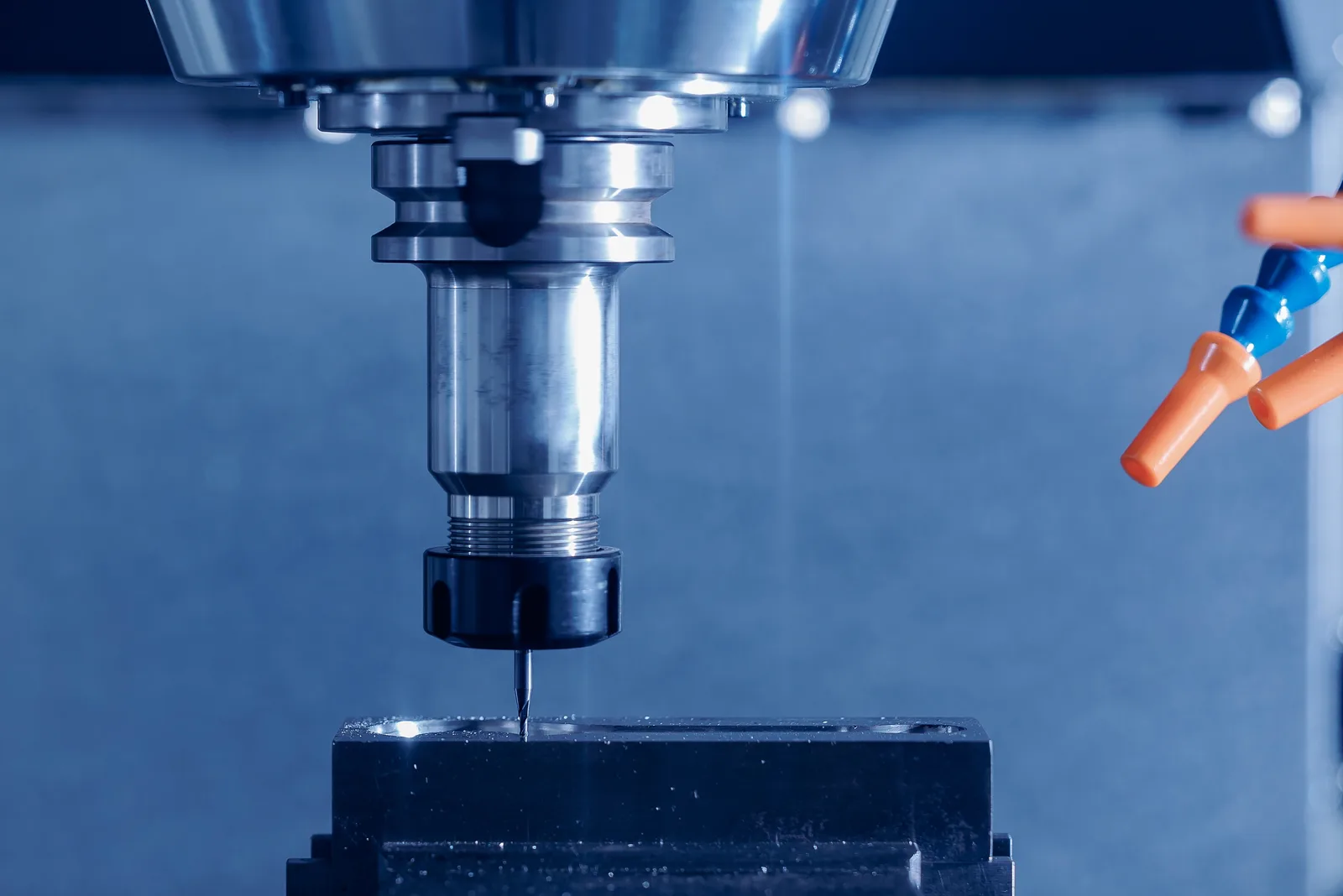

Illinois is where we write machine shops and manufacturers of nearly every kind: contract machinists and fabricators, food processors and agricultural equipment makers, life-science and device companies, microelectronics producers, clean-energy equipment builders, and the logistics-heavy manufacturers that move product through the state’s distribution network. Illinois operations often sit inside long chains of distributors and resellers, and that chain decides who ends up defending a products claim.
Four Illinois rules matter most to those programs. Private employers are inspected by federal OSHA, because the state’s own plan covers public employees only. Personal injury actions carry a 2-year limitation period under 735 ILCS 5/13-202, and product actions based on strict liability also face a repose period under 5/13-213(b). A defendant that is not the manufacturer must identify the manufacturer by affidavit under 735 ILCS 5/2-621(a). And the Illinois Environmental Protection Agency issues air pollution control permits. The sections below cover each one.
Pricing an Illinois manufacturing account
Carriers pricing an Illinois account start with payroll by class, equipment and tooling values, building and stock values, the end use of your products, and your recent claims. For liability, end use is decisive. A component in medical equipment, a processed food, a part for farm machinery, and a bracket for a warehouse rack all carry different products exposure, and the price reflects the difference in what a failure could cause.
Illinois features then adjust the picture. The manufacturer-identification rule means distributors and retailers can point to you, which puts the manufacturer squarely in products claims. The repose period for strict liability actions gives an outer boundary on some older product claims, but only for that theory and only as its qualifier describes. Food processors and life-science companies face federal regulation that makes recall coverage central. Customers in logistics and industrial supply chains set insurance terms in their contracts. And your federal OSHA record is part of the file. We quote from your operation, not a published rate; our guide to machine shop and manufacturing insurance costs covers the factors every state shares.
Distribution adds its own exposure for many Illinois manufacturers. Products stored in third-party warehouses, goods in transit between plants and distribution centers, and inventory held on consignment at customer sites can all fall outside a property policy written for your own buildings. We map where your stock actually sits during the year and extend property or inland marine coverage to each location, so a fire at a warehouse you do not own is still a covered loss. The same review catches customer-owned goods in your plant, such as tooling, materials, or product sent for finishing, which a standard property form may limit. Scheduling those items, and confirming who is responsible for them under the customer’s terms, prevents an argument after a loss.
Six growth industries, several insurance profiles
The Illinois Department of Commerce and Economic Opportunity has identified six industries for targeted growth in Illinois: advanced manufacturing; next generation agriculture, ag tech, and food processing; transportation, distribution, and logistics; quantum computing, AI, and microelectronics; clean energy production and manufacturing; and life sciences. Each changes the program in its own way.
Food processors and agricultural manufacturers answer to the U.S. Food and Drug Administration’s food rules. Facilities that manufacture or process food register under 21 CFR Part 1, Subpart H, and 21 CFR Part 117 sets the hazard analysis and preventive-controls rule for human food. Life-science and device makers fall under the device rules: establishment registration and device listing in 21 CFR 807.20 and the quality management system in 21 CFR Part 820. For both groups, product recall coverage belongs near the top of the program.
Microelectronics and clean-energy manufacturers concentrate value in specialized equipment and controlled processes, so equipment breakdown and business income tend to be the lines that decide how well a program holds up after a loss. Clean-energy equipment makers also carry design and performance exposure: a system that works safely but underperforms is a financial loss, covered by manufacturers errors and omissions rather than general liability. Logistics-heavy manufacturers need transit and warehouse coverage that follows their goods. A contract shop supplying any of these customers inherits the customer’s requirements, which is why the first question we ask is who buys from you.
IL OSHA covers public workplaces; OSHA covers yours
Illinois runs an OSHA-approved plan for the public sector only. Federal OSHA’s Illinois State Plan page explains that the Division of Occupational Safety and Health (IL OSHA), part of the Illinois Department of Labor, covers state and local government workplaces, while federal OSHA covers all private sector workplaces. That leaves every privately owned Illinois shop, plant, and processing line under the federal agency.
Two federal standards shape most inspections of a machine floor. 29 CFR 1910.212 requires guarding at the point of operation and elsewhere on machines, and 29 CFR 1910.147 requires procedures for controlling hazardous energy during service and maintenance. In food plants those rules reach mixers, slicers, and conveyors, and in electronics plants they reach automated handling and test equipment. Carriers ask about both because failures there cause the worst injuries, and we gather your written programs before approaching the market.
Classification drives Illinois comp
Illinois workers compensation is written by private carriers in a competitive market. The price for a given employer depends mostly on how payroll is divided among classes and on loss history. Machinists, food production workers, electronics assemblers, warehouse and shipping staff, and office employees each belong in different classes, and the rates can differ widely. Payroll placed in the wrong class is corrected at audit.
Alongside comp sits employers liability, the coverage that pays when an Illinois injury claim becomes a lawsuit, and we line it up with the general liability program so the two meet without a gap. The workers compensation page covers classes and audits, and our article on reducing manufacturing workers comp costs describes the controls carriers reward. Illinois companies with staff working in Indiana, Wisconsin, or Missouri should report that payroll by state.
Illinois time limits and the manufacturer affidavit
Illinois uses several rules together for product claims. The general limitation period for personal injury is in 735 ILCS 5/13-202, which requires actions for damages for an injury to the person to be commenced within 2 years after the cause of action accrued.
For product actions based on strict liability in tort, 735 ILCS 5/13-213(b) sets a repose period of 12 years, and the qualifier matters: it applies to product actions based on strict liability in tort, and runs 12 years from first sale by a seller or 10 years from first sale to the initial user, whichever period expires earlier. It does not describe negligence or warranty claims, so it should not be read as a general end date for a product line.
The third rule concerns who stays in a case. Under 735 ILCS 5/2-621(a), “In any product liability action based in whole or in part on the doctrine of strict liability in tort commenced or maintained against a defendant or defendants other than the manufacturer, that party shall upon answering or otherwise pleading file an affidavit certifying the correct identity of the manufacturer of the product allegedly causing injury, death or damage.” A distributor or retailer sued over your product will name you, and the claim moves toward the manufacturer.
Together these rules point to continuous products-completed operations coverage with limits sized to the end use of your products. With an occurrence form, the policy that was active on the date of injury pays, even if the suit arrives many renewals later. With a claims-made form, the policy active when the claim is first reported pays, provided the injury falls after its retroactive date, which is why switching carriers or selling an Illinois company calls for tail coverage or a matching retroactive date. Our comparison of occurrence and claims-made forms explains the trade-offs, and additional-insured coverage for manufacturers explains how distributors are protected under your policy.
Illinois EPA air pollution control permits
Air permits for Illinois manufacturers come from the Illinois Environmental Protection Agency (Illinois EPA), which issues air pollution control permits and runs programs including the Clean Air Act Permit Program and federally enforceable state operating permits for larger sources. Coating and finishing lines, degreasers, ovens and dryers in food plants, and process equipment in electronics and energy manufacturing are the usual reasons to check permit requirements before new equipment is installed.
Pollution coverage is a separate decision. General liability and property forms exclude most pollution, so a solvent release, a spill to a drain, or an emissions event from your own process generally needs a dedicated pollution or environmental policy. Underwriters for manufacturing insurance accounts with finishing, chemical, or process equipment ask about Illinois EPA permits directly, and a documented answer keeps the review moving.
Here are those four Illinois rules side by side, each with the coverage decision it pushes.
Most Illinois programs also carry commercial property for owned buildings, machinery, and stock at every location, and an umbrella for the higher limits that food, life-science, and logistics customers commonly require.
Five Illinois locations and their effect
We insure Illinois shops and plants across the state. Each of these five locations has a named feature that changes what the program needs.
Chicago
CBP’s Chicago port office sits in Rosemont. Manufacturers moving imported components or exported goods through the Chicago port need cargo coverage that follows each shipment and property limits for goods held at distribution sites.
Rockford
Rockford has its own CBP port of entry at its airport. Aerospace and machinery suppliers shipping high-value parts by air should schedule those shipments on inland marine coverage matched to declared value.
Peoria
CBP operates a port at General Wayne A. Downing Peoria International Airport. Equipment builders exporting from the Peoria area need transit terms that make clear when risk of loss passes to the buyer.
Rock Island
Rock Island Arsenal is an active U.S. Army installation and home to the Joint Manufacturing and Technology Center. Shops supporting defense manufacturing there should expect contract flow-downs and higher limit requirements.
Waukegan
Waukegan National Airport is a CBP port of entry. Manufacturers near it that fly in tooling or ship finished goods by air need coverage that follows those goods from the airport to the plant.
Illinois is among the 48 states we are licensed in. Companies with sites in neighboring states can also read our pages for Indiana, Wisconsin, Iowa, Missouri, and Kentucky, or open our state list.
Where your Illinois operation fits
Illinois companies land in one of three places: contract work, their own products, or a mix. Contract machining and finishing to a customer’s drawing is covered on our page on machine shop insurance, with its focus on equipment, tooling, and floor exposures. Fabricating and welding go to our page on metal fabrication and welding shop insurance, where fire and completed operations carry more weight. Designing and selling food products, equipment, devices, or components under your own name is covered on our page on manufacturing insurance, where products liability, recall, and errors and omissions lead. A mixed operation is written as one program, with each part of the business rated on the basis that fits it.
Illinois manufacturing and machine shop questions
Does IL OSHA inspect private Illinois plants?
No. IL OSHA, the Division of Occupational Safety and Health within the Illinois Department of Labor, covers state and local government workplaces. Federal OSHA covers all private sector workplaces in Illinois. A private machine shop, food plant, or factory is therefore inspected under federal standards, and its guarding and lockout programs are what carriers ask about.
How long can someone wait to sue over an injury in Illinois?
Under 735 ILCS 5/13-202, actions for damages for an injury to the person must be commenced within 2 years after the cause of action accrued. Strict liability product actions also face the repose period in 5/13-213(b), subject to its qualifiers. Manufacturers should keep products-completed operations coverage continuous rather than rely on either limit.
What does the Illinois product repose period cover?
735 ILCS 5/13-213(b) sets a 12-year repose period that applies to product actions based on strict liability in tort. It runs 12 years from first sale by a seller or 10 years from first sale to the initial user, whichever expires earlier. It does not address negligence or warranty theories, so it is not a general end date for a product line.
Why do Illinois distributors name the manufacturer in a lawsuit?
Because 735 ILCS 5/2-621(a) requires a defendant other than the manufacturer, in a product action based on strict liability, to file an affidavit certifying the manufacturer’s correct identity. The claim then moves toward the manufacturer. That makes your products-completed operations limits, and the vendors endorsements you give distributors, central to an Illinois program.
Does an Illinois food processor need recall coverage?
It should look closely at it. Food facilities register with the FDA under 21 CFR Part 1, Subpart H, and Part 117 sets the preventive-controls rule for human food. A contamination or labeling problem can force a recall with no one injured, and general liability does not pay to retrieve and replace product. Product recall coverage does.
Can an Illinois plant buy comp from any private insurer?
Yes; Illinois comp is sold in a competitive market. Your premium depends on how payroll is divided among classes and on loss history. We check that machinists, food production workers, electronics assemblers, warehouse staff, and office employees are each classed correctly, and we pair comp with employers liability so an injury that becomes a lawsuit is still covered.
Ask for an Illinois machine shop or manufacturer quote
Tell us what your Illinois operation makes or processes, and who sells it on, and we will bring the account to carriers that write your class.