
States we serve · Kentucky
Machine Shop and Manufacturing Insurance in Kentucky
For Kentucky automotive and aerospace suppliers, primary metals and chemical plants, food and beverage producers, plastics and rubber molders, and machine shops.
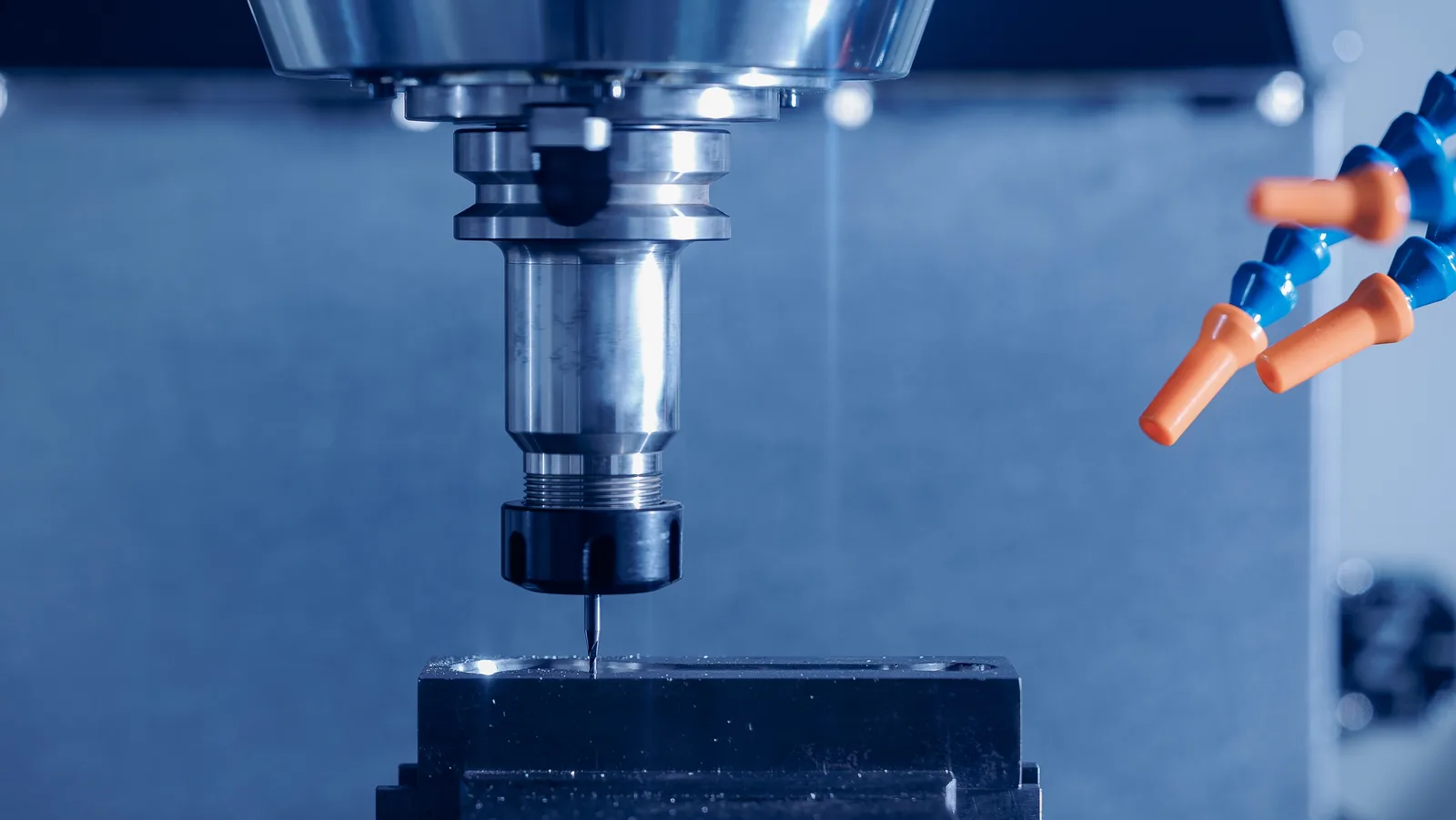

In Kentucky we insure automotive and aerospace suppliers, primary metals producers, chemical plants, food and beverage manufacturers, plastics and rubber molders, appliance-related manufacturers, and the machine shops, stampers, and fabricators that support them. Much of this work flows into larger supply chains, where a customer’s contract terms can set the shape of a supplier’s insurance before any carrier sees the account.
Kentucky contributes five rules to those programs. Kentucky Occupational Safety and Health (Kentucky OSH) runs an OSHA-approved State Plan that applies to private sector workplaces. Injury actions must generally be commenced within one (1) year under KRS 413.140(1)(a). KRS 411.310(1) creates a rebuttable presumption that a product was not defective if an injury occurred more than five years after the first sale or more than eight years after manufacture. KRS 411.340 protects wholesalers, distributors, and retailers who sold a product in its original condition when the manufacturer is identified. And air permits come from the Division for Air Quality, except in Jefferson County, where the Louisville Metro Air Pollution Control District issues them. The sections below work through those five in order.
Pricing inputs for a Kentucky manufacturer
An underwriter builds a Kentucky price from payroll by class, the values of machinery, tooling, buildings, and stock, the end markets your products reach, and your claims record. On liability, the decisive input is where your product goes. A stamped automotive part, an aerospace fitting, a chemical intermediate, a molded rubber component, and a food product each carry a different potential for harm, and each is priced on what its failure could do.
From there, Kentucky’s rules and industries move the number. The one-year injury period means claims tend to be filed soon after an injury. The KRS 411.310 presumptions help the defense of older products but can be rebutted. The KRS 411.340 seller rule keeps many claims pointed at the manufacturer. Automotive customers write recall cost-sharing into supplier terms. Chemical, metals, and plastics plants carry process, fire, and pollution exposures. And your Kentucky OSH record is read on both comp and liability. We price from your operation rather than any table; our guide to the pricing of machine shop and manufacturing coverage explains the drivers every state shares.
Automotive supply chains deserve a closer look in Kentucky. A smaller supplier may reach a vehicle maker only through a tier-one customer, yet the vehicle maker’s requirements often travel down to it in the purchase order, including recall cost-sharing and warranty chargebacks the supplier did not negotiate. Those are contractual obligations that general liability does not cover. We read the flow-down terms before a new part number is quoted, and where cost-sharing is required we look at recall coverage written to respond to it.
Automotive, aerospace, metals, food, chemicals, plastics
The Kentucky Cabinet for Economic Development lists automotive, aerospace, primary metals, food and beverage, chemicals, and plastics and rubber among the state’s manufacturing industries. Each shapes a program differently.
Automotive suppliers need products coverage matched to customer terms and often product recall coverage. Aerospace suppliers need their general liability confirmed for aircraft products, which some forms exclude. Primary metals producers carry heat, heavy handling, and costly furnaces and mills, where equipment breakdown and business income need careful sizing. Plastics and rubber molders combine high tool values, often customer-owned, with fire load from resin and finished stock.
Food and beverage producers answer to the U.S. Food and Drug Administration’s food rules: facilities that manufacture or process food register under 21 CFR Part 1, Subpart H, and 21 CFR Part 117 sets the preventive-controls rule for human food, which makes recall exposure real for food plants of every size. A Kentucky chemical plant’s program has to be built around its process hazards and its pollution exposure from the first draft. Across all six, a product that meets its specification but fails the use the buyer intended is a financial loss addressed by manufacturers errors and omissions. Contract shops supplying any of these inherit their customers’ terms, so we start with who buys from you.
Kentucky OSH on the private-sector floor
Kentucky operates an OSHA-approved State Plan covering most private sector workers and all state and local government workers. Federal OSHA’s Kentucky State Plan page states that the plan applies to all private sector workplaces in the state, and the plan, Kentucky Occupational Safety and Health (Kentucky OSH), sits within the Kentucky Education and Labor Cabinet. For a private Kentucky shop or plant, Kentucky OSH is the inspector.
Because a state plan must be at least as effective as federal OSHA, the federal machinery standards set the baseline: 29 CFR 1910.212 on machine guarding and 29 CFR 1910.147 on hazardous-energy control. They reach stamping presses, molding machines, furnace and mill equipment, and food processing lines. Carriers ask about guarding and lockout because failures there cause the most serious injuries, and our Kentucky submissions include your written programs and any Kentucky OSH inspection history.
Comp placement for Kentucky plants
Kentucky workers compensation is written by private carriers in a competitive market. What an employer pays follows the classification of its payroll and its loss record. Press operators, molders, metals workers, chemical operators, food production workers, machinists, and office staff each belong in a different class, and payroll found in the wrong class is reassigned at audit.
The employers liability part of the comp policy responds when a workplace injury turns into a lawsuit, and we coordinate it with general liability. The workers compensation page explains classification and audits, and our guide to lowering comp costs in manufacturing lists the controls carriers credit. Kentucky companies with employees working in Indiana, Ohio, Tennessee, or West Virginia should report that payroll by state.
One year to sue, and Kentucky’s product presumptions
Kentucky’s limitation period for injury claims is short. Under KRS 413.140(1)(a), an action for an injury to the person must be commenced within one (1) year after the cause of action accrues. For product injuries, the period generally runs from the injury, which can be long after the sale.
Kentucky also uses presumptions for older products. KRS 411.310(1) presumes, until the contrary is shown, that a product was not defective if the injury occurred more than five (5) years after the date of sale to the first consumer or more than eight (8) years after the date of manufacture. The qualifier matters: this is a rebuttable presumption that the product was not defective, not an absolute bar. A claimant can still overcome it with evidence, but the manufacturer begins the defense with the presumption in its favor.
Sellers get separate protection. KRS 411.340 provides that “if the manufacturer is identified and subject to the jurisdiction of the court, a wholesaler, distributor, or retailer who distributes or sells a product, upon his showing by a preponderance of the evidence that said product was sold by him in its original manufactured condition or package, or in the same condition such product was in when received by said wholesaler, distributor or retailer, shall not be liable to the plaintiff for damages arising solely from the distribution or sale of such product.” In practice, that tends to leave the identified manufacturer as the defendant.
For a Kentucky manufacturer, the practical results are records and continuity. Dates of first sale and of manufacture support the presumptions, so keep them. Products-completed operations coverage should stay continuous, because the presumptions can be rebutted and the one-year period runs from injury rather than sale. On policy form, an occurrence policy answers for injuries during its term whenever claimed, and a claims-made policy answers for claims first made during its term back to a retroactive date, so a carrier change or sale needs tail coverage. See occurrence versus claims-made for manufacturers and the products-completed operations aggregate.
Air permits: the state and Louisville Metro
Air permits in Kentucky come from the Department for Environmental Protection’s Division for Air Quality, which handles minor/state-origin permitting as well as major/Title V permits, in every county except Jefferson. In Jefferson County, the Louisville Metro Air Pollution Control District is responsible for air permitting. A Louisville-area plant therefore deals with the local district rather than the state division, and should confirm which agency governs before a project starts. Paint and coating lines, molding and curing processes, furnaces, chemical process units, and boilers are the usual triggers.
Pollution coverage is separate from either agency’s permit. General liability and property forms exclude most pollution, so a spill, a release to a drain or stream, or an emissions event from your own process generally needs a dedicated pollution or environmental policy. Underwriters for manufacturing insurance accounts with coating or chemical processes ask about permits directly, and knowing which agency issued yours shortens the conversation.
Laid out together, the Kentucky rules on this page and their program effects look like this.
Most Kentucky programs also include commercial property for buildings, machinery, dies, and molds, including customer-owned tooling, and an umbrella for the higher limits that automotive, aerospace, and food customers require.
Louisville, Lexington, and Owensboro
We place Kentucky shops and plants statewide. The three verified locations below each have a named feature that changes something in the program, and one of them, Louisville, also sits under its own local air permitting authority.
- Louisville. Louisville’s Appliance Park appears in the Cabinet’s manufacturing news, and Louisville plants fall under the Louisville Metro Air Pollution Control District for air permits. Suppliers to appliance production face fire and water-damage products exposure and customer terms on limits and recall.
- Lexington. BOS Innovations celebrated the grand opening of a new manufacturing operation in Lexington. A manufacturer opening a new plant should update property values, equipment schedules, and business income limits before production starts.
- Owensboro. Toyotetsu Mid America, an automotive parts supplier, plans to expand its Owensboro operations. Suppliers in automotive chains face recall cost-sharing and tiered contract terms that call for recall coverage and careful contract review.
Our license covers Kentucky and 48 states in all. Companies with sites across state lines can also read our pages for Indiana, Ohio, Tennessee, West Virginia, Virginia, Illinois, and Missouri, or see every state.
Stamping to print versus selling your own parts
Kentucky operations divide between supplier work and branded products, with many doing both. A shop that stamps, machines, or molds to a customer’s drawing should start with our page on machine shop insurance, which centers on tooling, equipment, and floor exposures. Fabrication and welding work has its own page on metal fabrication and welding shop insurance. A company that designs and sells components, chemicals, food, or equipment under its own name should start with our page on manufacturing insurance, where products liability, recall, and errors and omissions do more of the work. Combined operations are written as one program, each side rated on its own basis. For molders in particular, the tooling question often decides which side a part belongs on: a mold the customer owns and designs usually signals contract work, while a mold you designed for your own catalog part signals product-maker exposure.
Kentucky manufacturing insurance, question by question
Is a private Kentucky plant under Kentucky OSH or federal OSHA?
Kentucky OSH. Kentucky operates an OSHA-approved State Plan that applies to all private sector workplaces, administered within the Kentucky Education and Labor Cabinet. Because state plans must be at least as effective as federal OSHA, the federal machine guarding and hazardous-energy control standards set the baseline, and carriers ask to see your programs for both.
How quickly must an injury lawsuit be filed in Kentucky?
KRS 413.140(1)(a) requires an action for an injury to the person to be commenced within one (1) year after the cause of action accrues. The year generally runs from the injury, not the sale, so a product can be in service for a long time before the period even starts. Continuous products-completed operations coverage remains important.
What does KRS 411.310 do for an older product?
It creates a presumption, until the contrary is shown, that the product was not defective if the injury occurred more than five (5) years after sale to the first consumer or more than eight (8) years after manufacture. It is a rebuttable presumption, not an absolute bar, so coverage for older products should stay in force.
Can a Kentucky retailer avoid liability for a product it sold?
Often, if the manufacturer is identified and subject to the court’s jurisdiction. KRS 411.340 protects a wholesaler, distributor, or retailer that shows the product was sold in its original manufactured condition or package, or as received. Claims then tend to stay with the manufacturer, whose products limits and vendors endorsements matter most.
Which agency issues air permits to a Louisville plant?
The Louisville Metro Air Pollution Control District, which is responsible for air permitting in Jefferson County. Elsewhere in Kentucky, the Division for Air Quality issues permits. Coating lines, molding and curing, furnaces, and boilers are common triggers. General liability and property exclude most pollution, so a release also needs its own pollution policy.
Can a Kentucky plant choose its own comp insurer?
Yes. Comp in Kentucky is sold by private carriers competing for the business. The premium depends on how payroll is classified and on your loss history. We check that press operators, molders, metals and chemical workers, food production workers, machinists, and office staff are each classed correctly, and we coordinate employers liability with general liability.
Sources
Request a Kentucky supplier, molder, or plant quote
Tell us what your Kentucky operation makes, which county it runs in, and who buys the result, and we will take it to carriers that write your class.