States we serve · Virginia
Machine Shop and Manufacturing Insurance in Virginia
For Virginia aerospace and defense suppliers, advanced-materials and life-science makers, food and beverage plants, energy suppliers, and machine shops statewide.
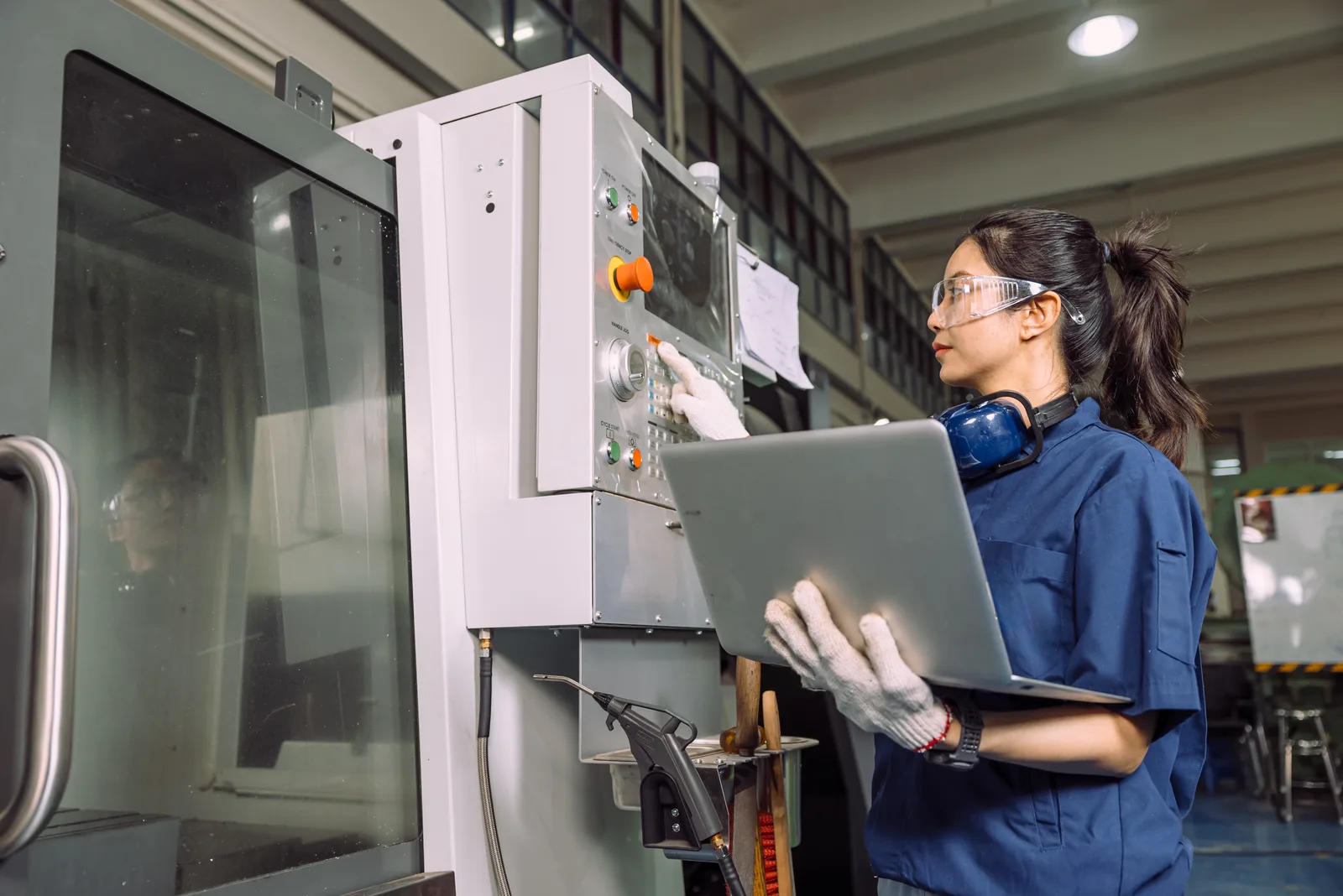

Our Virginia clients include aerospace and defense suppliers, advanced-materials manufacturers, life-science and device companies, food and beverage producers, companies in the energy supply chain, and the machine shops, fabricators, and welders that support them. When a Virginia company sells to federal and defense customers or ships through the Port of Virginia, both of those shape the insurance program as much as the machines on the floor.
Three Virginia rules frame the program. The Virginia Occupational Safety and Health (VOSH) Program runs an OSHA-approved State Plan that applies to private sector workplaces, so VOSH is the inspector a private Virginia shop deals with. Personal injury actions carry a two-year limitation period under Va. Code § 8.01-243(A). And the Department of Environmental Quality issues permits for new and modified stationary sources of air pollution. The sections below take each in turn.
What a Virginia underwriter needs to see
Underwriting a Virginia account starts with payroll by class, equipment and tooling values, building and stock values, the end markets your products serve, and a claims record. The end market does most of the work on the liability side: a component for a defense platform, an advanced composite, a medical device, and a packaged food each carry a very different potential for harm, and each is priced accordingly.
After that base, Virginia’s particular customers and rules come in. Defense and federal customers write detailed insurance terms into their contracts, including specific limits, additional-insured requirements, and flow-downs from prime contracts. Aerospace suppliers need their general liability confirmed for aircraft products. Life-science and food producers operate under federal oversight that makes recall coverage central. Port-dependent manufacturers carry transit and waterside property exposures. And your VOSH inspection record is part of the file on both comp and liability. We price from what you do rather than a rate schedule; our guide to machine shop and manufacturing premiums explains the drivers common to every state.
Defense and shipyard supply chains deserve particular attention in Virginia. A shop that supplies parts or services to a shipbuilder, a defense prime, or a federal facility usually signs terms that shift liability to the supplier, name the customer and sometimes the government as additional insureds, and require waivers of subrogation. Some also require coverage for government-furnished or customer-furnished property held in the shop. Those obligations need matching endorsements and property schedules, and we review them before the first order ships.
Security and export controls add a layer for some Virginia defense suppliers. Work on controlled technical data or parts can bring contractual obligations about where parts are made, who may handle them, and how records are kept, and a breach of those obligations can lead to claims that are neither injury nor property damage. We look at whether the program needs errors and omissions or other coverage for contractual and professional exposures of that kind, and we make sure certificates describe only what the policies actually provide.
Five Virginia industries and their coverage needs
VEDP, the Virginia Economic Development Partnership, lists advanced materials manufacturing, aerospace and defense, energy supply chain, food and beverage manufacturing, and life sciences among the industries driving Virginia’s economy. Each has its own insurance emphasis.
Advanced-materials producers work with composites, specialty metals, and coatings in controlled processes where equipment breakdown and business income need careful sizing, and where a material that meets its specification yet fails in the buyer’s application creates an economic claim for manufacturers errors and omissions. Aerospace and defense suppliers need aircraft-products coverage confirmed and contract flow-downs met. Energy supply-chain companies build components and equipment used in power and fuel systems, where a failure can mean injury, property damage, and business interruption for the customer at once.
Life-science and device manufacturers answer to the U.S. Food and Drug Administration’s device rules, with establishment registration and listing under 21 CFR 807.20 and the quality management system in 21 CFR Part 820. Food and beverage manufacturers fall under the agency’s food rules, with facility registration in 21 CFR Part 1, Subpart H and preventive controls in 21 CFR Part 117. For both, product recall coverage belongs near the top of the program. Machine shops supplying any of these five inherit the customer’s requirements, so the first thing we ask is who buys your parts.
VOSH and Virginia’s private workplaces
Virginia operates an OSHA-approved State Plan covering most private sector workers and all state and local government workers. Federal OSHA’s Virginia State Plan page states that the plan applies to private sector workplaces in the state, and the Virginia Occupational Safety and Health (VOSH) Program administers it. For a private Virginia shop or plant, VOSH is the agency that inspects and cites.
Because a state plan must be at least as effective as federal OSHA, the federal machinery rules remain the baseline: 29 CFR 1910.212 on machine guarding and 29 CFR 1910.147 on hazardous-energy control. They reach CNC cells, composite trimming, welding bays, and food processing lines. Guarding and lockout failures drive the most serious injuries, so a Virginia submission from us carries your written programs and any VOSH history.
Workers compensation on a Virginia payroll
Private carriers compete to write workers compensation in Virginia. For any one employer, the premium follows the classification of its payroll and its claims experience. Machinists, welders, composite technicians, food and device production workers, and office staff each belong in a different class, and payroll placed in the wrong class is reassigned at audit.
Employers liability, part of the comp policy, answers lawsuits that arise from workplace injuries, and we coordinate it with general liability. Crews that work aboard vessels or on a shipyard waterfront may fall under federal maritime compensation laws that a standard comp policy does not address without endorsements, so we ask where your people work. The workers compensation page covers the basics, and our article on lowering manufacturing comp costs lists the practices carriers reward. Virginia companies with staff in Maryland, North Carolina, or West Virginia should report that payroll by state.
Va. Code § 8.01-243(A) and products coverage
Virginia’s limitation period for personal injury claims is in Va. Code § 8.01-243(A), which sets two years. For injuries caused by products, that period generally runs from the injury, and a product can be in service for a long time before an injury occurs.
Because the period starts with the injury rather than the sale, a Virginia manufacturer’s products exposure lasts as long as its products are in use. That exposure is answered by products-completed operations coverage, part of general liability with its own aggregate limit. Three decisions matter. The limit should reflect the end use of what you ship, not just the size of your company. The coverage should stay continuous, without gaps between carriers. And the trigger should be chosen deliberately. Occurrence wording ties the claim to the policy year in which the injury took place, however long the lawsuit takes to arrive; claims-made wording ties it to the policy year in which the claim is first reported, provided the injury falls after the retroactive date, which is why changing carriers or selling the company calls for an extended reporting period.
Records support all three decisions. Drawings, inspection data, lot tracing, and shipping records show the condition in which a product left your plant, and warnings and manuals show what users were told. For defense and aerospace suppliers, quality certifications and traceability documents often carry the same weight in a defense. Our comparison of occurrence and claims-made coverage explains the trigger choice, and the products-completed operations aggregate explains the limit.
DEQ permits for new and modified sources
Air permits for Virginia manufacturers come from the Department of Environmental Quality, and the state’s air regulations require a permit for new and modified stationary sources before construction or operation, under rules adopted by the State Air Pollution Control Board. Coating and composite curing lines, degreasers, food processing equipment, and boilers are the usual reasons a Virginia plant needs to check before a project starts.
A permit does not insure against a release. General liability and property forms exclude most pollution, so a spill of coating materials, a release to a storm drain or waterway, or an emissions event from your own process generally requires a dedicated pollution or environmental policy. Plants near the water should give that coverage particular attention. Underwriters for manufacturing insurance accounts with coating or process equipment ask about DEQ permits, and a documented answer helps.
The chart below lines up Virginia’s rules and industries with the decisions they drive.
Most Virginia programs also include commercial property for buildings, machinery, and stock, including customer-furnished property held in the shop, and an umbrella for the limits defense, aerospace, and federal customers require.
Port of Virginia terminals in the program
We write Virginia shops and plants statewide. Each of these five verified locations is a Port of Virginia terminal or inland port, and each changes how goods move and what the program has to cover, from heavy-lift equipment at the waterfront to cargo moving through an inland port in the northern part of the state.
Norfolk
Norfolk International Terminals is part of the Port of Virginia. Manufacturers importing components or exporting finished goods through it need cargo coverage that follows each shipment and property terms for goods held at the terminal.
Newport News
The Newport News Marine Terminal is the port’s primary roll-on/roll-off and breakbulk terminal, handling autos, construction and farming equipment, and heavy-lift machinery. Equipment makers shipping large units through it need transit coverage that fits heavy-lift cargo.
Portsmouth
Portsmouth Marine Terminal is part of the Port of Virginia. Fabricators near the waterfront that move steel or components through it should confirm who bears the risk of loss at the terminal and set cargo limits to match.
Richmond
Richmond Marine Terminal is the Port of Virginia’s terminal in Richmond. Manufacturers in the Richmond area that ship by barge or container through it need marine cargo terms that follow each load inland.
Front Royal
The Virginia Inland Port is located in Front Royal in Northern Virginia. Plants using it should confirm who carries the risk of loss while containers move between the inland port and the seaport, and set transit limits accordingly.
Virginia is one of the 48 states we are licensed to serve. Companies with sites across state lines can also read our pages for Maryland, North Carolina, West Virginia, Kentucky, and Tennessee, or browse our full state list.
Supplier to primes or seller of your own
Virginia companies divide between suppliers working to a customer’s specification and companies selling products under their own name, and many do both. Suppliers should start with our page on machine shop insurance, focused on tooling, equipment, and contract exposures. Companies selling devices, materials, food products, or equipment under their own name should start with our page on manufacturing insurance, where products liability, recall, and errors and omissions do more of the work. A combined business is written as one program, each side rated on its own figures.
Virginia plant and machine shop questions
Does VOSH inspect private Virginia manufacturers?
Yes. Virginia operates an OSHA-approved State Plan that applies to private sector workplaces, administered by the Virginia Occupational Safety and Health (VOSH) Program. State plans must be at least as effective as federal OSHA, so the federal guarding and hazardous-energy control standards set the baseline, and carriers ask to see your written programs for both.
When must a Virginia injury lawsuit be filed?
Va. Code § 8.01-243(A) sets two years for personal injury actions, and most product injury claims follow that period. The period generally runs from the injury, which can be long after a product ships, so manufacturers should keep products-completed operations coverage continuous and choose between occurrence and claims-made forms with care.
Which contract terms matter most to a Virginia defense supplier?
Look for indemnity terms, additional-insured requirements for the prime and sometimes the government, waivers of subrogation, primary and noncontributory wording, and obligations to insure government-furnished or customer-furnished property in your shop. Each needs a matching endorsement or property schedule. We review the contract and adjust the program before the first order ships.
Which Virginia agency permits new air sources at a plant?
The Department of Environmental Quality. Virginia’s air regulations require a permit for new and modified stationary sources before construction or operation, under rules of the State Air Pollution Control Board. Coating lines, degreasers, and boilers are common triggers. Since general liability and property exclude most pollution, releases also need a separate pollution policy.
Does a Virginia food or device maker need recall coverage?
Usually. The FDA regulates device establishments through registration and listing (21 CFR 807.20) and the quality system rule (21 CFR Part 820), and food facilities through Part 1, Subpart H and Part 117. When product must come back, general liability does not pay to retrieve and replace it; recall coverage does, and many buyers ask their suppliers to carry it.
Who writes workers compensation for Virginia plants?
Private carriers, in a competitive market. Your premium depends on how payroll is classified and on your claims experience. We check that machinists, welders, composite technicians, food and device workers, and office staff are each in the right class, and we look separately at maritime exposures for crews that work aboard vessels or on the waterfront.
Sources
Start a Virginia defense, device, or machine shop quote
Tell us what your Virginia operation makes, who it supplies, and how it ships, and we will take it to carriers that write your class.