Insurance by operating model
Machine Shop Insurance for CNC, Job, and Tool and Die Shops
Insurance for the machine shop — CNC machining, laser cutting, and job shops. The precision-machining model, where working to a customer’s print, machine-heavy production, and the value of the equipment on your floor drive the risk profile.
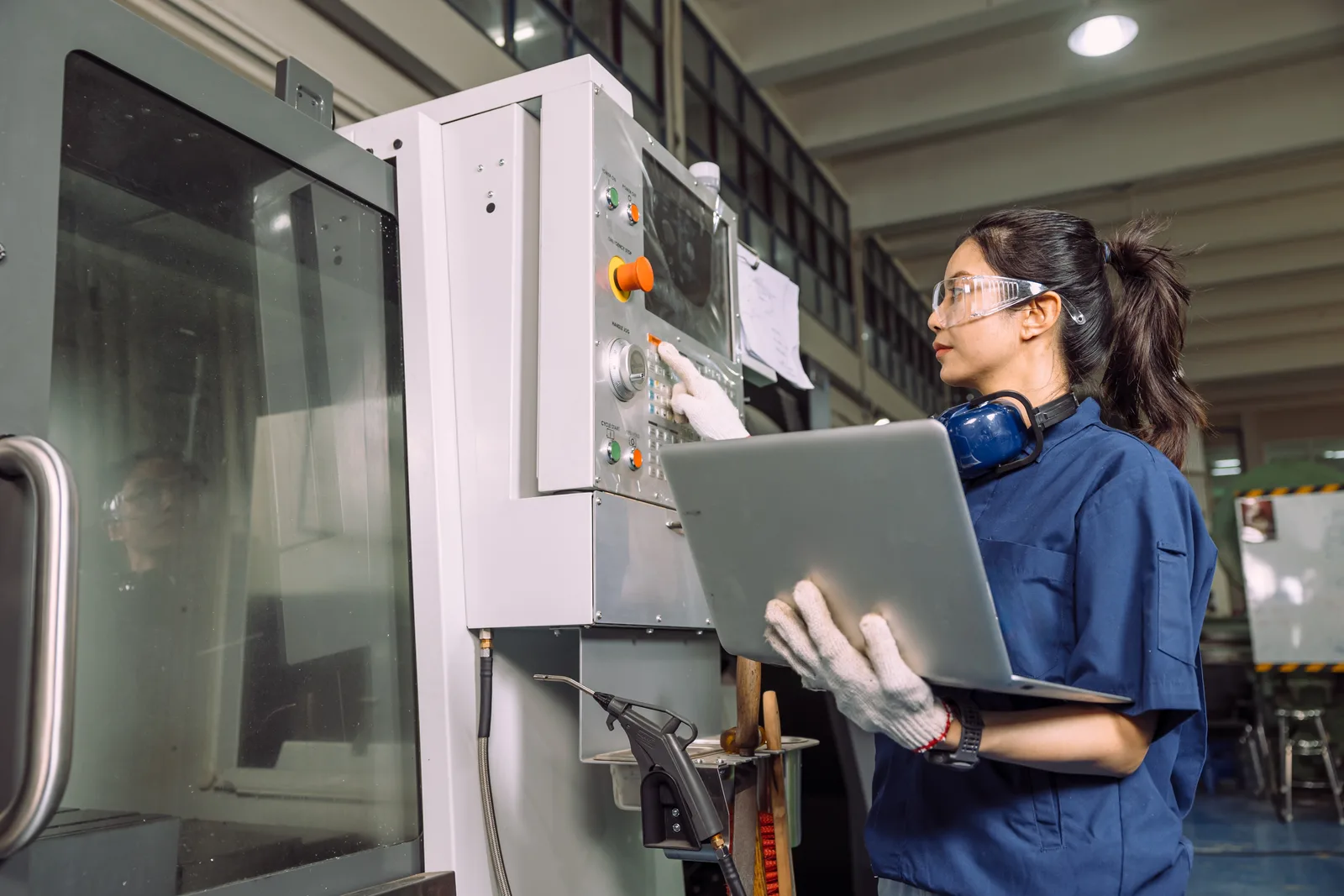

A machine shop is its own operating model, not a coverage line — and what makes its insurance distinct is the floor itself. A job shop takes in a customer’s print or part and machines, cuts, welds, or fabricates it to spec — the parts belong to the customer, who puts them into their own product. The work is made to tolerance on equipment that represents most of the capital in the building: CNC machining centers, lasers, press brakes, and welding cells. That is a very different risk picture from a business whose value is in its inventory or its storefront, and it demands a program built around the machines, the people who run them, and the precision the work is held to.
Two exposures define the machine-shop model. The first is the equipment. The machines on your floor are the operation — when a CNC cell goes down, production stops — and standard property coverage does not answer for the machine failing from the inside. A control-board fault, a motor burnout, an electrical surge: those are internal failures that manufacturing machine and equipment coverage, through its equipment-breakdown side, is built to respond to, including the income lost while the cell is down. The second is the work made to a print. You are machining to someone else’s tolerance, and two things can go wrong: a part can fail downstream after it leaves you and cause harm — a products-liability exposure that runs to general liability — or a part can simply come out of spec, costing the customer a deadline or a scrapped run with no injury at all, which is the financial-loss seam manufacturers errors and omissions answers.
Two more exposures come with running a machine-heavy floor. The building, contents, and stock — the shop itself, the tooling and material, and the parts moving through production — run through commercial property against fire, theft, and the external perils a facility carries. And the people running the machines — operators around presses, cutting, grinding, and welding — run through workers compensation, because a shop floor is a machine-intensive injury environment. The equipment and the floor sit at the center of this model in a way they do not for a business that simply sells finished goods.
This page covers how machine shop insurance is built for the precision-machining model: what the model is and the work it covers, the equipment-and-work-to-print risk profile, the coverage stack it leans on, the drivers that move cost, and how carriers underwrite it. Machine shop does not lead with the makes-its-own-product, products-liability-and-recall exposure that comes with selling a finished product under your own name — if your operation also manufactures and sells its own product line, the Manufacturing Insurance page is built for that model.
Running a machine shop? Get a quote structured around the equipment on your floor and the work you make to print.
Get a Free QuoteWhat makes machine shop insurance different
Machine-shop risk is equipment risk and precision risk, and it lands in places a generic business policy does not anticipate. The first is the equipment-breakdown exposure — the machines are the business, and the most likely thing to stop production is not a fire but the machine failing from the inside, which standard property coverage excludes. The second is the work-to-print exposure — because you machine to someone else’s tolerance, a defective part can become a downstream products-liability claim, and an out-of-spec part can become a pure financial-loss claim, two different lines answering two different failures. A policy rated to a generic light-manufacturing or business risk treats none of these with the emphasis a machine-heavy job shop needs.
The practical consequence is that two shops with similar revenue can carry very different exposures depending on their equipment and their work. A shop running newer, networked, high-value CNC and laser equipment concentrates more value — and more breakdown exposure — in the machines than a shop running older manual equipment, and a shop holding tight aerospace or medical tolerances carries a deeper work-to-print exposure than one doing rough fabrication. We separate the equipment exposure from the products exposure, and the job-shop work from any own-product line in the same book, so none is mispriced — and we weight the stack toward the lines the machine-shop model leans on.
The work this covers
The machine-shop model holds several kinds of work that share one risk profile — a customer’s part or print, machined to spec on equipment that is the heart of the operation. These are the shop types that live within this pillar:
- CNC machining. Milling, turning, and multi-axis machining to a customer’s print — the precision core of the job-shop model, where high-value equipment and tight tolerances both run highest.
- Laser cutting. Cutting and profiling metal to spec on laser equipment — a capital-intensive process where the cutting equipment and its electronics are the asset to protect.
- Job shops. The contract model itself — taking in work order by order against a customer’s prints, where the most valuable item on a bench may belong to the customer and the schedule is driven by the contract.
Metal fabrication and welding shops — structural and miscellaneous metals, sheet metal, and fabricators who install their work on customer sites — carry hot-work and field-installation exposures of their own and have a dedicated page on metal fabrication and welding shop insurance.
Making and selling your own finished product into the market is not part of this model — it carries its own products-liability, recall, and federal-regulatory exposures and lives on the Manufacturing Insurance page. If your operation runs both a job shop and an own-product line, each scope is underwritten on its own terms.
State and regulatory considerations
A machine shop generally does not need a state occupational or trade license to operate the way a licensed contractor or a regulated manufacturer might — there is no nationwide “machine shop license.” What does shape the risk by location is worker safety and workers compensation. Worker safety on a shop floor — machine guarding, lockout and tagout around presses and powered equipment, and the cutting, grinding, and welding exposures — runs through OSHA standards, and a documented safety program is something carriers look for. Workers compensation rules vary by state, including the four state-fund states — North Dakota, Ohio, Washington, and Wyoming — each with its own rules on who may provide comp, which matters for a shop whose employees work across a state line or whose ownership runs facilities in more than one state.
A shop that also makes and sells its own product line can pick up sector-specific federal regulation that a pure job shop does not carry — that is the manufacturing model’s territory, covered on the manufacturing page. As our state pages come online we link the workers-compensation and worker-safety specifics for the states we serve. We write across all 48 licensed states, with priority markets including Texas, California, Ohio, Michigan, and Indiana.
Coverage breakdown
Here is the stack a machine shop carries, weighted for the equipment-and-work-to-print model. Each line links to its full page — and manufacturing machine and equipment, carrying the breakdown exposure on the machines that are the business, is the signature placement for this model.
- Manufacturing Machine & Equipment Insurance — the signature line: the CNC, laser, press, and welding equipment that is the operation, plus equipment breakdown for the internal mechanical and electrical failure that standard property coverage excludes, including the income lost while a cell is down.
- Commercial Property Insurance — the building, contents, tooling, material, and stock against fire, theft, and the external perils a shop floor carries, with business income for a covered shutdown.
- Workers Compensation Insurance — medical and lost-wage coverage for operators around presses, cutting, grinding, and welding on a machine-intensive floor, with employers liability and honest handling of the four state-fund states.
- General Liability Insurance — third-party claims and the products-liability side when a part you machined fails downstream after it leaves your shop and causes injury or property damage.
- Manufacturers Errors & Omissions Insurance — the out-of-spec part: when a part is wrong and costs a customer a deadline or a scrapped run with no injury, the financial-loss seam general liability does not answer.
- Umbrella Liability Insurance — excess limits above general liability and the other primary lines for the serious claim that runs past them.
What machine shop insurance costs
Premium tracks the operation, not a sticker price. The drivers that move it most are your payroll and the operator classifications it covers, the value and age of the equipment on your floor and how networked and high-value it is, your building and stock values, the tolerances and sectors you work to, your products and prior-claims history, your multi-state footprint, and your machine-guarding and safety discipline. A shop running newer high-value CNC and laser equipment concentrates more breakdown exposure than one on older manual machines, and a shop holding tight aerospace or medical tolerances carries a deeper work-to-print exposure than one doing rough fabrication. We price to that real picture and stand behind any figure we give — verified ranges come from us directly, never a generic guess.
Claims scenarios
These are plausible machine-shop claim categories, described qualitatively and with generic carrier language — every claim is handled by the carrier, never named here — and with no fabricated cost or frequency figures.
- A CNC cell breaks down. A control board or motor fails inside a machining center and takes the cell offline, with production stopped while it is repaired — an equipment-breakdown claim, including the lost income, not a property claim.
- An out-of-spec run. A batch of parts comes off out of tolerance, the customer misses a deadline or scraps the run, and the loss is purely financial with no injury — a manufacturers errors and omissions exposure, not general liability.
- A part fails downstream. A machined component fails in the customer’s assembly after it ships and is linked to an injury or property damage — the products-completed operations side of general liability.
- A shop-floor injury. An operator is hurt at a press, a grinder, or a welding station — a workers compensation claim on a machine-intensive floor.
Underwriting realities
Carriers writing the machine-shop class look at the equipment and the discipline: the value, age, and type of the machines on your floor, your building and stock values, your operator payroll and classifications, the tolerances and sectors you serve, your machine-guarding and lockout/tagout practices, your products and prior-claims history, and your multi-state footprint. A modern, well-maintained equipment fleet with documented preventive maintenance, a strong safety program, and a clean claims history opens more markets; aging high-value equipment without a maintenance record, or a serious products or breakdown loss, narrows them. Shops that also run an own-product line get that portion underwritten separately so the job-shop book is not subsidizing — or stranding — the rest. We position your operation to the carriers most likely to want a machine-heavy job-shop risk rather than sending one generic submission everywhere.
Why Machine Guard Insurance
We write one class — machine shops and manufacturers — and within it we treat the machine shop as the equipment-and-precision operation it is. We weight your stack toward the equipment-breakdown and workers-compensation exposures a machine-heavy floor actually carries, read the work-to-print scope so the out-of-spec part runs to manufacturers errors and omissions and the defective part runs to products liability, and structure commercial property and the products lines around the way a job shop really works. We place coverage with carriers that want the machine-shop class. Start with a quote, or talk it through with us first.
Learn more
Machine shop is one of three operating models we write, and the coverage stack shifts with the work. The signature exposure for this model lives on the manufacturing machine & equipment page, with workers compensation close behind. If your operation makes and sells its own finished products instead — into the market, under your own name, with the products-liability, recall, and federal-regulatory exposures that brings — the Manufacturing Insurance page leads with that profile. Opening a new shop? Our guide on how to start a machine shop walks through registration, equipment, safety, and insurance in order.
Coverage for machine shops
- General Liability Insurance
- Commercial Property Insurance
- Manufacturing Machine & Equipment Insurance
- Workers Compensation Insurance
- Umbrella Liability Insurance
- Product Recall Insurance
- Manufacturers Errors & Omissions Insurance
Operating models
Get covered
Primary sources
Frequently asked questions about Machine Shop Insurance
What insurance does a machine shop need?
A machine shop typically carries commercial property, manufacturing machine and equipment, workers compensation, general liability, and an umbrella as its core stack. Because the CNC machines, lasers, presses, and welding cells are the operation, equipment breakdown carries real weight, and so does workers compensation on a machine-intensive floor. General liability covers the products side, a part that fails downstream, and manufacturers errors and omissions answers the out-of-spec part that costs a customer money without hurting anyone.
Do I need machine shop insurance or manufacturing insurance?
It depends on what you do with the parts. A machine shop works to a customer’s print, machining, cutting, welding, or fabricating parts that belong to someone else; that is this page. A manufacturer makes and sells its own finished products, which brings heavier products-liability and product-recall exposure and, in some sectors, federal regulation; the manufacturing insurance page leads with that. Many shops carry elements of both, and we sort out which mix yours is before we quote.
Is the equipment on my floor covered if a machine breaks down?
Yes, through equipment breakdown, part of manufacturing machine and equipment coverage. Standard commercial property responds to external perils like fire, theft, and water damage, but excludes the internal mechanical and electrical failure of the machine. A CNC combines high-torque mechanical components with sensitive electronic controllers, so a control-board failure, a motor burnout, or a power surge can take a cell offline; equipment breakdown answers that, including the income lost while the line is down.
What happens if I machine a part out of spec?
It depends on what the part does. If a defective machined part fails downstream and injures someone or damages other property, general liability’s products-completed operations side responds. If the part is simply out of tolerance and unusable, and the customer loses money on a missed deadline or a scrapped run with no injury or property damage, general liability generally will not respond; manufacturers errors and omissions is built for that gap.
How does workers compensation work for a machine shop?
A shop floor is workers-comp-intensive: machine guarding, presses, cutting, grinding, welding, and material handling drive the injury profile. Comp covers an injured employee’s medical care and lost wages, and the employers-liability side answers the lawsuit. Comp follows your payroll, so where your employees work matters, including the four state-fund states, North Dakota, Ohio, Washington, and Wyoming, each with its own rules on who may provide comp.
Does machine shop insurance cover the parts I am working on?
The parts you hold for a customer, their property in your care while you machine it, are a distinct exposure from your own building and equipment, and we read how a policy treats property of others in your custody rather than assume. Your machines run through machine and equipment coverage; the building, contents, and stock through commercial property; and a customer’s parts in your care on their own terms.
Insure your machine shop the way it runs
Tell us about the equipment on your floor, the tolerances you hold, and the work you make to print, and we will market it to carriers that write the machine-shop class.