States we serve · North Carolina
Machine Shop and Manufacturing Insurance in North Carolina
For North Carolina aerospace, automotive and EV, furniture, textiles, plastics and chemicals, and food manufacturers, and the machine shops that supply them.
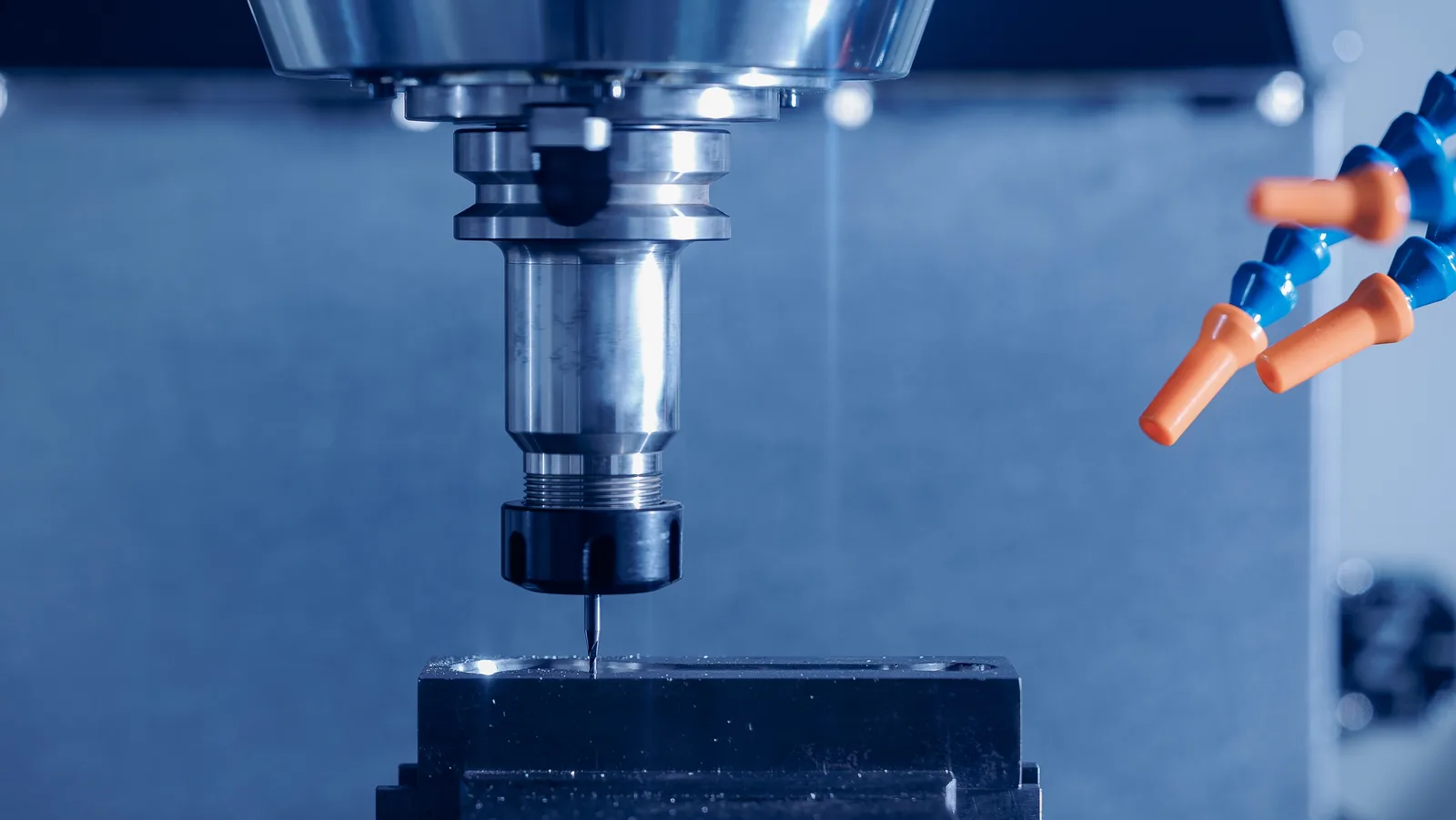

North Carolina’s manufacturing base is broad, and our clients here range across it: aerospace and turbine-component makers, automotive and EV suppliers, furniture manufacturers, textile and nonwovens producers, plastics and chemical companies, food and beverage makers, and the machine shops, fabricators, and finishers that support them. A North Carolina program often has to handle traditional exposures like furniture and textile fire load alongside the strict requirements of aerospace customers.
Five North Carolina rules shape the program. The North Carolina Occupational Safety and Health (NC OSH) Division covers private sector workplaces under an OSHA-approved State Plan. Personal injury claims carry a three-year limitation period under N.C. Gen. Stat. § 1-52(16). A 12-year repose period applies under § 1-46.1(1). The sealed-container rule in § 99B-2(a) protects some sellers. And air permits come from the Division of Air Quality, except where one of three local air programs issues its own. Each is covered below.
North Carolina underwriting, input by input
A North Carolina quote begins with payroll by class, the values of machinery, tooling, buildings, and stock, the markets your products reach, and a claims history. The market a product enters shapes most of the liability exposure: a turbine airfoil, a vehicle component, a sofa frame, a nonwoven filtration material, and a packaged food each carry a different potential for harm.
North Carolina specifics then refine the picture. Aerospace customers impose strict quality and insurance terms, and some general liability forms exclude aircraft products. Automotive and EV customers write recall responsibility into supplier agreements. Furniture and textile plants carry significant fire load from wood, fiber, dust, and foam. Plastics and chemical producers carry process and pollution exposures. The 12-year repose period and the sealed-container rule both shape how products claims unfold. And your NC OSH record is read on comp and liability. We price from your operation, not a table; our guide to machine shop and manufacturing insurance costs covers the drivers common to every state.
Fire protection deserves emphasis for North Carolina’s furniture and textile plants. Dust from sanding and cutting, lint from fiber processing, and stored foam and fabric can turn a small fire into a total loss, and property underwriters look closely at dust collection, housekeeping, sprinkler coverage, and spark detection. A plant that documents those controls usually finds more carriers willing to write its property and business income, and on better terms.
Seven North Carolina industries and what each needs
The Economic Development Partnership of North Carolina lists advanced manufacturing, aerospace, automotive and EV, food and beverage manufacturing, furniture manufacturing, plastics and chemicals, and textiles and nonwovens among the state’s industries. Those seven share a need for floor safety and not much else in how they are insured.
Aerospace suppliers need their general liability confirmed for aircraft products and often face grounding and certificate requirements. Automotive and EV suppliers need products coverage matched to customer terms and, often, product recall coverage. Advanced manufacturers and plastics producers concentrate value in automated lines and molds, where equipment breakdown and business income matter. Furniture and textile makers carry fire load and, for consumer products, products exposure tied to flammability and structural failure.
Food and beverage manufacturers fall under the U.S. Food and Drug Administration’s food rules, with facility registration under 21 CFR Part 1, Subpart H and preventive controls for human food under 21 CFR Part 117, which makes recall exposure real for them. Chemical producers need process safety and pollution treated as core exposures. And across the seven, a product that meets its specification but misses the purpose it was bought for is a financial loss for manufacturers errors and omissions. Contract shops supplying any of these customers inherit their requirements, so we ask about your buyers first.
NC OSH and private North Carolina workplaces
North Carolina operates an OSHA-approved State Plan covering most private sector workers and all state and local government workers. Federal OSHA’s North Carolina State Plan page describes it, and the plan is administered by the North Carolina Occupational Safety and Health (NC OSH) Division of the state Department of Labor, which covers private sector workplaces in the state.
Because a state plan must be at least as effective as federal OSHA, the federal machinery rules set the baseline: 29 CFR 1910.212 on machine guarding and 29 CFR 1910.147 on hazardous-energy control. They reach woodworking machinery in furniture plants, looms and carding equipment in textile mills, molding machines, and CNC cells alike. Carriers ask about guarding and lockout because failures there cause the most serious injuries, and our North Carolina submissions include your written programs and any NC OSH history.
Buying comp for North Carolina plants
North Carolina workers compensation is written by private carriers in a competitive market. For any one employer, classification and loss history set the price. Woodworkers and upholsterers, textile machine operators, molders, machinists, food production workers, and office staff each belong in a different class, and payroll placed in the wrong class is moved at audit.
Employers liability, carried in the comp policy, answers lawsuits that arise from workplace injuries, and we tie it to the general liability program. The workers compensation page explains classification and audits, and our guide to lowering comp costs in manufacturing lists the practices carriers reward. North Carolina companies with staff working in South Carolina, Virginia, or Tennessee should report that payroll by state.
Three years, twelve years, and sealed containers
North Carolina’s personal injury limitation period is in N.C. Gen. Stat. § 1-52(16), which sets three years. For product injuries, that generally runs from the injury rather than the sale, which can be long after a part ships.
North Carolina also sets an outer limit for product claims. N.C. Gen. Stat. § 1-46.1(1) establishes a repose period of 12 years for product liability actions. For a manufacturer, that period gives older product lines a defined horizon, but it does not remove the need for continuous coverage while products are within it.
Sellers of packaged goods have a separate protection. Under N.C. Gen. Stat. § 99B-2(a), “No product liability action, except an action for breach of express warranty, shall be commenced or maintained against any seller when the product was acquired and sold by the seller in a sealed container” under the conditions the section describes. A distributor or retailer that simply passed along a sealed product is therefore often outside the claim, which tends to leave the manufacturer or packager as the defendant, and the express-warranty exception means warranty language still matters.
Those rules together argue for continuous products-completed operations coverage, careful records of first sale, and warranty language reviewed with the insurance program. On policy form, an occurrence policy responds to injuries that happened during its term whenever claimed, while a claims-made policy responds to claims first made during its term back to a retroactive date, so a new carrier or a sale calls for tail coverage. Our comparison of the forms walks through the choice, and our explanation of products-completed operations covers the coverage itself.
DAQ permits and the three local programs
Air permits for most North Carolina manufacturers come from the North Carolina Department of Environmental Quality’s Division of Air Quality, whose Permitting Section handles the issuance, renewal, and modification of air quality permits. Three local air programs issue their own permits, so the Division of Air Quality does not permit every North Carolina facility. Before a new finishing line, spray booth, boiler, or process unit goes in, a plant should confirm which agency has jurisdiction over its site.
Pollution exposure sits outside the permit. General liability and property forms exclude most pollution, so a spill of finishing materials, a release to a storm drain, or an emissions event from your own process generally needs a dedicated pollution or environmental policy. Furniture finishing, textile dyeing and finishing, and chemical production all raise that question. Underwriters for manufacturing insurance accounts with finishing or chemical processes will ask which agency issued your permits.
The North Carolina rules above, set against the decisions they drive, appear in this chart.
Most North Carolina programs also include commercial property with fire protection documented carefully, and an umbrella for the higher limits aerospace, automotive, and retail customers require.
Six North Carolina locations that matter
We write North Carolina shops and plants statewide. Each of these six verified locations has a named feature that changes the program, and three of them are North Carolina Ports facilities where cargo handoffs matter.
Charlotte
The Charlotte Inland Port serves the region’s manufacturing and distribution centers. Plants using it should confirm who bears the risk of loss between the inland port and the seaport, and set transit limits to match their shipments.
Greensboro
EDPNC highlights a production facility at Piedmont Triad International Airport (PTI) in Greensboro. Aerospace suppliers in the area need aircraft-products coverage confirmed and grounding exposure reviewed before accepting orders.
Wilmington
The Port of Wilmington is a North Carolina Ports facility. Manufacturers importing materials or exporting finished goods through it need cargo coverage that follows each shipment and property terms for goods awaiting export.
Asheville
Pratt & Whitney is expanding its turbine airfoil manufacturing operations in the Asheville area. Precision shops supplying turbine work face strict quality requirements and aerospace products exposure that call for carefully matched coverage.
Fayetteville
American Titanium Metal, LLC, a U.S. titanium manufacturer, is expanding its operations in Fayetteville. Shops that machine or process titanium for aerospace and defense customers carry high material values and demanding customer terms.
Morehead City
The Port of Morehead City is a North Carolina Ports facility. Manufacturers shipping heavy or bulk goods through it need marine cargo terms and a clear handoff of risk at the terminal.
North Carolina is one of the 48 states on our license list. Companies with operations across state lines can also compare our pages for South Carolina, Virginia, Tennessee, and Georgia, or open the complete list of states.
Working to print or selling your own line
North Carolina businesses divide between contract work and branded products, and many combine them. If most of your work is machining, molding, or sewing to a customer’s specification, our page on machine shop insurance is the starting point, with its focus on equipment, tooling, and floor exposures. Metal fabrication and welding have their own page on metal fabrication and welding shop insurance. If you design and sell furniture, textiles, food, components, or equipment under your own name, our page on manufacturing insurance is the better fit, since products liability, recall, and errors and omissions carry more weight there. A combined operation gets one program with each side rated on its own basis. Textile and nonwovens producers often sit in the middle, making material to a customer’s specification that the customer then converts into a finished product, and the program should reflect whether your material reaches the end user as you made it or only after further processing.
What North Carolina plant owners ask us
Does NC OSH inspect private North Carolina plants?
Yes. North Carolina operates an OSHA-approved State Plan covering most private sector workers, administered by the NC OSH Division of the state Department of Labor. State plans must be at least as effective as federal OSHA, so the federal guarding and lockout standards set the baseline, and carriers ask to see your written programs for both.
How long does a North Carolina injury claimant have to sue?
N.C. Gen. Stat. § 1-52(16) sets three years for personal injury claims. The period generally runs from the injury, which can come long after a product ships and passes through other hands. Manufacturers should therefore keep products-completed operations coverage in force without gaps. Manufacturers should therefore keep products-completed operations coverage continuous and choose policy forms deliberately.
Does North Carolina have a product repose period?
Yes. N.C. Gen. Stat. § 1-46.1(1) sets a repose period of 12 years for product liability actions. That gives older product lines a defined outer limit, but every product still inside the period remains exposed, so products coverage should stay continuous from one carrier to the next. Records of first sale help establish when the period applies to a given product.
When is a North Carolina seller protected by the sealed-container rule?
Under N.C. Gen. Stat. § 99B-2(a), no product liability action, except for breach of express warranty, may be commenced against a seller when the product was acquired and sold in a sealed container, under the conditions the section describes. Claims then tend to move to the manufacturer or packager, whose products limits carry them.
Which agency permits air sources at a North Carolina plant?
Usually the Division of Air Quality, whose Permitting Section issues and modifies air permits. Three local air programs issue their own permits, so a plant should confirm which agency covers its site. General liability and property exclude most pollution, so finishing and chemical releases also need a separate pollution policy.
Who sells workers compensation to North Carolina plants?
Private carriers, competing for the business in an open market. The premium follows how payroll is classified and your loss history. We check that woodworkers, upholsterers, textile operators, molders, machinists, food workers, and office staff are each in the right class, and we keep employers liability aligned with the general liability program.
Sources
- OSHA — North Carolina State Plan
- NC Department of Labor — Occupational Safety and Health
- N.C. Gen. Stat. § 1-52
- N.C. Gen. Stat. § 1-46.1
- N.C. Gen. Stat. Chapter 99B
- NC DEQ — Air quality permitting
- Economic Development Partnership of North Carolina — Industries
- North Carolina Ports — Charlotte Inland Port
Price a North Carolina plant, mill, or machine shop program
Tell us what your North Carolina operation makes, which agency permits its air sources, and who buys its products, and we will take it to carriers that write your class.