
States we serve · Texas
Machine Shop and Manufacturing Insurance in Texas
For Texas job shops, fabricators, and plants selling their own products — including whether to carry workers comp at all, a choice Texas law leaves to the employer.
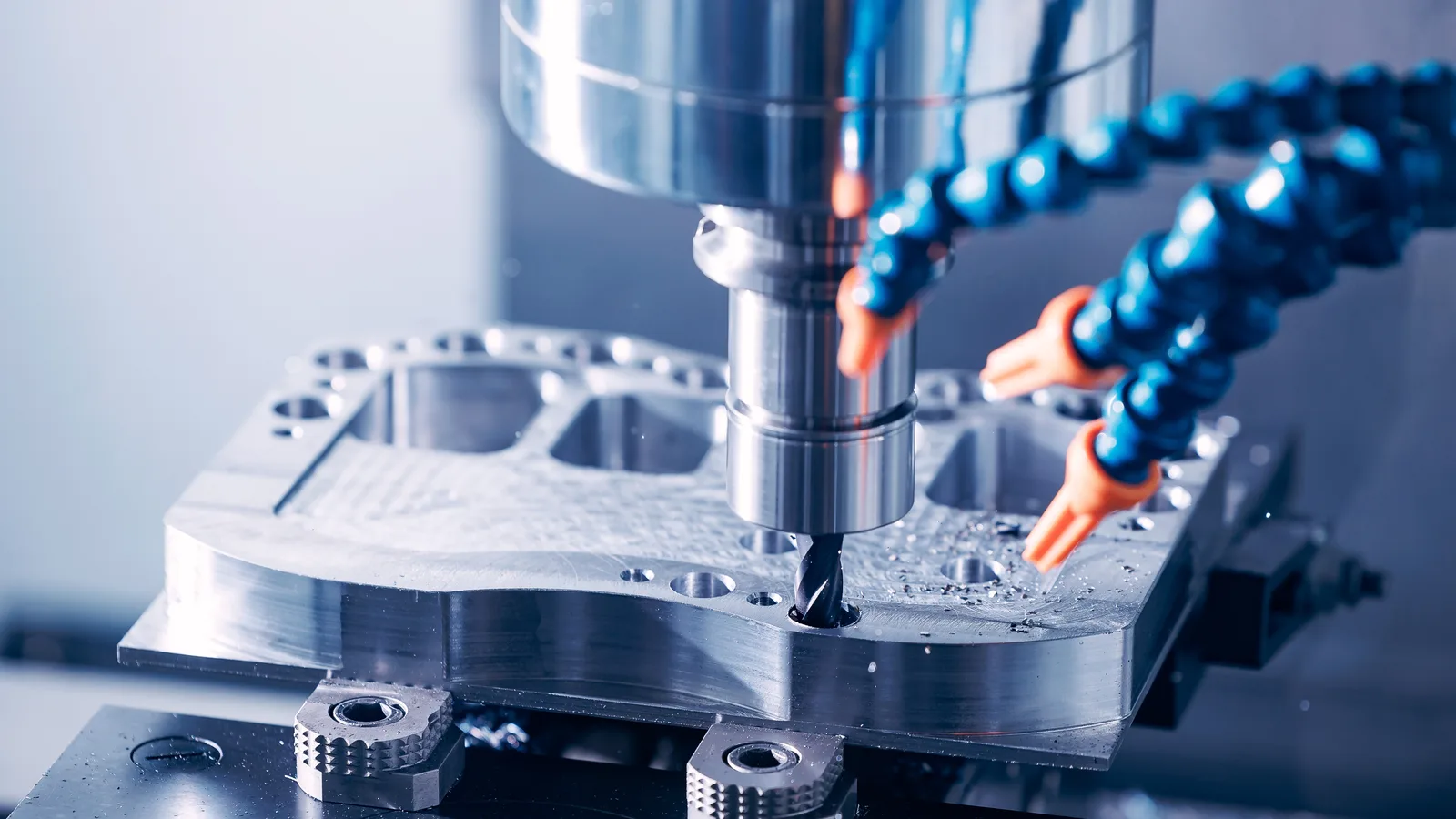

We insure Texas machine shops, fabricators, and manufacturers — the job shop turning parts to a customer’s print, the welding and fabrication yard, and the plant that ships a finished product under its own name. A Texas program pairs general liability with products-completed operations, property, equipment breakdown, product recall, errors and omissions, and an umbrella, and then settles whether the business will carry workers compensation at all — in Texas, the employer’s call under § 406.002.
Texas answers several other questions its own way too. There is no state OSHA plan, so federal inspectors cover private plants. Products claims face a two-year injury limitation and a repose period measured from the date of sale. Manufacturers owe their sellers an indemnity written into statute. And the Texas Commission on Environmental Quality holds the air permits. Here is how each one reaches your policy.
What an underwriter weighs first on a Texas file
Start with comp, because in Texas it changes the rest of the submission. A subscriber buys workers compensation and employers liability in the usual way; a non-subscriber has to show the underwriter how injuries will be handled instead, and that answer shapes the general liability and umbrella pricing that sit beside it. Next comes the federal OSHA record — inspections, citations, and how they were closed. Then the products picture: what you make, who uses it, and how long it stays in service, which Texas bounds with a repose period covered below. Sector mix matters as much as size, since an aerospace or semiconductor customer’s contract terms can set the limits before any rating begins.
Nobody can quote a Texas shop off a rate chart, and we price from the operation in front of us. Our guide to what drives machine shop and manufacturing insurance cost lays out the national factors; this page stays with the Texas-specific ones.
The Texas economy, by the state’s own industry clusters
The Texas Economic Development & Tourism Office groups Texas advanced manufacturing into aerospace vehicles, aircraft, and defense; automotive; computers, electronics, and semiconductors; and production technology and heavy machinery, and it tracks petroleum refining and chemicals and food production as industries of their own. The same office calls Texas the birthplace of the integrated circuit.
For insurance, those clusters split into different stacks. Aerospace and defense suppliers need aviation products wording and contract-driven limits. Automotive and heavy-machinery makers lean on products-completed operations and recall. Electronics and semiconductor work concentrates value in equipment, so equipment breakdown and lost income weigh more than the building. Food producers answer to the U.S. Food and Drug Administration under 21 CFR Part 1, Subpart H and Part 117, which puts recall at the front. Refining and chemical plants and the job shops that maintain them bring pollution exposure onto the table.
Federal OSHA, not a state plan, on a Texas floor
OSHA’s State Plans page is direct about it: Texas is not an OSHA-approved State Plan, and is under federal OSHA jurisdiction. Private Texas plants are inspected from federal area offices, including offices in Houston and Dallas, and the federal standards apply without a state layer in between — machine guarding under 29 CFR 1910.212 and hazardous-energy control, or lockout/tagout, under 29 CFR 1910.147.
That matters twice in Texas. For a subscriber, federal citation history feeds the comp and liability underwriting in the ordinary way. For a non-subscriber it matters more, because a serious guarding or lockout injury can become a negligence suit rather than a comp claim, and a documented federal violation is the kind of evidence that suit will use.
Subscriber or non-subscriber: the Texas comp decision
Texas Labor Code § 406.002 is titled “coverage generally elective,” and it lets most private employers decide whether to obtain workers compensation. The Texas Department of Insurance, Division of Workers’ Compensation calls those that decline non-subscribers. Opting out carries duties: a non-covered employer must notify the division under § 406.004 and tell employees whether coverage exists under § 406.005.
The trade-off sits in § 406.033. When an employee without comp sues over a workplace injury, the employer cannot defend on the ground that the employee was contributorily negligent, assumed the risk, or was hurt through a fellow employee’s negligence — although the employee must still prove the employer was negligent. On a floor full of presses, shears, and welding cells, that makes the alternative program the real decision: employer’s liability coverage written for non-subscribers, an occupational injury benefit plan, or a return to workers compensation. Contracts often decide it first, because many customers and general contractors require comp regardless of what the statute allows. Operations that also run plants in Oklahoma or Louisiana can compare those states’ pages before assuming the same answer applies there.
Non-subscribing is also a reporting job. The Texas Department of Insurance tells employers without coverage that they must report to the state that they do not have coverage, and must report to the division any work-related injury resulting in more than one day of lost time, along with work-related illnesses and deaths. The division’s Employer E-File tool is where the annual non-subscriber notices are filed. For a shop weighing the switch, those filings sit beside the insurance decision: a plant that stops reporting on time has a compliance problem before it ever has a claim. We walk non-subscribing clients through what the division expects, and we raise the question again at renewal whenever a customer contract starts asking for comp.
Two statutory limits on a Texas products claim
The first is time from injury. Under Tex. Civ. Prac. & Rem. Code § 16.003, a personal-injury suit must be brought not later than two years after the day the cause of action accrues. The second is time from sale. Tex. Civ. Prac. & Rem. Code § 16.012(b) requires a products liability action against a manufacturer or seller to be commenced before the end of 15 years after the defendant sold the product. The statute stretches that window when the maker warrants in writing a useful safe life longer than the repose period, and it carves out certain latent-disease claims, so the outer edge is not absolute.
A Texas manufacturer also carries a duty that reaches past its own customers. Tex. Civ. Prac. & Rem. Code § 82.002 provides that a manufacturer shall indemnify and hold harmless a seller against loss arising out of a products liability action, except for losses the seller itself caused. When a product is sued on, the distributor or retailer will send you its defense, and your general liability should treat that statutory indemnity as covered.
The repose window is also a records problem. An occurrence policy answers for injury that happens during its term, so a claim brought long after the sale may be paid by a policy from a year you have forgotten about; keep every old declarations page. A claims-made policy answers only while it, or an extended reporting period, is in force. Our comparison of occurrence and claims-made forms for manufacturers goes further.
TCEQ air authorizations and pollution exposure
Air permits for Texas plants come from the Texas Commission on Environmental Quality (TCEQ), whose Air Permits Division handles New Source Review and Title V authorizations. A new coating booth, a chemical process, or an expanded finishing line is the moment to confirm which authorization applies — ideally before the equipment is ordered. TCEQ’s air permitting pages also lay out procedures for public notice and dispersion modeling, so a larger expansion can take calendar time that belongs in the project schedule and in the installation or builders risk coverage for the new equipment.
The insurance angle is the pollution exclusion. General liability and property both exclude most pollution, so a release from your own process, from a tank or drum to an emissions exceedance, needs a separate environmental policy. For manufacturers along the Gulf Coast chemical and refining corridor, that policy is usually part of the conversation from the start.
Where a Texas floor risk lands in the program
The figure lines up four Texas exposures with the coverage built for each: a product that fails long after the sale, a defect that forces a recall, a machine that stops the line, and an employee injury that — for a non-subscriber — can arrive as a lawsuit instead of a comp claim.
Beyond those four, a part that passes inspection and still fails the customer’s purpose is a financial loss for manufacturers errors and omissions; the building, stock, and tooling sit on commercial property; and the higher limits Texas aerospace, energy, and automotive customers write into purchase orders sit on an umbrella.
Texas manufacturing markets we write
Each of these Texas markets has a named local feature that changes the program, and each is backed by the operator’s own published information.
Houston
Port Houston operates along the Houston Ship Channel, so Gulf Coast manufacturers that import raw material or export finished equipment by sea carry ocean cargo exposure from the vessel to the plant gate — a marine policy question, not a property one, and one we settle before the first container moves.
Dallas
Texas Instruments is headquartered in Dallas, and the company credits its own engineer with inventing the integrated circuit. Contract shops machining tight-tolerance parts for electronics and semiconductor equipment face a different claim than a bodily injury: a part that meets the print and still costs the customer a production run, which is an errors-and-omissions loss.
San Antonio
Port San Antonio, the technology campus southwest of downtown that traces its heritage to Kelly, lists aerospace, defense, and advanced manufacturing among its industries. Parts that fly are underwritten as aviation products, and a general liability program may restrict or exclude them, so a San Antonio shop making them should have aviation products liability confirmed in writing.
El Paso
The Bridge of the Americas Port of Entry anchors El Paso’s commercial link to Mexico. A manufacturer whose components are assembled or sold south of the border needs a coverage territory and, often, a foreign liability policy that answers a claim brought where the product ends up.
Laredo
CBP’s Laredo port runs commercial traffic over the World Trade Bridge and the Colombia Solidarity crossing. Suppliers moving freight by truck through those crossings need goods-in-transit limits sized to a full load, plus contingent business income for the days a customer across the border cannot receive.
Texas is one of the 48 states we are licensed in. Plants that straddle a state line can compare New Mexico, Oklahoma, and Louisiana, or open the full list of every state we serve.
Three operating models, three service pages
The split that matters most in Texas is between making parts for someone else and making products you sell. Contract machining and cutting to a customer’s drawing is covered on our machine shop insurance page, where equipment and work-to-print exposure lead. Designing and selling your own product is covered on our manufacturing insurance page, where the § 82.002 indemnity, recall, and errors and omissions carry more weight. Fabrication and welding, including steel your crews install, is covered on our metal fabrication and welding shop insurance page, where hot work and completed operations lead. A Texas operation that does more than one of these gets one program written across all of them.
Texas shop and plant insurance: common questions
Is workers compensation optional for a Texas manufacturer?
For most private employers, yes. Texas Labor Code § 406.002 makes coverage generally elective, and the Texas Department of Insurance calls employers who decline it non-subscribers. Opting out has conditions: a non-covered employer must notify the Division of Workers’ Compensation under § 406.004 and tell its employees under § 406.005. Many customers still require comp in their contracts, so the decision is commercial as well as legal.
What does a Texas shop give up by going non-subscriber?
Three defenses. Under Texas Labor Code § 406.033, when an employee without comp sues over a workplace injury, the employer cannot argue that the employee was contributorily negligent, assumed the risk, or was hurt by a co-worker’s negligence. The employee must still prove the employer was negligent. On a press or welding floor that makes an employer’s liability policy, or an injury benefit plan, the real decision.
When does a products claim in Texas become too old to file?
Two limits apply. A personal-injury suit must be brought not later than two years after the cause of action accrues under Civil Practice and Remedies Code § 16.003, and § 16.012(b) generally bars a products liability action filed after 15 years from the date the defendant sold the product. A written warranty of a longer useful safe life extends that repose, and some latent-disease claims fall outside it.
Does Texas have a state OSHA program for manufacturers?
No. Federal OSHA states that Texas is not an OSHA-approved State Plan and is under federal OSHA jurisdiction, so private Texas plants are inspected from federal area offices such as those in Houston and Dallas. The federal machine-guarding standard, 29 CFR 1910.212, and the lockout/tagout standard, 29 CFR 1910.147, apply directly, and underwriters read a plant’s federal citation history.
Why would a Texas distributor send our company its products lawsuit?
Because Texas law points it at you. Civil Practice and Remedies Code § 82.002 requires a manufacturer to indemnify and hold harmless a seller against loss from a products liability action, unless the seller’s own conduct caused the loss. Expect distributors and retailers to tender their defense, and make sure your general liability treats that duty as covered contractual liability.
Who issues air permits to a Texas manufacturing plant?
The Texas Commission on Environmental Quality, through its Air Permits Division, which handles New Source Review and Title V authorizations. Check before a new coating, finishing, or chemical process starts, because permit status is also an insurance question: general liability excludes most pollution, and a release from your own process belongs on a separate environmental policy.
Sources
- OSHA — State Plans
- OSHA — Texas area offices
- Texas Labor Code, chapter 406
- Texas Department of Insurance — Non-subscribers
- Texas Civil Practice and Remedies Code, chapter 16
- Texas Civil Practice and Remedies Code, chapter 82
- TCEQ — Air permits
- Texas Economic Development & Tourism — Advanced Manufacturing
- Port Houston
- Port San Antonio
- U.S. Customs and Border Protection — El Paso
- U.S. Customs and Border Protection — Laredo
- Texas Instruments — About TI
Get a Texas machine shop or manufacturing insurance quote
Tell us what your Texas operation makes, who buys it, and whether you carry comp today, and we will take it to carriers that write the class.