
States we serve · Louisiana
Machine Shop and Manufacturing Insurance in Louisiana
For Louisiana energy and process-industry fabricators, aerospace and defense suppliers, agribusiness and life-science producers, and the machine shops behind them.
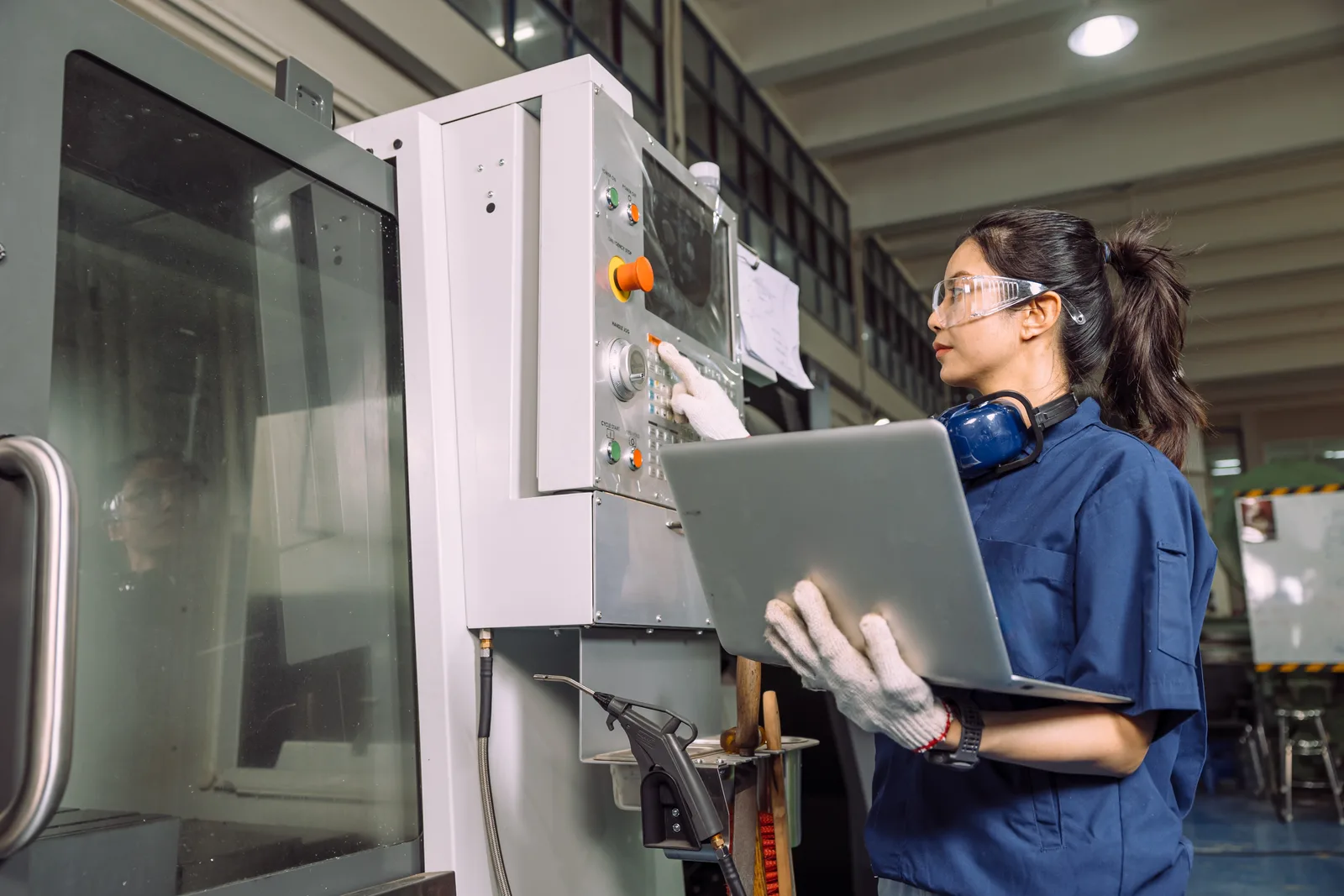

Louisiana manufacturers and the shops that serve them are who we insure here: fabricators and machine shops supporting energy and process industries, aerospace and defense suppliers, agribusiness and food processors, life-science and device companies, and logistics-driven manufacturers working through the state’s ports. When Louisiana fabrication happens around process plants, ship channels, and waterside terminals, that setting shapes both the liability and the property side of a program.
Three Louisiana rules carry most of the weight. Private employers are under federal OSHA jurisdiction, handled through the agency’s Baton Rouge Area Office, since Louisiana does not run its own plan. The Civil Code sets a two-year period in article 3493.1. And the Louisiana Products Liability Act makes its theories the exclusive basis for a manufacturer’s liability for damage caused by its products. On the environmental side, LDEQ handles air permits. Each of these gets its own section below.
What a Louisiana underwriter looks at
The raw material of a Louisiana quote is payroll by class, the values of machinery, tooling, buildings, and inventory, the end markets your products serve, and your claims history. End market decides most of the liability picture. A pressure-vessel component for a process plant, an aerospace part, a food ingredient, and a medical device each carry a different potential for harm, and the price reflects it.
Several Louisiana factors then weigh in. Energy and process-industry customers write detailed insurance terms into service and supply contracts, often including broad indemnity and additional-insured requirements. Fabricators working inside a customer’s plant carry on-site exposures that a shop-based program may not reach. The Products Liability Act channels claims against manufacturers into its own theories. Coastal and waterside sites face windstorm and flood questions on the property side. And whatever federal inspectors have found on your floor is read on comp and liability. We price from your operation, never a table; our article on machine shop and manufacturing insurance pricing covers the general drivers.
Contract terms with plant owners deserve particular attention. A fabricator or machine shop doing turnaround, maintenance, or installation work inside a refinery or chemical plant usually signs a master service agreement that shifts liability to the contractor, names the owner and its affiliates as additional insureds, and requires waivers of subrogation and primary coverage. Those promises must be backed by matching endorsements on the policy. We review each master service agreement before work begins, since a gap between the agreement and the policy can leave a contractor paying a claim it assumed was insured.
Energy, aerospace, agribusiness, life sciences, logistics
Louisiana Economic Development lists aerospace and defense, agribusiness, energy and process industries, life sciences, and logistics among the state’s industries. Each has its own insurance profile.
Energy and process-industry fabricators need programs built for on-site work, pollution exposure, and customer contracts that shift risk heavily. Aerospace and defense suppliers need general liability confirmed for aircraft and space products, which some forms exclude, and they face contract flow-downs. Logistics-driven manufacturers need transit and warehouse coverage that follows their goods through terminals.
Agribusiness and food processors fall under the U.S. Food and Drug Administration’s food rules: facility registration under 21 CFR Part 1, Subpart H and preventive controls for human food under 21 CFR Part 117. Life-science companies that make devices fall under the device rules, with registration and listing in 21 CFR 807.20 and quality systems in 21 CFR Part 820. For both, product recall coverage belongs near the top of the program, and manufacturers errors and omissions covers products that work safely but miss their promised performance. Precision equipment across these sectors makes equipment breakdown worth sizing carefully.
Waterside plants and yards bring a property question that inland plants rarely face. Buildings, cranes, and stock near a ship channel or bayou can be exposed to windstorm and storm surge, and standard property forms often apply separate windstorm deductibles and exclude flood. A fabricator that cannot run after a storm also loses the income from contracts it cannot fulfill. We review windstorm deductibles, flood options, and business income together, and we look at whether customer-owned equipment in the yard is covered while it is there.
Louisiana shops and federal OSHA
Louisiana is under federal OSHA jurisdiction, which covers most private sector workers in the state, and it has no OSHA-approved plan of its own. The agency’s Baton Rouge Area Office describes itself as the federal office covering private sector employers and workers in Louisiana, so a private shop or plant here works under federal standards.
On a fabrication floor, the federal rules that matter most are machine guarding under 29 CFR 1910.212 and hazardous-energy control under 29 CFR 1910.147. They reach plate rolls, beveling and burning tables, CNC equipment, and food processing lines. For crews working in a customer’s plant, lockout coordination with the owner’s own procedures is part of the job. Underwriters ask about guarding and lockout because those failures lead to the worst injuries, and our Louisiana submissions include your written programs.
Comp and employers liability in Louisiana
Louisiana workers compensation is written by private carriers in a competitive market. What a given employer pays turns on classification and loss history. Fabricators and welders, machinists, pipe fitters in the shop, food processing workers, device technicians, and office staff each fall into a different class, and payroll in the wrong one is corrected at audit.
Employers liability, inside the comp policy, answers lawsuits that grow out of workplace injuries, and we fit it to the general liability program so the two policies meet without a gap. Crews that work on or near navigable water may fall under federal maritime compensation laws that a standard comp policy does not address without endorsements, so we ask where your people actually work. The workers compensation page covers the basics, and our article on reducing comp costs lists what carriers credit. Louisiana companies with crews in Texas, Mississippi, or Arkansas should report that payroll by state.
Art. 3493.1 and the Products Liability Act
Louisiana’s Civil Code sets the period that governs many injury claims. Under La. Civ. Code art. 3493.1, the prescriptive period is two years. As in other states, the period generally runs from the injury, so a product can be in service for a long time before the clock starts.
The Louisiana Products Liability Act frames how a manufacturer can be held liable. La. R.S. 9:2800.52 states: “This Chapter establishes the exclusive theories of liability for manufacturers for damage caused by their products.” A claim against a Louisiana manufacturer for damage its product caused must therefore fit within the Act’s theories rather than a separate general theory of fault. For a manufacturer, that makes the Act the lens through which products claims are defended, and it makes documentation of design, testing, warnings, and the product’s condition at shipment especially valuable.
Products-completed operations coverage is what answers those claims, and it should stay continuous. Under an occurrence form, the policy active when the damage happened responds whenever the claim is filed; under a claims-made form, the policy active when the claim is first made responds, back to a retroactive date, so a new carrier or a sale calls for tail coverage. Our comparison of the forms explains the choice, and our note on three distinct products coverages separates liability, recall, and errors and omissions.
LDEQ air permits and pollution coverage
The Louisiana Department of Environmental Quality (LDEQ) is responsible for safeguarding air quality across the state, and its air permits establish the operating conditions, emission limits, and control requirements for a facility, including minor source general permits. Blasting and coating operations, welding fume systems, food processing equipment, and boilers are the usual reasons a Louisiana plant needs to check permit status before starting a project.
Pollution exposure is especially relevant for Louisiana fabricators working around process plants. General liability and property forms exclude most pollution, so a release during work in a customer’s plant, a coating spill at your own yard, or an emissions event generally needs a dedicated pollution or contractors pollution policy. Master service agreements frequently require it. Underwriters for manufacturing insurance accounts with coating or on-site work ask about LDEQ permits and pollution coverage together.
Here is how the Louisiana rules on this page, and the settings its fabricators work in, turn into program decisions.
Most Louisiana programs also carry commercial property with windstorm and flood terms reviewed carefully for waterside sites, and an umbrella sized to the limits process-plant owners, aerospace primes, and food buyers require.
Five Louisiana locations and their program effect
We write Louisiana shops and plants statewide. At each of these five verified locations, a named feature changes what the program needs. Three of the five are ports or ship-channel authorities, so cargo, waterside property, and maritime questions come up again and again below.
New Orleans
NASA’s Michoud Assembly Facility is in New Orleans. Shops supporting space and aerospace work there face customer quality and insurance requirements, and aircraft or space products coverage should be confirmed before accepting orders.
Lake Charles
The Port of Lake Charles, officially the Lake Charles Harbor and Terminal District, manages the Calcasieu Ship Channel. Fabricators serving plants along the channel need master service agreement review and pollution coverage for on-site work.
Shreveport
The Port of Caddo-Bossier and the City of Shreveport jointly reopened a fire station serving the port and residents of South Shreveport. Manufacturers at the port should note that fire protection near their site is part of how property underwriters view it.
Bossier City
The Cyber Innovation Center in Bossier City anchors the National Cyber Research Park. Technology manufacturers there may carry design and software exposures that call for errors and omissions coverage alongside products liability.
New Iberia
The Port of Iberia in New Iberia is an industrial and manufacturing site with companies in oil and gas fabrication and production, materials handling, and marine services. Waterside fabricators there need vessel-in-care, maritime comp, and pollution questions answered together.
Louisiana is one of 48 states where we hold a producer license. Companies with sites across state lines can also read our pages for Texas, Mississippi, and Arkansas, or see the whole state list.
Shop work, plant work, or your own products
Louisiana fabricators often do three kinds of work: shop fabrication to a customer’s drawing, on-site work inside customers’ plants, and sometimes products sold under their own name. The first is covered on our page on machine shop insurance, built around equipment, tooling, and floor exposures. The third is covered on our page on manufacturing insurance, which puts products liability, recall, and errors and omissions first. On-site work sits between them and needs its own look for contractual liability and pollution. We write all three into one program when a company does them together. Keeping them separate on the application matters, because shop fabrication, on-site work, and product sales are each rated on a different basis, and a carrier that cannot see the split will often apply the most expensive basis to all of it.
Louisiana fabricators and manufacturers ask
Does Louisiana have a state OSHA program for private shops?
No. Louisiana has no OSHA-approved plan for private employers, so federal OSHA holds jurisdiction, working through its Baton Rouge Area Office. The federal machine guarding and lockout standards therefore apply in your shop and to crews working inside customers’ plants, and carriers ask to see your written programs for both before they quote comp or liability.
What limitation period applies to a Louisiana injury claim?
La. Civ. Code art. 3493.1 sets a two-year prescriptive period for these claims. The period generally runs from the injury, not from the date of sale, and a product can be in service for years before an injury happens, so manufacturers should keep products-completed operations coverage continuous and change policy forms only with a plan for continuity.
How does the Louisiana Products Liability Act affect a manufacturer?
La. R.S. 9:2800.52 states that the Act establishes the exclusive theories of liability for manufacturers for damage caused by their products. Claims against a manufacturer must fit within those theories. That makes documentation of design, testing, warnings, and shipped condition central to the defense, and products-completed operations coverage central to the program.
Why do Louisiana fabricators need contractors pollution coverage?
Because work inside refineries and chemical plants can cause or worsen a release, and general liability and property forms exclude most pollution. Master service agreements often require the contractor to carry pollution coverage and to name the owner as an additional insured. We place that coverage and match its endorsements to the agreement.
Do waterside crews need different comp coverage?
Often. Employees who work on or near navigable water, including at shipyards and terminals, may fall under federal maritime compensation laws that a standard state comp policy does not cover without endorsements. We review where your crews work, in the shop, at a terminal, or aboard a vessel, and arrange the right coverage before a claim ever tests it.
Can a Louisiana plant buy comp in a private market?
Yes. Private insurance carriers write Louisiana comp in a competitive market. Premium depends on how payroll is classified and on your claims record. We check that fabricators, welders, machinists, food processing workers, device technicians, and office staff are each in the right class, and we coordinate employers liability with general liability.
Get a Louisiana fabrication or manufacturing quote
Tell us what your Louisiana operation builds, where your crews work, and which contracts set your insurance terms, and we will take it to carriers that write the class.