
States we serve · Mississippi
Machine Shop and Manufacturing Insurance in Mississippi
For Mississippi shipbuilders and marine fabricators, aerospace and defense suppliers, automotive manufacturers, and the machine shops that support them statewide.
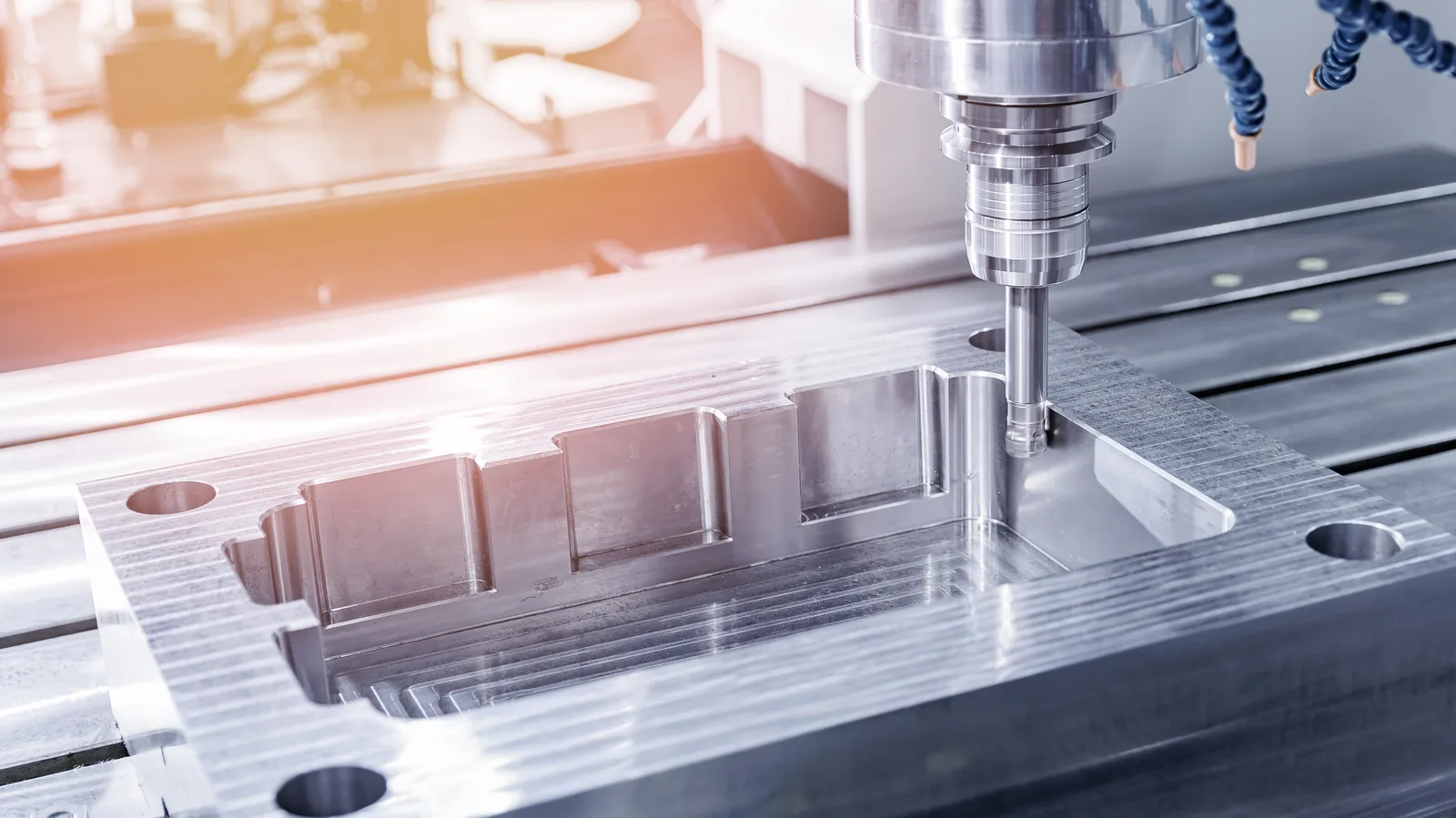

Mississippi machine shops, metal fabricators, and manufacturers are the businesses we insure here: shipbuilders and marine-equipment suppliers on the coast, aerospace and defense contractors, automotive plants and their suppliers, and the contract machinists and welders that support them. Much of this work involves large structures, heavy steel, and customers with detailed contract requirements, and the program has to reflect all three.
Mississippi law adds three rules to the picture. Private employers are under federal OSHA jurisdiction, with an area office in Jackson, because the state does not operate its own plan. Miss. Code Ann. § 15-1-49(1) sets a three-year general period for actions with no other prescribed limitation period. And § 11-1-63(h) states an intent to immunize innocent sellers who are not actively negligent but are mere conduits of a product. Air permits come from the Mississippi Department of Environmental Quality. The sections that follow take the three rules one at a time.
What sets a Mississippi manufacturer’s premium
The starting point is the same as anywhere: payroll by class, the values of machinery, tooling, buildings, and stock, where your products end up, and your claims history. What a product becomes matters most on the liability side. A hull section, an aerospace fitting, an automotive component, and a structural weldment each carry a different kind of products exposure, because a failure in each causes a different kind of harm.
Several Mississippi factors then adjust the result. Shipbuilding and marine work involves vessels owned by others, waterside operations, and in some cases maritime employment questions that fall outside standard forms. Aerospace, defense, and automotive customers impose detailed contract terms. The innocent-seller statute tends to leave manufacturers, rather than distributors, as the defendants in products claims. And whatever federal inspectors have found on your floor is read on both comp and liability. We quote from what you actually do, not a rate schedule; our guide to machine shop and manufacturing premiums explains the factors common to every state.
Maritime work deserves a specific note. Employees who work on or near navigable water, such as those building or repairing vessels, can fall under federal maritime compensation laws rather than, or in addition to, state workers compensation. A standard comp policy may not respond to those claims without the right endorsements. We ask detailed questions about where your people work, on land, at a shipyard, or aboard a vessel, and we arrange the coverage that fits before a claim tests it.
Subcontracting inside a shipyard or a large plant is another Mississippi pattern. A fabricator or machine shop working on a customer’s premises is usually asked to sign an access or subcontract agreement with indemnity terms, additional-insured requirements, and waivers of subrogation, sometimes reaching to the customer’s affiliates and the vessel owner. Those agreements shift liability onto the subcontractor’s policy, and the endorsements have to match them. We read each agreement before work begins and adjust the policy, rather than learning after an incident that a certificate promised more than the policy delivers.
Advanced manufacturing, aerospace, automotive, and shipbuilding
The Mississippi Development Authority lists advanced manufacturing, aerospace and defense, and automotive among the state’s key industries, and it points to Mississippi’s strengths in maritime industries such as shipbuilding. Each of those shapes a program differently.
Shipbuilders and marine fabricators carry the care, custody, and control question: damage to a customer’s vessel while it is in the yard may fall outside a standard liability form, and ship repairers often need specialized coverage for that exposure. Aerospace and defense contractors need their general liability confirmed for aircraft products and carry contract flow-downs with high limits. Automotive suppliers face customer terms that assign recall costs, which is where product recall coverage comes in.
Advanced manufacturers concentrate value in automated equipment and controls, so equipment breakdown and business income need careful sizing. Across these sectors, a product that meets its drawing but cannot perform the job it was sold for creates an economic claim rather than an injury, and manufacturers errors and omissions is designed for it. Machine shops supplying any of these customers inherit the customer’s requirements, which is why we begin by asking who you ship to.
Automotive work brings a Mississippi supplier into a tiered chain in which the vehicle maker’s requirements reach smaller shops through their direct customers. Those terms can include recall cost-sharing, warranty chargebacks, and certificates naming several companies up the chain. Recall cost-sharing is a contractual obligation, not an injury claim, so general liability does not answer it; recall coverage written to respond to that obligation can. We read the flow-down terms and set the recall limit with the volume of parts you ship into a single vehicle program in mind.
Private Mississippi employers and federal OSHA
Mississippi is under federal OSHA jurisdiction, which covers most private sector workers in the state, and it has no OSHA-approved plan of its own. The agency’s Jackson Area Office handles Mississippi, so a private shop, yard, or plant here works under federal standards and federal inspection.
Two federal standards shape most machine-floor inspections: 29 CFR 1910.212 on machine guarding and 29 CFR 1910.147 on hazardous-energy control during service and maintenance. They reach plate-processing and burning tables, press brakes, robotic welding cells, and automotive assembly equipment. Carriers ask about both because failures there cause the most serious injuries, and we send your written programs with every Mississippi submission.
Buying comp for a Mississippi operation
Mississippi workers compensation is written by private carriers in a competitive market. The premium for a given employer depends on how payroll is classified and on its claims record. Shipfitters and welders, machinists, assemblers, aerospace technicians, and office staff are each rated differently, and payroll in the wrong class is reassigned at audit.
The employers liability section responds when a workplace injury leads to a lawsuit, and we fit it to the general liability program. The workers compensation page explains classification and audits, and our article on reducing manufacturing workers comp costs covers the controls carriers credit. Mississippi companies with crews in Alabama, Louisiana, Tennessee, or Arkansas should report that payroll by state.
Mississippi’s three-year period and innocent sellers
Mississippi’s general limitation period is set by Miss. Code Ann. § 15-1-49(1): “All actions for which no other period of limitation is prescribed shall be commenced within three (3) years next after the cause of such action accrued, and not after.” That qualifier is part of the rule: § 15-1-49(1) is the general period for actions with no other prescribed limitation period. The Supreme Court of Mississippi quoted it in Kelly v. Ocwen Loan Servicing.
Mississippi’s product liability statute also addresses sellers who did not create a defect. As the Supreme Court of Mississippi quoted in Sunshine Mills, Inc. v. Nutra-Blend, LLC, Miss. Code Ann. § 11-1-63(h) states: “It is the intent of this section to immunize innocent sellers who are not actively negligent, but instead are mere conduits of a product.” A distributor or retailer that simply passed a product along is therefore in a very different position from the manufacturer that made it.
For a Mississippi manufacturer, the result is that products claims tend to stay with the maker, and products-completed operations coverage carries the weight. Because a product can cause harm long after it ships, that coverage should remain continuous. Under an occurrence form, the policy in force when the injury happened answers the claim whenever it is brought; under a claims-made form, the policy in force when the claim is first reported answers, back to a retroactive date, so a change of carrier or a sale needs tail coverage. See our comparison of occurrence and claims-made forms, and our note on additional-insured status for how distributors are protected under your policy.
MDEQ air construction and operating permits
Air permits in Mississippi come from the Mississippi Department of Environmental Quality (MDEQ), whose Environmental Permits Division issues air construction permits, including Prevention of Significant Deterioration and other construction permits, and air operating permits, including Title V, synthetic minor, and significant minor permits. MDEQ notes that its Air II Branch administers air permitting actions related to metal and metal fabricators, which makes it the branch most Mississippi machine shops and fabricators deal with. Blasting and painting operations, galvanizing, and welding fume systems are the usual reasons to check before a project starts.
A permit does not insure a release. General liability and property forms exclude most pollution, so a paint or coating spill, a release to a waterway, or an emissions event from your own process generally needs a dedicated pollution or environmental policy. For waterside yards, that coverage is often part of the core program. Underwriters for manufacturing insurance accounts with blasting and coating work ask about MDEQ permits directly.
The Mississippi rules and sectors on this page line up with program decisions as follows.
Most Mississippi programs also carry commercial property for buildings, machinery, and stock, with attention to windstorm terms for coastal sites, and an umbrella for the higher limits defense, aerospace, and automotive customers require.
Three Mississippi locations we write
We insure Mississippi shops, yards, and plants statewide. Three verified locations are listed below; each carries a named feature that changes something in the program.
- Gulfport. The Port of Gulfport is based in Gulfport, which is also home to the Wicker Center for Ocean Enterprise. Marine and ocean-technology manufacturers there need cargo terms for shipments through the port and coverage that fits work done on or near the water.
- Pascagoula. The Jackson County Port Authority operates industrial water systems serving the county’s industrial base, and current occupants of the former Naval Station Pascagoula site include Ingalls Shipbuilding. Suppliers to shipbuilding need contract terms, maritime comp, and vessel-in-care coverage reviewed together.
- Tupelo. The CDF SELECT Building Program offers industrial space to growing companies in Lee County, and CDF serves as the chamber of commerce for Tupelo. A manufacturer moving into a new or expanded building should update property values and business income limits before the move.
Our Mississippi license is one of 48 state licenses we hold. Companies with operations across state lines can also see our pages for Alabama, Louisiana, Tennessee, and Arkansas, or browse every state we write.
Fabricating to spec or building your own line
Mississippi operations span pure contract fabrication and full product lines. Shops that cut, machine, or assemble to a customer’s specification should start with our page on machine shop insurance, which focuses on equipment, tooling, and floor exposures. Welding and fabrication shops have a separate page on welding shop insurance for their hot-work and installation exposures. Companies that design and sell vessels, equipment, or components under their own name should start with our page on manufacturing insurance, where products liability, recall, and errors and omissions carry more weight. Operations that do both are written as a single program with each side rated on its own basis. Where a Mississippi fabricator also installs what it builds, on a vessel, in a plant, or at a customer’s site, the installation work is a third element with its own liability and property questions, and we make sure the program covers it rather than assuming the shop policy reaches it.
Mississippi manufacturers and fabricators ask
Does a state agency inspect private Mississippi shops?
No. Mississippi is under federal OSHA jurisdiction, which covers most private sector workers in the state, and it has no OSHA-approved plan of its own. The Jackson Area Office handles Mississippi. The federal guarding and hazardous-energy control standards apply on your floor, and carriers ask to see written programs for both before pricing comp and liability.
What limitation period applies to a Mississippi claim?
Miss. Code Ann. § 15-1-49(1) provides that all actions for which no other period of limitation is prescribed must be commenced within three (3) years after the cause of action accrued. It is the general catch-all period. Because product claims can arrive long after a sale, manufacturers should keep products-completed operations coverage continuous.
Are Mississippi distributors protected from product claims?
Innocent ones largely are. Miss. Code Ann. § 11-1-63(h) states that it is the intent of the section to immunize innocent sellers who are not actively negligent but are mere conduits of a product. Claims therefore tend to stay with the manufacturer, which is why its products-completed operations limits and vendors endorsements matter.
Why does a shipyard need more than standard coverage?
Because damage to a customer’s vessel while it is in your care can fall outside a standard liability form, and employees working on or near navigable water may fall under federal maritime compensation laws that standard comp does not cover without endorsements. We review where your people work and what property you hold before placing coverage.
Who issues air permits to Mississippi metal fabricators?
The Mississippi Department of Environmental Quality, through its Environmental Permits Division. MDEQ notes that its Air II Branch administers air permitting actions related to metal and metal fabricators. Blasting, painting, and galvanizing are common reasons to check. Since general liability and property exclude most pollution, a release also needs a separate pollution policy.
Do private carriers write Mississippi comp?
Yes, for land-based work in a competitive market. Premium depends on classification and claims history. We check that shipfitters, welders, machinists, assemblers, and office staff are each in the right class, and we look separately at maritime exposures, since employees working on or near navigable water may need coverage a standard comp policy does not provide.
Request a Mississippi shipyard, fabrication, or plant quote
Tell us what your Mississippi operation builds, where your people work, and who buys the result, and we will take it to carriers that write the class.