
States we serve · Georgia
Machine Shop and Manufacturing Insurance in Georgia
For Georgia aerospace, automotive and EV, life-science, and food-processing manufacturers, and the machine shops and fabricators that supply them statewide.
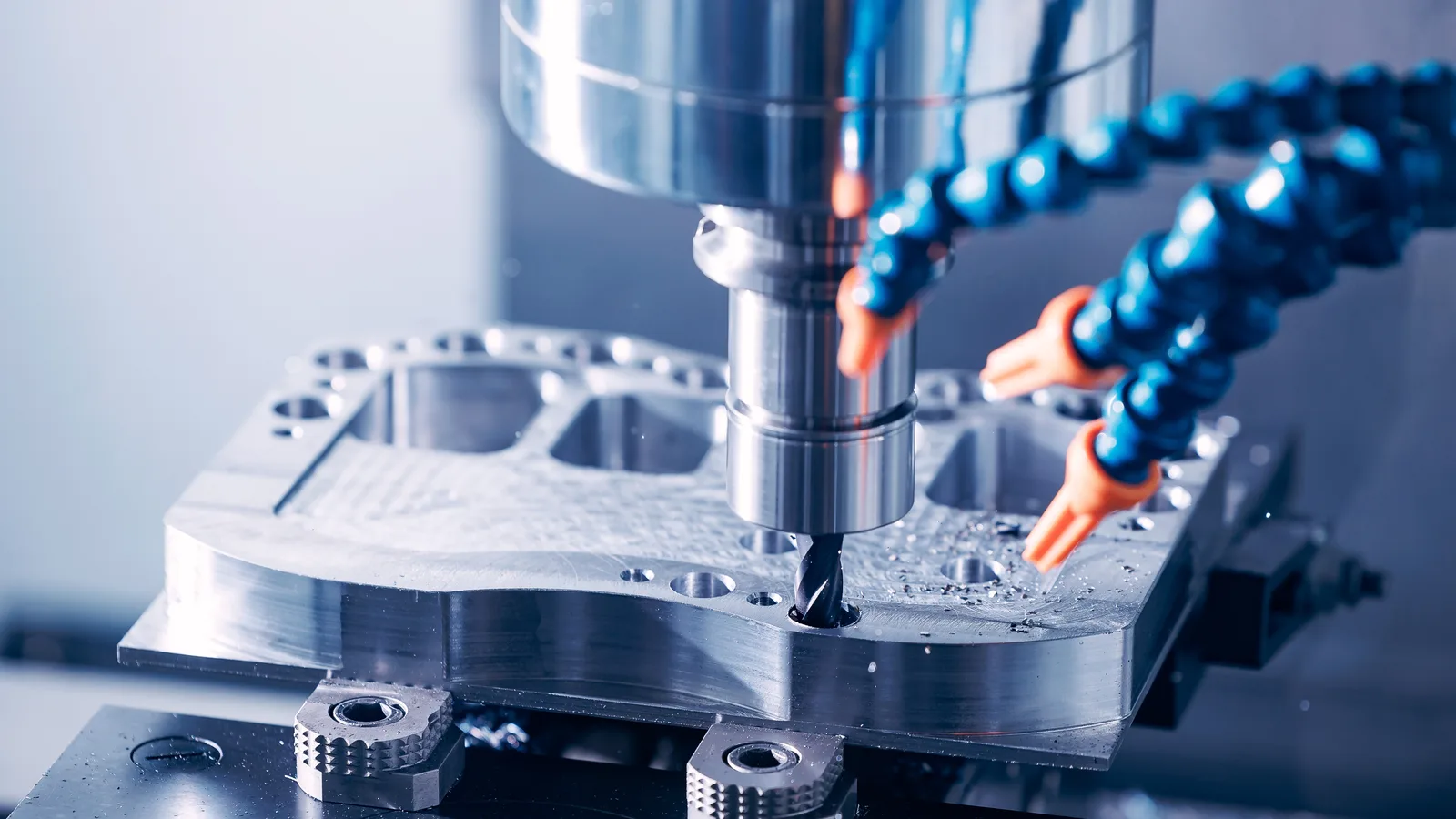

We write Georgia manufacturers of many kinds: aerospace component makers, automotive and electric-vehicle suppliers, life-science and device companies, food processors and agribusiness plants, and the contract machine shops, fabricators, and welders that serve them. Georgia’s port system links many of these operations to customers and suppliers overseas, and the route a shipment takes can matter as much to the program as the machine that made it.
Georgia brings three rules to that program. Private employers fall under federal OSHA jurisdiction, with area offices including Atlanta East and Atlanta West, because the state does not operate its own plan. Strict-liability product actions face a ten-year repose period under O.C.G.A. § 51-1-11(b)(2), running from the first sale of the product as new to its end user. And the Environmental Protection Division’s Air Protection Branch issues air quality construction permits. Each has a section below, tied to the coverage it affects.
Building a Georgia premium
An underwriter pricing a Georgia account starts with payroll by class, the values of machinery, tooling, buildings, and stock, the end markets your products reach, and your claims history. End market carries most of the liability weight. An aerostructure bracket, a battery component, a medical instrument, and a processed food each carry a different potential for harm, and the price follows.
From there, Georgia specifics push the price in one direction or another. Aerospace and automotive customers write insurance terms into purchase orders, including products limits, additional-insured wording, recall responsibility, and umbrella limits. Life-science and food producers operate under federal oversight that makes recall coverage essential. The ten-year repose period applies to strict-liability actions and runs from the first sale of a product as new to its end user, which affects how long older products stay exposed. And whatever federal inspectors have recorded on your floor is part of what comp and liability underwriters read. We quote from your operation, not a table; our article on machine shop and manufacturing insurance cost factors explains the drivers every state shares.
Battery and EV work raises its own Georgia questions. Manufacturers and suppliers handling cells, modules, or packs concentrate fire exposure in storage and production areas, and they sell into customers whose recall and warranty terms can be demanding. Underwriters look at storage separation, fire detection and suppression, and the handling of damaged or defective cells. A plant that documents those controls, and whose contracts are reviewed for recall cost-sharing, is in a far stronger position when it goes to market.
Port-linked supply chains add a further Georgia layer. Components that arrive through Savannah or Brunswick, or move by rail to an inland port, pass through several hands before they reach the plant, and a loss in transit can stop a line as effectively as a fire. We look at who carries the risk of loss at each handoff under your purchase terms, set cargo and inland marine limits to match the value of a typical shipment, and consider contingent business income where a single import source feeds a critical product.
Five Georgia industries and what each needs
The Georgia Department of Economic Development lists aerospace, agribusiness and food processing, automotive and EV, life sciences, and manufacturing among Georgia’s industries. The five share a floor-safety baseline but little else when it comes to insurance.
Aerospace suppliers need their general liability confirmed for aircraft products, which some forms exclude, and sometimes dedicated aviation products coverage. Automotive and EV suppliers need products coverage that fits their customers’ terms and often product recall coverage for contractual cost-sharing. General manufacturers carry the classic floor exposures of cutting, forming, and welding, where workers compensation and equipment breakdown matter most.
Food-processing and agribusiness plants fall under the federal food rules. The U.S. Food and Drug Administration registers facilities that manufacture or process food under 21 CFR Part 1, Subpart H, and its preventive-controls rule for human food is 21 CFR Part 117. Life-science companies that make devices fall under the agency’s device rules instead, with establishment registration and device listing in 21 CFR 807.20 and quality systems in 21 CFR Part 820. In both cases, recall coverage belongs near the top of the program, and manufacturers errors and omissions covers products that work safely but miss their promised performance. A contract shop supplying any of these customers inherits their terms, so we start with who buys from you.
Georgia shop floors and federal inspectors
Georgia private employers are under federal OSHA jurisdiction, which covers most private sector workers in the state, and Georgia does not run an OSHA-approved plan of its own. The agency’s Georgia area office listing includes the Atlanta East and Atlanta West Area Offices, and federal inspectors from offices like these visit private shops and plants.
On a Georgia machine or processing floor, the federal rules that matter most are machine guarding under 29 CFR 1910.212 and hazardous-energy control under 29 CFR 1910.147. They reach stamping and welding lines, battery assembly, food processing equipment, and CNC cells. Because guarding and lockout failures lie behind the most serious injuries, our Georgia submissions include your written programs and any citation history.
Georgia comp from private insurers
Georgia workers compensation is written by private insurers in a competitive market. Price follows how payroll is classified and how claims have run. Assemblers, welders, machinists, food production workers, battery production workers, and office staff are each rated in their own class, and an auditor who finds payroll in the wrong class moves it, with the bill following.
The employers liability section of the comp policy responds when a workplace injury leads to a lawsuit, and we align it with the general liability program. The workers compensation page covers classes and audits, and our guide to lowering comp costs lists the practices carriers reward. Georgia companies with employees working in Alabama, South Carolina, Tennessee, or Florida should report that payroll by state.
Georgia’s ten-year strict-liability repose
Georgia’s product repose rule is in O.C.G.A. § 51-1-11(b)(2): “No action shall be commenced pursuant to this subsection with respect to an injury after ten years from the date of the first sale for use or consumption of the personal property causing or otherwise bringing about the injury.” The Supreme Court of Georgia quoted and applied that provision in Burroughs v. Strength of Nature Global, LLC.
The qualifier on this rule matters. The ten-year repose applies to strict-liability actions under § 51-1-11(b), and it runs from the first sale of the product as new to its end user. Because it runs from the first sale as new to an end user, the date that matters is the sale to the person who will use the product, not the date it left your plant. And because the rule is tied to strict-liability actions under that subsection, it should not be read as ending every kind of claim a product can bring.
For a Georgia manufacturer, that points to three practical steps. Keep records of when products are first sold as new to end users, since the repose runs from those dates. Keep products-completed operations coverage continuous, since products still being sold are still inside the period. And choose the policy form deliberately: an occurrence policy pays for injuries that happened during its term whenever the claim comes, while a claims-made policy pays for claims first reported during its term back to a retroactive date, so a change of carrier or a sale calls for tail coverage. Our comparison of occurrence and claims-made forms walks through the choice, and products liability versus general liability explains how the coverage fits together.
EPD air quality construction permits
The Georgia Environmental Protection Division (EPD) runs the Air Protection Branch, which regulates air pollution from factories, power plants, and vehicles and handles air quality construction permit applications. Paint and coating lines, battery manufacturing processes, food processing dryers and fryers, and boilers are the usual reasons a Georgia plant needs to check permit status before installing new equipment.
An EPD permit does not insure a release. General liability and property forms exclude most pollution, so a spill, a release to a storm drain, or an emissions event from your own process generally needs a dedicated pollution or environmental policy placed alongside the rest of the program. Underwriters for manufacturing insurance accounts with finishing or process equipment ask about EPD permits, and documented answers help.
The Georgia rules and industries on this page, and the decisions they drive, are summarized below.
Most Georgia programs also carry commercial property for buildings, machinery, and inventory, including goods waiting at a port or inland terminal, and an umbrella for the higher limits aerospace, automotive, and food customers require.
Georgia ports and terminals in the program
We place Georgia shops and plants statewide. Each of these four locations is part of the state’s port network or its manufacturing development, and each changes something in the program. Three are run by the Georgia Ports Authority, so cargo handoffs and the risk of loss at each terminal come up repeatedly.
Savannah
The Savannah Economic Development Authority promotes its Savannah Chatham Manufacturing Center alongside the Port of Savannah’s global carrier network. Manufacturers there that import components or export finished goods need cargo terms that follow each shipment and property limits for goods at the terminal.
Gainesville
The Gainesville Inland Port links Gainesville to the Port of Savannah by Norfolk Southern rail. Plants using it should confirm who bears the risk of loss while containers move between the inland port and the seaport.
Bainbridge
The Georgia Ports Authority owns and operates the Bainbridge terminal on the Apalachicola-Chattahoochee-Flint Waterway. Manufacturers shipping bulk goods through it need marine cargo terms matched to barge movements.
Brunswick
The Port of Brunswick is part of the Georgia Ports Authority system. Equipment and vehicle manufacturers moving large units through it should schedule goods in transit on inland marine or cargo coverage rather than rely on property coverage at the plant.
Georgia is one of the 48 states in which we place coverage under license. Companies with sites across state lines can also read our pages for Alabama, South Carolina, North Carolina, Tennessee, and Florida, or open the state directory.
Building parts or building products
Georgia companies divide between those making parts to someone else’s drawing and those selling products under their own name. For the first group, our page on machine shop insurance covers the tooling, equipment, and contract exposures of work to print. For the second, our page on manufacturing insurance goes deeper into products liability, recall, and errors and omissions. When a Georgia business does both, one program covers it, with each side rated on the basis that fits. The repose rule adds one Georgia-specific reason to keep those sides distinct: sales records for your own branded products establish when each product first reached an end user, while contract parts often reach the end user through someone else’s product, and knowing which is which makes the rule easier to apply when a claim arrives.
Georgia shop and plant owners ask us
Is a Georgia plant inspected by federal OSHA?
Yes. Georgia is under federal OSHA jurisdiction, which covers most private sector workers in the state, and it does not operate an OSHA-approved plan. Area offices such as Atlanta East and Atlanta West handle inspections. The federal machine guarding and hazardous-energy control standards apply, and carriers ask to see your programs for both before pricing.
How long can a strict-liability product claim be brought in Georgia?
O.C.G.A. § 51-1-11(b)(2) bars actions under that subsection for an injury after ten years from the date of the first sale for use or consumption of the product. The repose applies to strict-liability actions under § 51-1-11(b) and runs from the first sale of the product as new to its end user.
When does the Georgia repose period start running?
From the first sale of the product as new to its end user, according to the stored qualifier on O.C.G.A. § 51-1-11(b)(2). The date that matters is the sale to the person who will use it, not when it left your plant or first went to a distributor. Keeping records of those dates, and keeping products coverage continuous, both follow.
Does a Georgia food processor need recall coverage?
It should consider it closely. Under FDA rules, a food facility registers through 21 CFR Part 1, Subpart H, and follows the Part 117 preventive-controls rule for human food. A contamination or labeling problem can force product off shelves with no injury, and general liability does not pay to retrieve it. Product recall coverage does, and many buyers expect it.
Which Georgia agency handles air construction permits?
The Environmental Protection Division, through its Air Protection Branch, which regulates air pollution from factories and handles air quality construction permit applications. Paint lines, battery processes, and food processing equipment are common reasons to check. General liability and property exclude most pollution, so a release from those processes also calls for a separate pollution policy.
Is Georgia comp written by private insurers or a state fund?
Private insurers write it, in a competitive market; Georgia has no state fund monopoly on comp. The premium depends on how payroll is classified and on your claims history. We check that assemblers, welders, machinists, food and battery production workers, and office staff are each in the right class, and we keep the employers liability section aligned with your general liability program.
Sources
- OSHA — Georgia area offices
- Supreme Court of Georgia — Burroughs v. Strength of Nature Global (O.C.G.A. § 51-1-11(b)(2))
- Georgia EPD — Air Protection Branch forms and permits
- Georgia Department of Economic Development — Industries
- Savannah Economic Development Authority
- Georgia Ports Authority — Inland ports
Get a Georgia manufacturing or machine shop quote started
Tell us what your Georgia operation makes, how it moves through the ports, and who buys it, and we will take it to carriers that write your class.