States we serve · Michigan
Machine Shop and Manufacturing Insurance in Michigan
Coverage for Michigan job shops, tool-and-die makers, fabricators, and own-product manufacturers — written to MIOSHA, a private comp market, and a products-liability clock that runs on state law.
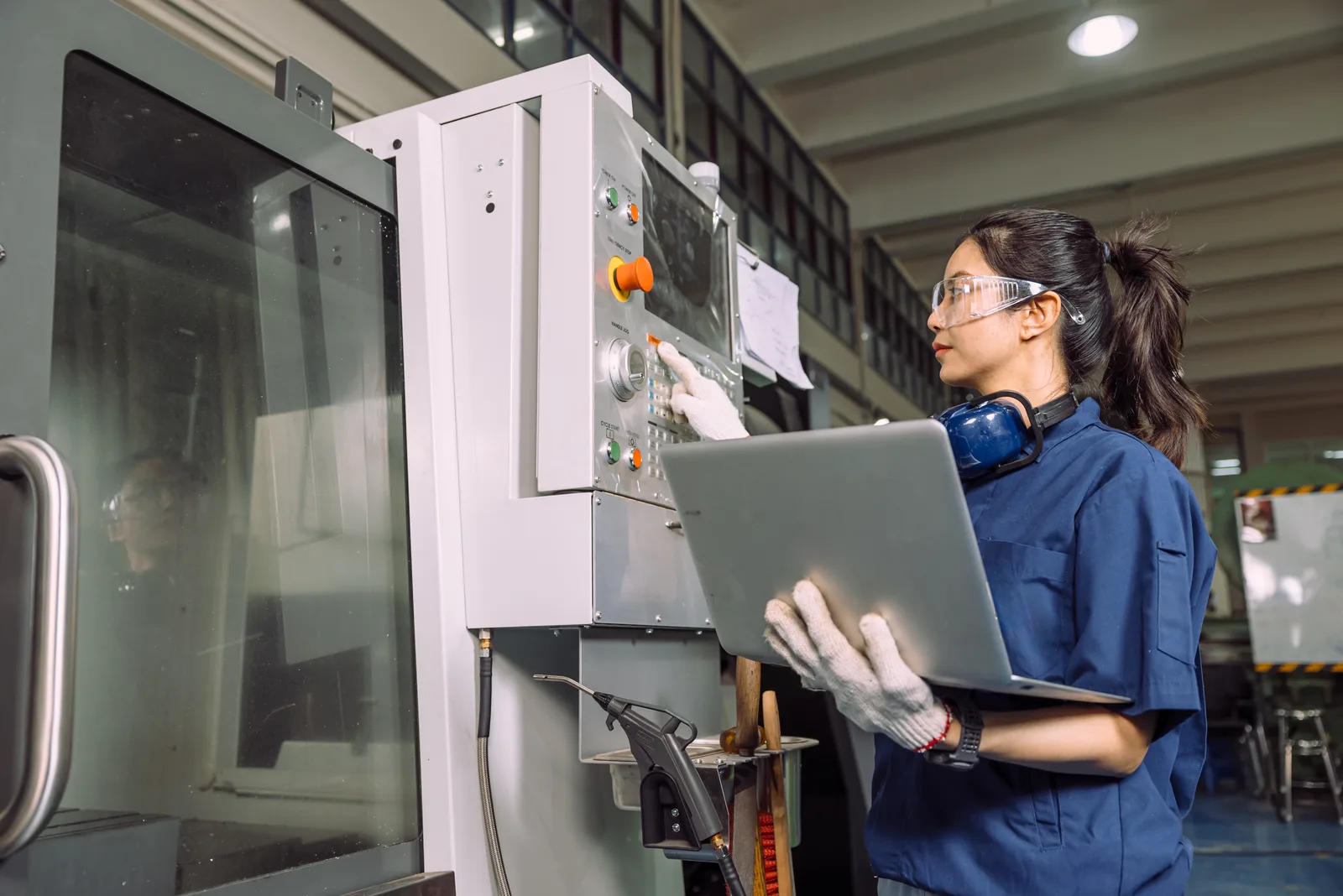

Machine Guard Insurance writes machine shop and manufacturing insurance for Michigan operations of every shape: contract CNC and tool-and-die shops that machine to a customer’s print, fabricators, and companies that design, build, and sell their own products. A Michigan program usually starts with general liability carrying products-completed operations, then adds property, equipment breakdown, workers compensation, product recall, and manufacturers errors and omissions, weighted to what your floor actually makes.
What changes from state to state is the rulebook around that stack. In Michigan the floor answers to MIOSHA instead of federal OSHA, workers compensation is bought from private carriers under the Workers’ Disability Compensation Agency, a products claim runs on the limitation period in MCL 600.5805(12), and air permits come from EGLE. Each section below takes one of those and ties it to the coverage it moves.
How Michigan’s rules move a shop’s premium
Underwriters build a Michigan price from the same raw material they use anywhere — payroll by operator class, the end use of the parts or products you ship, equipment values, building and stock values, and loss history. Several Michigan specifics sit on top of that. Because private carriers compete for workers compensation here, your own classifications and claims record drive the comp price more than any state rate table. Your MIOSHA inspection history is part of the file a carrier reads: a clean record on guarding and energy control supports both comp and general liability pricing, and open citations invite questions. The state’s products-liability limitation period and its proof rule for older products shape how long a product line stays exposed. And customers in the automotive supply chain commonly set insurance requirements in their supplier terms — additional-insured status, products limits, and umbrella limits — that fix the floor of the program before price is discussed.
No published rate applies to your shop, and we quote from your operation rather than a class average. For the drivers that apply in every state, read our guide to what drives machine shop and manufacturing insurance cost; the rest of this page covers the parts that are specific to Michigan.
Michigan’s manufacturing base, sector by sector
The Michigan Economic Development Corporation lists the state’s core industries as mobility and automotive manufacturing, advanced manufacturing, life sciences and medical devices, semiconductor, defense, aerospace, and engineering, design, and development. Each of those pulls a Michigan program in a different direction.
Mobility and automotive suppliers live and die by their customers’ contract terms, so the products-completed operations limit, the additional-insured wording, and product recall coverage tend to be set by the buyer. Medical-device makers answer to the U.S. Food and Drug Administration under 21 CFR Part 807 and Part 820, which puts recall and products exposure at the center of the stack. Defense and aerospace work brings contract flow-downs that often require higher limits and careful certificate wording. Semiconductor and advanced-manufacturing plants concentrate value in equipment and controlled process environments, where equipment breakdown and the income lost while a line is down usually matter more than the building. A contract machine shop feeding any of these sectors inherits its customer’s requirements, which is why we ask who you ship to before we ask how big you are.
MIOSHA sets the safety rules on a Michigan floor
Michigan runs its own OSHA-approved State Plan. Federal OSHA’s Michigan State Plan page confirms that the plan applies to private-sector workplaces, so a Michigan shop is inspected and cited by the Michigan Occupational Safety and Health Administration (MIOSHA), part of the Michigan Department of Labor and Economic Opportunity, rather than by a federal area office. State plans must be at least as effective as OSHA, which is why the federal baselines for a machine floor still frame the conversation: general machine guarding under 29 CFR 1910.212 and the control of hazardous energy, lockout/tagout, under 29 CFR 1910.147.
For insurance the point is practical. Point-of-operation guarding on presses, shears, and lathes, and a written lockout procedure for die changes and maintenance, are where the most serious floor injuries begin, and amputation and crush claims shape a workers compensation record for years afterward. Carriers ask about guarding and lockout on the application, so we ask first, and we present a shop’s safety program as part of the submission rather than leaving the underwriter to guess.
Workers compensation in Michigan’s private market
Michigan employers buy workers compensation from private insurance carriers, and the Workers’ Disability Compensation Agency in the Department of Labor and Economic Opportunity administers the system and the filings those carriers make. For a manufacturer that makes comp a priced, competitive line. Machine operators, welders, assemblers, and office staff each carry their own classification, and your loss history adjusts the result, so the same payroll can price very differently from one shop to the next.
We keep classifications honest to how people actually work, because a machinist booked under the wrong code costs money at the premium audit, and we coordinate comp with employers liability so an injury that turns into a lawsuit still has a policy behind it. The workers compensation coverage page walks through the mechanics; shops that also run plants in Ohio can compare how comp is bought there before assuming the Michigan answer carries over.
Products liability and Michigan’s limitation period
Michigan puts a products liability action on a clock. Under MCL 600.5805(12), the period of limitations is 3 years for a products liability action. The same subsection adds a rule for older products: for a product in use not less than 10 years, the plaintiff proves a prima facie case without the benefit of any presumption. That section states no fixed cut-off measured from the date of sale, so it limits the time to sue without saying how long a part may stay in service.
Two things follow for a shop. First, the exposure follows the product, not the invoice: a bracket you machine this year can be assembled into someone else’s product, sold again, and fail long after it leaves your dock. Second, the way your general liability is triggered decides which policy answers. An occurrence form responds under the policy in force when the injury or damage happened, which protects you after you change carriers or close a product line. A claims-made form responds to claims first made while it is in force, subject to its retroactive date, so switching carriers, selling the business, or winding down needs continuous coverage or an extended reporting period. We compare the two for every Michigan manufacturer, because the difference only shows when a claim arrives — our article on occurrence versus claims-made for manufacturers covers it in depth.
EGLE air permits and where pollution coverage fits
Environmental permits for Michigan manufacturers come from the Michigan Department of Environment, Great Lakes, and Energy (EGLE). On air, Rule 201 of the Michigan Air Pollution Control Rules requires an approved Permit to Install for any potential source of air pollution unless the source is exempt. Coating, degreasing, and finishing processes are where a shop most often has to ask whether it needs one, and the answer belongs in your file before a new line starts running.
Permit status matters to insurance because general liability and property both exclude most pollution. A solvent release, a spill to a storm drain, or an emissions problem from your own process generally falls outside those forms and is handled by a separate pollution or environmental policy, which we can place alongside the rest of the program. Underwriters for manufacturers with finishing operations ask about permits directly, and a clean answer shortens the conversation.
Michigan floor risks and the lines that answer them
The diagram maps the four exposures behind the claims we see most often on Michigan files to the coverage that responds. A part that fails after it ships lands on general liability products-completed operations; pulling it back lands on product recall; a press or CNC cell that fails from the inside lands on equipment breakdown; and a hand caught in an unguarded machine lands on workers compensation.
Those four carry most of the weight, but they are not the whole program. A part that meets the drawing and still fails the customer’s purpose is a financial loss rather than an injury, and it belongs to manufacturers errors and omissions. The building, the stock, and the tooling belong to commercial property. And the limits above the primary policies — the ones an automotive or defense customer writes into a purchase order — sit on an umbrella.
Where we write in Michigan
We place shops and plants across the state. These are the Michigan markets where a named local feature changes what the program needs.
Detroit
The U.S. Customs and Border Protection Port of Detroit runs the Ambassador Bridge, the Detroit-Windsor Tunnel, the Gordie Howe International Bridge, and the Fort Street Cargo Facility. Suppliers that ship finished parts into Ontario need a general liability coverage territory that reaches the plants those parts end up in — the first thing we check on a Detroit program.
Port Huron
The Blue Water Bridge gives Port Huron its own border crossing and CBP port. A plant that buys from or sells to a single customer across the border carries contingent business income exposure — its line can stop because a partner’s plant or the crossing between them stops, not because anything broke here.
Lansing
Lansing is where MIOSHA keeps its main office, so the capital is where Michigan’s floor-safety program is run from. For a Lansing plant, as everywhere in the state, MIOSHA inspection and citation history travels with every workers compensation and general liability submission we make.
Grand Rapids
Gerald R. Ford International Airport sits on 44th Street SE in Grand Rapids. West Michigan shops that expedite high-value parts by air should name those shipments on an inland marine or transit form with a per-shipment limit that matches the declared value, rather than assume property coverage follows goods off the dock.
Michigan is one of the 48 states we are licensed in. Suppliers with plants on both sides of a state line can compare our pages for Indiana, Ohio, and Wisconsin, or browse every state we serve.
Coverage by operating model
A Michigan job shop and a Michigan product manufacturer can share a building and still need different programs. If you machine or cut to a customer’s drawing, start with our page on machine shop insurance, which covers the equipment-heavy, work-to-print side of the trade. If you weld or fabricate, start with metal fabrication and welding shop insurance instead, where hot work and field installation lead. If you design and sell a product under your own name, read our page on manufacturing insurance, where products liability, recall, and errors and omissions carry more of the weight. Many Michigan operations do both, and we write them as one program.
Michigan machine shop and manufacturing insurance questions
Who inspects a Michigan machine shop for workplace safety?
The Michigan Occupational Safety and Health Administration, part of the Department of Labor and Economic Opportunity. Federal OSHA confirms that the Michigan State Plan applies to private-sector workplaces, so a private shop answers to MIOSHA rather than a federal area office. State plans must be at least as effective as OSHA, so guarding and lockout expectations track the federal standards, and your inspection record is part of what carriers read.
How long does someone have to bring a products liability suit in Michigan?
Under MCL 600.5805(12), the period of limitations is 3 years for a products liability action. The same subsection adds that for a product in use not less than 10 years, the plaintiff must prove a prima facie case without the benefit of any presumption. For a manufacturer, that makes the trigger on your general liability, occurrence or claims-made, a decision worth making deliberately rather than by default.
Who writes workers compensation for a Michigan manufacturer?
Private insurance carriers write it, and the Workers’ Disability Compensation Agency within the Department of Labor and Economic Opportunity administers the system and the filings carriers make. Because the market is competitive, a shop’s own classifications and loss history drive the price. We match classifications to how machinists, welders, and assemblers actually work, and pair comp with employers liability so a floor injury that becomes a lawsuit is still covered.
Does a Michigan plant need an air permit before adding a finishing line?
Possibly. Rule 201 of the Michigan Air Pollution Control Rules requires an approved Permit to Install from EGLE for any potential source of air pollution unless the source is exempt, so a new coating, degreasing, or finishing process is worth checking first. Permit status matters to insurance too: general liability excludes most pollution, and a release from your process calls for a separate pollution policy.
Does my liability policy follow parts we ship across the Ambassador Bridge?
Only if the coverage territory says so. Detroit suppliers move parts to Ontario through the Ambassador Bridge, the Detroit-Windsor Tunnel, and the Gordie Howe International Bridge, and a products claim can arise where the part is installed rather than where it was machined. We read the territory wording on every program that ships across the border, and set cargo limits for the goods while they are in transit.
Which Michigan manufacturers most need product recall coverage?
Any maker whose product can be pulled from the market, and the sectors the Michigan Economic Development Corporation lists as core industries, mobility and automotive, life sciences and medical devices, aerospace, and defense, all carry it. General liability pays for injury a defect causes; it does not pay to find, retrieve, and replace the product. Recall coverage fills that gap, and some supplier contracts require it outright.
Sources
- OSHA — Michigan State Plan
- Michigan Occupational Safety and Health Administration
- Michigan Legislature — MCL 600.5805
- Workers’ Disability Compensation Agency
- EGLE — Air permits
- Michigan Economic Development Corporation — Industries
- U.S. Customs and Border Protection — Port of Detroit
- U.S. Customs and Border Protection — Port of Port Huron
Get a Michigan machine shop or manufacturing insurance quote
Tell us how your Michigan operation runs — contract work to print, your own product line, or both — and we will market it to carriers that write the class.