Coverage line
Manufacturing Machine & Equipment Insurance for Machine Shops and Manufacturers
The machine is the business — and the moment it stops, production stops. Commercial property answers the external perils that strike a machine from the outside; equipment breakdown answers the internal mechanical and electrical failure property leaves out: a sudden breakdown, an electrical arc, a power surge, a motor burnout — plus the income lost while the line is down.
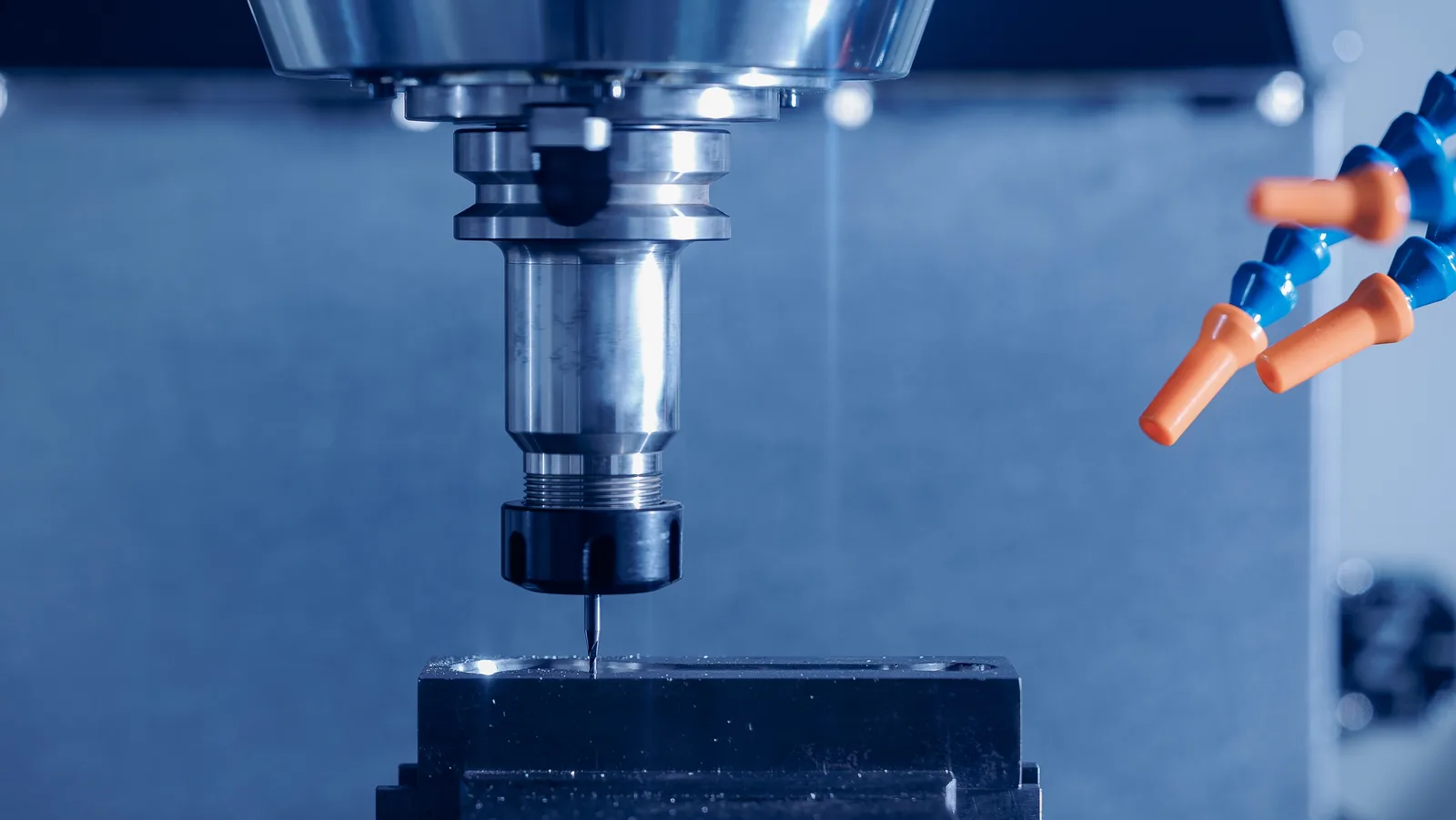

For most machine shops and manufacturers, the single most valuable thing on the floor is also the single point of failure: the CNC, the press brake, the laser, the welding cell. The machine is not a tool the business uses — for a great many shops, the machine is the business, and the day it stops, production stops with it. That is the exposure equipment breakdown insurance is built around, and it is the one most owners assume their property policy already covers.
It usually does not. Standard commercial property is written for perils that strike a machine from the outside — fire, theft, wind, vandalism, a collision on the floor — and most property forms specifically exclude the internal mechanical and electrical breakdown of equipment. That exclusion is the gap, and equipment breakdown is the line written to fill it. This page walks the property-vs-breakdown seam in full, because it is the distinction that decides whether a sudden internal failure on your floor is a covered claim or a bill you pay alone — then names what the coverage actually pays, why a modern electronic machine has more failure points than ever, and why a fixed-facility shop should not let anyone frame this as in-transit equipment coverage.
Equipment breakdown: the modern name for boiler and machinery
Equipment breakdown insurance is the current name for a coverage that has existed for well over a century under an older label: boiler and machinery. The name changed because the exposure did — the line that once concentrated on steam boilers and pressure vessels now answers the failure of the electrical and mechanical systems that run a modern shop. The principle, though, is the same one it always was: it responds to sudden and accidental internal failure of covered equipment, the kind property treats as off-limits.
In practical terms, an equipment breakdown form typically responds to the internal failures that take a machine down without any outside peril touching it:
- Sudden and accidental mechanical breakdown. A drive, a spindle, a bearing, a gear set, or a hydraulic component fails internally — the machine breaks itself, with no fire, no collision, no outside cause.
- Electrical arcing and short circuit. An arc, a short, or an insulation failure inside the machine’s electrical system damages the equipment from within.
- Power surge. A surge off the utility line or from within the facility damages drives, controllers, and motors — a cause property typically does not answer.
- Motor burnout. A motor fails and burns out — one of the most common breakdown claims in a shop full of motor-driven equipment.
- Operator error, where the form provides. Some forms extend to damage the operator causes the machine — a real and frequent cause of loss that a narrow form may leave out, which is why the form wording matters.
None of those is a fire, a theft, or a storm. Each is the machine failing from the inside — and each is the kind of loss equipment breakdown exists to answer.
The defining seam: external perils versus internal failure
This is the distinction worth slowing down on, because it is the one a machine-heavy operation gets caught by. Commercial property and equipment breakdown are not competing coverages and not overlapping ones — they are two halves of the same machine, split along a clean line.
Commercial property answers the external peril: something happens to the machine from the outside. A fire sweeps the building and damages the CNC; a thief takes it; a windstorm tears the roof open and the weather gets to it; a forklift backs into it. In every one of those, an outside force struck the equipment, and property is the line that responds. Property is also where the building, the contents, and your stock sit — it is the foundation of the whole structure.
Equipment breakdown answers the internal failure: the machine fails on its own, from the inside, with no external peril involved. The spindle seizes, the drive fails, an arc takes out the control cabinet, a surge fries the electronics, the motor burns out. There is no fire to point to and no storm to blame — and that is precisely why the standard property form does not respond, and why a separate line has to. Most commercial property forms carry an explicit exclusion for the mechanical and electrical breakdown of equipment; equipment breakdown is written to sit against that exclusion and pick up exactly what it leaves out.
Read together, the two lines cover the machine through its whole risk profile: property for everything that can happen to it, equipment breakdown for everything that can go wrong inside it. Carry only property, and an internal failure is yours to absorb. Carry only breakdown, and a fire is uncovered. A shop whose machines are its livelihood needs both, written so the seam between them is closed rather than assumed — and that is the structure we build.
The modern machine: more failure points, not fewer
The reason equipment breakdown matters more for a shop today than it did a generation ago is the machine itself. A modern CNC, a fiber laser, a servo press, or an automated welding cell is no longer a purely mechanical asset. It combines high-torque mechanical components — spindles, drives, hydraulics, ball screws — with sensitive electronic controllers, programmable logic, servo amplifiers, and increasingly with network connectivity to the rest of the plant. Each of those layers is a distinct way the machine can fail.
That is the quiet shift: a more capable machine is also a machine with more internal failure points. The mechanical side can seize or break; the electrical side can arc or short; the control side can fail on a surge or an internal fault; the network side adds its own fragility. A single machine can be taken down by a worn bearing one month and a fried controller the next, and neither has anything to do with the fire-and-theft perils property is built for.
The newer electronic circuitry impairment enhancement is the response to one corner of this. Traditional boiler-and-machinery coverage historically required detectable physical damage before it would respond — there had to be something visibly broken. But electronic systems can fail with no physical damage anyone can point to: the controller is impaired, the machine will not run, yet nothing is mechanically broken. Electronic circuitry impairment is built for exactly that case, extending the trigger to a pure electronic failure. As shop equipment becomes more electronic, whether your form carries that enhancement is a real question, and it is one we check on the form rather than assume.
The warranty is not the coverage
One of the most common misreads we untangle is the assumption that the equipment manufacturer’s warranty already handles all this. It does not, and the gap is wider than most owners expect. A warranty covers defects in material and workmanship — a machine that was built wrong — for a limited time. That is a narrow promise. It does not answer operator error; it does not answer a power surge that came off the utility line; it does not answer a failure that falls outside the warranty window or its exclusions; and crucially, it does not pay for the production you lose while the machine sits idle waiting on a part or a technician.
Equipment breakdown is insurance, not a warranty. It responds to sudden and accidental internal failure regardless of whether a manufacturing defect is to blame, and it carries the business-income piece a warranty never will. The two are not interchangeable, and a shop that leans on the warranty alone is covered for far less than it thinks.
What equipment breakdown responds to
These are the categories underwriters expect on a machine-shop or manufacturing equipment-breakdown file. They are described qualitatively and with generic carrier language — every claim is handled by the carrier, never named here — with no fabricated cost or frequency figures.
- Repair or replacement of the damaged equipment. The direct cost to fix or replace the machine after a covered internal breakdown — the mechanical, electrical, or control failure that property excludes.
- Business income while the line is down. The income lost when the machine that runs the work stops, where the form provides — often the larger half of the loss for a manufacturer whose output depends on one critical machine.
- Extra expense to keep producing. The added cost of renting machine time, outsourcing the run, or expediting a replacement part to keep an order moving while the machine is repaired, where the form provides.
- Spoilage and consequential loss, where the form provides. Material, work-in-process, or other property spoiled or ruined as a consequence of the breakdown, when the form extends to it.
- Electronic and control failure. Arcing, short circuit, surge, and — where the electronic circuitry impairment enhancement is carried — electronic failure with no detectable physical damage.
This is a fixed-facility line, not in-transit equipment
One distinction is worth drawing plainly, because it changes how the coverage should be written. Equipment breakdown for a shop or plant is a fixed-facility coverage: your CNC, your press, your laser live on your floor, bolted down, and they do not travel. The exposure is the internal failure of equipment in place.
That is a different thing from contractors equipment coverage, which is written on an inland-marine basis for tools and equipment that move — that leave the premises and travel between job sites, exposed to loss in transit. A machine shop or a manufacturer does not have that exposure on its production equipment; the machines stay put. Framing a fixed-facility operation as if its risk were in-transit equipment loss misses the actual exposure entirely. The right structure pairs commercial property for the external perils with equipment breakdown for the internal failure of machines that stay where they are — and that is how we write it for a shop or plant.
Why machine shops and manufacturers need it
The case for this line comes down to a single fact about how a shop runs: the machine is the production, so the machine’s downtime is the production’s downtime. An internal breakdown does two things at once — it leaves you with a repair bill on an expensive, often long-lead-time machine, and it stops the work that pays for everything. Commercial property, by design, does not answer the internal failure, and the manufacturer’s warranty answers a narrow slice of it and none of the lost income. Equipment breakdown is the line that closes both gaps, and for an operation built around its machines it is not an add-on — it is the coverage that keeps a single failure from becoming a business problem.
How it should be written differs by operating model. A Machine Shop running CNCs, lathes, mills, and lasers to a customer’s print carries breakdown exposure concentrated in a handful of high-value machines whose downtime stalls every job on the board. A Manufacturing running a production line carries it across the line, where one failed station can idle the whole flow. The business-income structure should follow how central each machine is to output rather than a default, and we rate each to the real floor.
Limits and structure
Equipment breakdown is usually written to repair or replace the damaged equipment and, where the form provides, to respond to the business income and extra expense that follow a covered breakdown. The right structure for your operation is driven by the machines you run — what they are worth to replace, their lead time, how central each is to your output, whether your form carries operator error and the electronic circuitry impairment enhancement, and how the breakdown coverage coordinates with your commercial property form so the seam between external peril and internal failure is closed rather than left open. Rather than quote a number, we read how your shop actually runs — which machines the work depends on, and what a loss of each would cost in downtime — and build the coverage and the business-income piece to match. The line is frequently written together with property on the same program so the two halves of the machine are covered as one.
Why Machine Guard Insurance
We are an independent agency that writes one class — machine shops and manufacturers — and we place coverage with carriers that actually want the work. That focus is the point. We know to read your property form for the equipment-breakdown exclusion before assuming the machines are covered; to ask which machines the work truly depends on and structure the business-income piece to match; to check whether your form carries operator error and the electronic circuitry impairment enhancement that a modern electronic machine needs; to keep this a fixed-facility coverage rather than letting anyone frame it as in-transit equipment; and to coordinate breakdown and property so the external-peril and internal-failure halves of the machine are covered as one. When a critical machine goes down, the question of which line answers should already be settled. Start with a quote, or talk it through with us first.
Learn more
Coverage for a shop or plant works as a system. Equipment breakdown pairs most often with commercial property for the building, contents, and stock, general liability for third-party injury and the products exposure, workers compensation for your crew, product recall for the cost of pulling a defective product back, manufacturers errors & omissions for a product that underperforms, and umbrella liability when an account demands limits above your primary layer. How it is written also differs by operating model across the three service hubs — Machine Shop Insurance, Manufacturing Insurance, and Metal Fabrication Shop Insurance.
Coverage for machine shops and manufacturers
- General Liability Insurance
- Commercial Property Insurance
- Workers Compensation Insurance
- Product Recall Insurance
- Manufacturers Errors & Omissions Insurance
- Umbrella Liability Insurance
Insurance by operating model
Get covered
Primary sources
Frequently asked questions about Manufacturing Machine & Equipment Insurance
What does equipment breakdown insurance cover for a machine shop or manufacturer?
Equipment breakdown, long called boiler and machinery insurance, answers the internal failures your commercial property policy leaves out: a sudden and accidental mechanical breakdown, an electrical arc or short circuit, a power surge, or a motor burnout inside the machine, plus operator error where the form provides. Property handles external perils such as fire and theft. A well-built form also pays the business income lost while the machine is down and the extra expense of working around it.
Does my commercial property policy cover a CNC machine that breaks down?
Generally not in the way owners assume. Standard commercial property is built around external perils — fire, theft, wind, vandalism, water — and most forms specifically exclude the internal mechanical and electrical breakdown of equipment. If a fire damages your CNC, property responds; if the machine suffers a sudden internal mechanical failure, an electrical arc, or a motor burnout, that is the gap equipment breakdown fills. The two lines are complementary, and we read both forms together.
Is equipment breakdown the same as the manufacturer warranty on my machine?
No. The equipment manufacturer warranty covers defects in material and workmanship for a limited time — a machine that was built wrong. It does not answer operator error or a power surge off the utility line, and it does not pay for the production you lose while the machine is down. Equipment breakdown is insurance: it responds to sudden and accidental internal failure regardless of a defect, and it carries the business income piece a warranty never will.
Does equipment breakdown cover lost income while a machine is down?
Where the form provides it, yes, and for a manufacturer that is often the larger half of the loss. When the machine that runs the line fails, the income lost while production is stopped, and the extra expense of renting time, outsourcing the run, or expediting a part, can dwarf the repair. A well-structured form pays to repair or replace the equipment and responds to that business interruption and extra expense, and, where the form provides, to spoilage.
What is electronic circuitry impairment and why does it matter for modern machines?
A CNC, a laser, or a welding cell pairs high-torque mechanical components with sensitive electronic controllers and network connectivity, and those controllers can fail on their own. Traditional boiler-and-machinery coverage historically required detectable physical damage to respond. Electronic circuitry impairment is an enhancement for the case where the electronics fail with no physical damage anyone can point to: the controller is impaired and the machine is down, but nothing is visibly broken.
My machines stay in my shop — is this the same as contractors equipment coverage?
No. Contractors equipment, written on an inland-marine basis, is built for tools and equipment that travel between sites. Your CNC, press, and laser stay on your floor, so the exposure is the internal breakdown of equipment in place, not loss in transit. Equipment breakdown at the facility, paired with commercial property for the external perils, is the right structure for machines that stay put, and that is how we write it.
Cover the machine for what goes wrong inside it
Tell us which machines your work depends on, and we will market equipment breakdown alongside your property — with the internal-failure gap closed and the lost-income piece built to your floor.