
States we serve · Iowa
Machine Shop and Manufacturing Insurance in Iowa
Coverage for Iowa food processors, construction-machinery builders, aerospace electronics and medical-device makers, and the machine shops that supply them statewide.
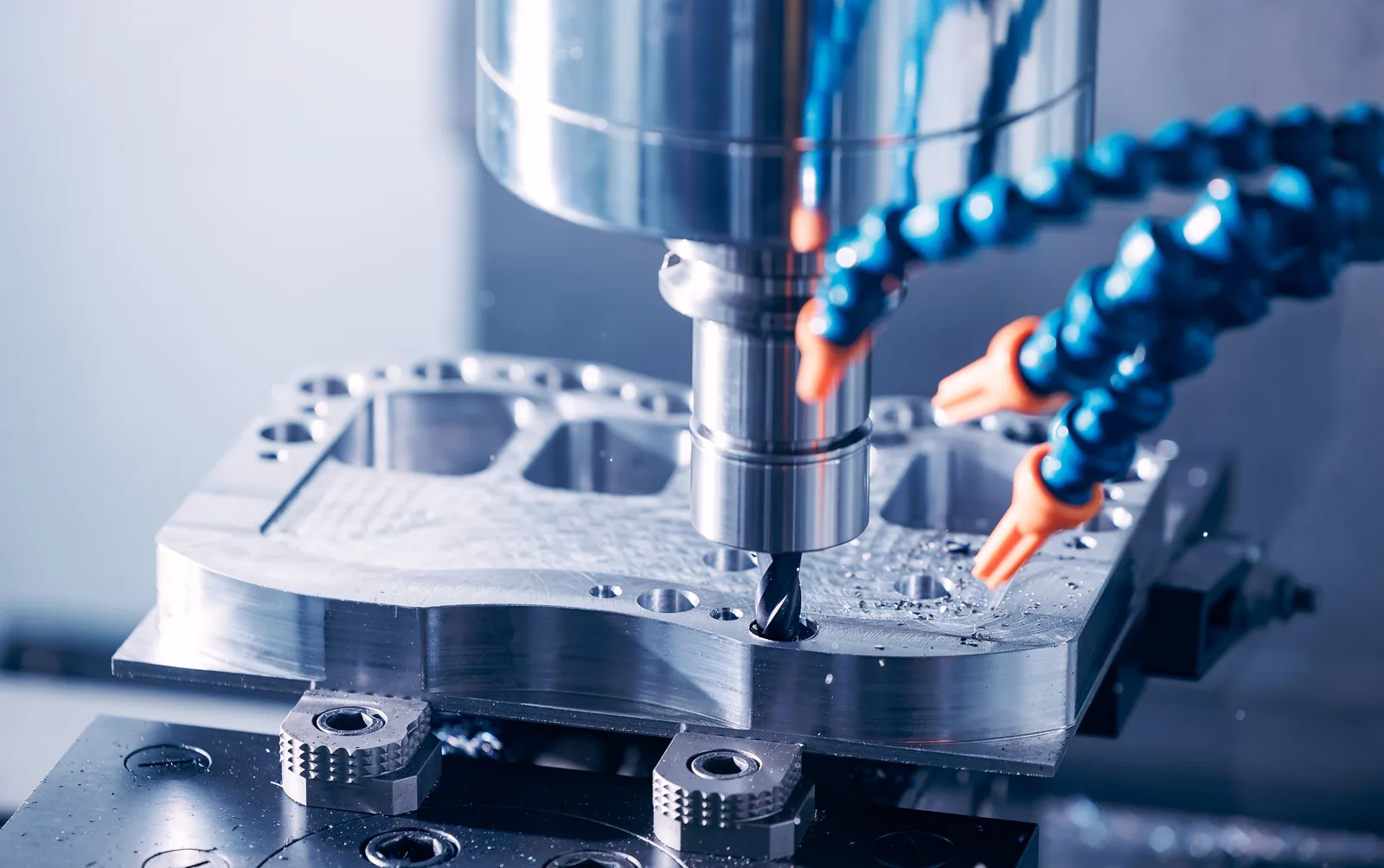

We insure Iowa manufacturers and the shops around them: builders of construction machinery, food processors, aerospace electronics firms, medical-device makers, and the contract machinists, fabricators, and welders that turn out their components. Construction machinery is heavy, long-lived equipment, and a machine built in Iowa may work for decades before anyone thinks about who made its parts. That long service life shapes the products side of every Iowa program we write.
Four Iowa rules set the terms. Iowa OSHA runs a State Plan that applies to all private sector workplaces. Injury actions carry a two-year limitation period under Iowa Code § 614.1(2), and product actions face a fifteen-year repose period under § 614.1(2A)(a), with exceptions. A seller that did not assemble, design, or make a product is generally immune from strict liability and implied warranty suits based only on an original defect, under § 613.18. And the Iowa Department of Natural Resources handles air construction permits, except where a local program such as Linn County’s takes applications. Each is covered below.
What Iowa underwriters build a price from
An Iowa quote is assembled from payroll grouped by class, the values of machines, tooling, buildings, and inventory, the end use of what you ship, and your claims history. End use decides most of the liability picture. A hydraulic component in a loader, an avionics board, a device used in a hospital, and a packaged food each carry a very different kind of products exposure, and each is priced on what a failure could do.
Iowa conditions then move the price. Equipment makers carry exposure for as long as their machines stay in service, and the fifteen-year repose period, with its exceptions and its express-warranty qualifier, sets the outer boundary for many product actions. Because § 613.18 shields nonmanufacturing sellers from certain claims, dealers and distributors tend to pass product suits back to the manufacturer. Food and device makers face federal oversight that makes recall coverage essential. And your Iowa OSHA inspection record is part of the file. We price from your operation, not from a rate schedule; our guide to the cost of machine shop and manufacturing insurance covers the national drivers.
Dealer networks deserve a specific look for Iowa equipment makers. Machines sold through independent dealers are often modified, rebuilt, or serviced by those dealers, and the manufacturer may be asked to name dealers as additional insureds under a vendors endorsement. The breadth of that endorsement, and whether it excludes products the dealer has altered, matters a great deal when a claim arrives. We review dealer agreements and set the endorsement to fit them. The same review covers the manuals, warnings, and service bulletins that go out with each machine, because in a products claim those documents are often the first evidence examined, and gaps in them can matter as much as the design itself.
Machinery, food, aerospace electronics, and devices
The Iowa Economic Development Authority highlights food products, medical devices, construction machinery, and aerospace electronics within the state’s advanced manufacturing base. Each of those has a distinct insurance profile.
Construction-machinery builders carry long-tail products exposure, heavy handling on the floor, and high equipment values. Their programs lean on strong products-completed operations limits, equipment breakdown for large machining centers and paint systems, and business income sized to how long it would take to replace specialized equipment. Aerospace electronics firms work under customer requirements for traceability and quality, face aircraft-products exposure that some general liability forms exclude, and carry design responsibility that manufacturers errors and omissions can address.
Food and device makers are regulated by the U.S. Food and Drug Administration. On the food side, the agency registers manufacturing and processing facilities under 21 CFR Part 1, Subpart H, and its preventive-controls rule for human food is 21 CFR Part 117. On the device side, establishment registration and listing fall under 21 CFR 807.20 and quality systems under 21 CFR Part 820. That oversight puts product recall coverage near the top of both programs. A contract shop supplying any of these customers inherits their requirements, so our first question is who you ship to.
Iowa OSHA and the private-sector floor
Iowa runs its own OSHA-approved State Plan, and federal OSHA’s Iowa State Plan page states that it applies to all private sector workplaces in the state. The program, Iowa OSHA, sits within the Iowa Department of Inspections, Appeals, and Licensing. For a private Iowa shop or plant, Iowa OSHA is the agency that inspects and cites.
Iowa’s plan must be at least as effective as federal OSHA, which keeps the federal machinery standards in place as the baseline: 29 CFR 1910.212 for guarding and 29 CFR 1910.147 for hazardous-energy control. On an Iowa floor that means press brakes, plate shears, large machining centers, robotic welders, and food processing lines. Carriers ask about guarding and lockout because failures there cause the worst injuries, and we send your written programs and inspection history with every submission.
Comp in Iowa’s competitive market
Iowa employers buy workers compensation from private insurers, and the market is competitive. What a given employer pays comes down to classification and claims experience. Welders, machinists, assemblers of heavy equipment, food production workers, electronics technicians, and office staff are rated in separate classes, and payroll placed in the wrong one is corrected when the policy is audited.
Employers liability, carried inside the comp policy, answers lawsuits that grow out of workplace injuries, and we check that it fits with the general liability program. The workers compensation page explains classification and audits, and our article on reducing comp costs in manufacturing covers the safety practices underwriters reward. Iowa companies with employees working in Illinois, Nebraska, Minnesota, or Missouri should report that payroll by state.
Iowa Code § 614.1 and the § 613.18 seller shield
Iowa’s injury limitation period is in Iowa Code § 614.1(2), which requires actions founded on injuries to the person to be brought within two years. For product actions, § 614.1(2A)(a) adds a repose period of fifteen years, measured from when the product was first purchased, leased, bailed, or installed for use or consumption. The qualifier is essential: the period applies unless the product is expressly warranted for a longer period, and further exceptions follow in the same subsection.
Iowa also protects sellers that did not make the product. Under Iowa Code § 613.18(1)(a), a person who is not the assembler, designer, or manufacturer and who sells a product is “Immune from any suit based upon strict liability in tort or breach of implied warranty of merchantability which arises solely from an alleged defect in the original design or manufacture of the product.” In practice, product claims based on those theories tend to land with the assembler, designer, or manufacturer.
For an Iowa manufacturer, three things follow. First, express warranties matter: a written promise that a machine will last longer than fifteen years can take it outside the repose period, so warranty language should be reviewed alongside the insurance program. Second, products-completed operations coverage should run continuously for as long as your machines are in service. Third, the trigger of the policy deserves thought. Occurrence coverage responds to injuries that happened during the policy period whenever they are claimed, while claims-made coverage responds to claims first reported during the period, back to a retroactive date, so a carrier change or sale needs tail coverage. Our comparison of occurrence and claims-made forms explains the choice, and our note on additional-insured status covers how dealers are protected.
DNR construction permits and the Linn County program
Air construction permits in Iowa come from the Iowa Department of Natural Resources (DNR), whose Construction Permits Section reviews pre-construction air permitting for the state, with exceptions where local air programs are present. In Linn County, air construction permit applications go to Linn County Public Health’s Air Quality Branch under the county code; for major (PSD) projects there, the Iowa DNR issues the permit and Linn County provides technical review. Paint lines, welding fume systems, boilers, and food processing dryers are the usual reasons an Iowa plant needs to check its permit status before a project begins.
Pollution exposure is a separate question from the permit. General liability and property forms exclude most pollution, so a release from a paint line, a spill to a drain, or an emissions event from your own process usually requires a dedicated pollution or environmental policy. Underwriters for manufacturing insurance accounts with painting or finishing will ask about DNR or Linn County permits, and having the answer ready helps.
Here is how the four Iowa rules on this page translate into program decisions.
Most Iowa programs also carry commercial property for buildings, machinery, and finished equipment awaiting shipment, and an umbrella sized to the long-tail exposure of heavy equipment and to the limits that food, device, and aerospace customers require.
Iowa airports and ports that affect coverage
We write Iowa shops and plants statewide. Four Iowa locations stand out, each with a verified local feature that a program should reflect.
Des Moines
CBP operates a port of entry at Des Moines International Airport. Manufacturers flying high-value electronics or device components through it should schedule them on inland marine coverage matched to declared values.
Davenport
CBP runs a port of entry for Davenport, Iowa together with Moline and Rock Island, Illinois. Plants moving goods across that state line should confirm their policies list every state where they operate and ship.
Cedar Rapids
The Eastern Iowa Airport serves Cedar Rapids. Aerospace electronics and equipment makers near it that ship by air need transit terms that follow each shipment, and should note that Linn County runs its own air permit program.
Sioux City
Sioux Gateway Airport, Brigadier General Bud Day Field, serves Sioux City. Food and equipment manufacturers there that move goods by air should make sure coverage follows the shipment from the airport to the customer.
Our license list covers Iowa and 48 states in all. Companies with operations across state lines can also read our pages for Illinois, Minnesota, Nebraska, Missouri, Wisconsin, and South Dakota, or see the complete list.
Components to order, or equipment under your name
The split in an Iowa company between building to someone else’s drawing and selling its own equipment decides which side of the program does the heavy lifting. Job shops that machine components to a customer’s specifications will find our page on machine shop insurance the better fit, with its focus on tooling, equipment values, and floor exposures. Welders and fabricators, in the shop or in the field, should start with metal fabrication and welding shop insurance. Companies that design and sell machinery, food products, electronics, or devices under their own name will find more in our page on manufacturing insurance, which gives products liability, recall, and errors and omissions their full weight. We write mixed operations as one program with each side rated appropriately. For a shop that has started selling a product of its own alongside contract work, that is often the moment to revisit the whole program, since a first branded product brings products and recall exposure that a pure job shop never carried.
Iowa manufacturer and machine shop questions
Does Iowa OSHA inspect privately owned plants?
Yes. Iowa’s State Plan applies to all private sector workplaces, and the program, Iowa OSHA, sits within the Iowa Department of Inspections, Appeals, and Licensing. Because the plan must be at least as effective as federal OSHA, the federal machine guarding and hazardous-energy control standards set the baseline, and carriers ask to see your programs for both.
How long does Iowa allow for a product injury claim?
Iowa Code § 614.1(2) sets a two-year period for actions founded on injuries to the person. For product actions, § 614.1(2A)(a) adds a fifteen-year repose period from first purchase, lease, bailment, or installation, unless the product is expressly warranted for a longer period, with further exceptions in the same subsection.
Can an Iowa dealer be sued in strict liability for a machine it sold?
Generally not, if it did not assemble, design, or manufacture the machine. Iowa Code § 613.18(1)(a) makes such a seller immune from suits based on strict liability or breach of implied warranty that arise solely from an alleged original design or manufacturing defect. Those claims tend to move to the manufacturer, whose products limits then matter most.
Does a longer warranty affect Iowa’s product repose period?
It can. Iowa’s fifteen-year repose period in § 614.1(2A)(a) applies unless the product is expressly warranted for a longer period. A manufacturer that promises a longer life in writing may keep claims open past fifteen years, so warranty and marketing language should be reviewed with the insurance program rather than on its own.
Who issues air construction permits in Linn County?
Linn County Public Health’s Air Quality Branch takes air construction permit applications there under the county code. For major (PSD) projects in Linn County, the Iowa DNR issues the permit and Linn County provides technical review. Elsewhere in Iowa, the DNR handles construction permits. Pollution itself is excluded by general liability, so releases need a separate policy.
Are Iowa comp policies bought from private carriers?
Yes. Iowa has a competitive comp market, and private carriers write it for manufacturers of every size. Price depends on how payroll is classified and on the employer’s own claims experience. We make sure welders, machinists, heavy-equipment assemblers, food workers, electronics technicians, and office staff are each classed correctly, and we keep employers liability coordinated with general liability.
Start an Iowa equipment maker or machine shop quote
Tell us whether your Iowa operation builds machinery, processes food, makes electronics, or machines parts, and who buys the result, and we will take it to carriers that write the class.