
States we serve · Minnesota
Machine Shop and Manufacturing Insurance in Minnesota
For Minnesota medical-device and electronics makers, vehicle and clean-tech manufacturers, food producers, and precision machine shops, written to MNOSHA and MPCA rules.
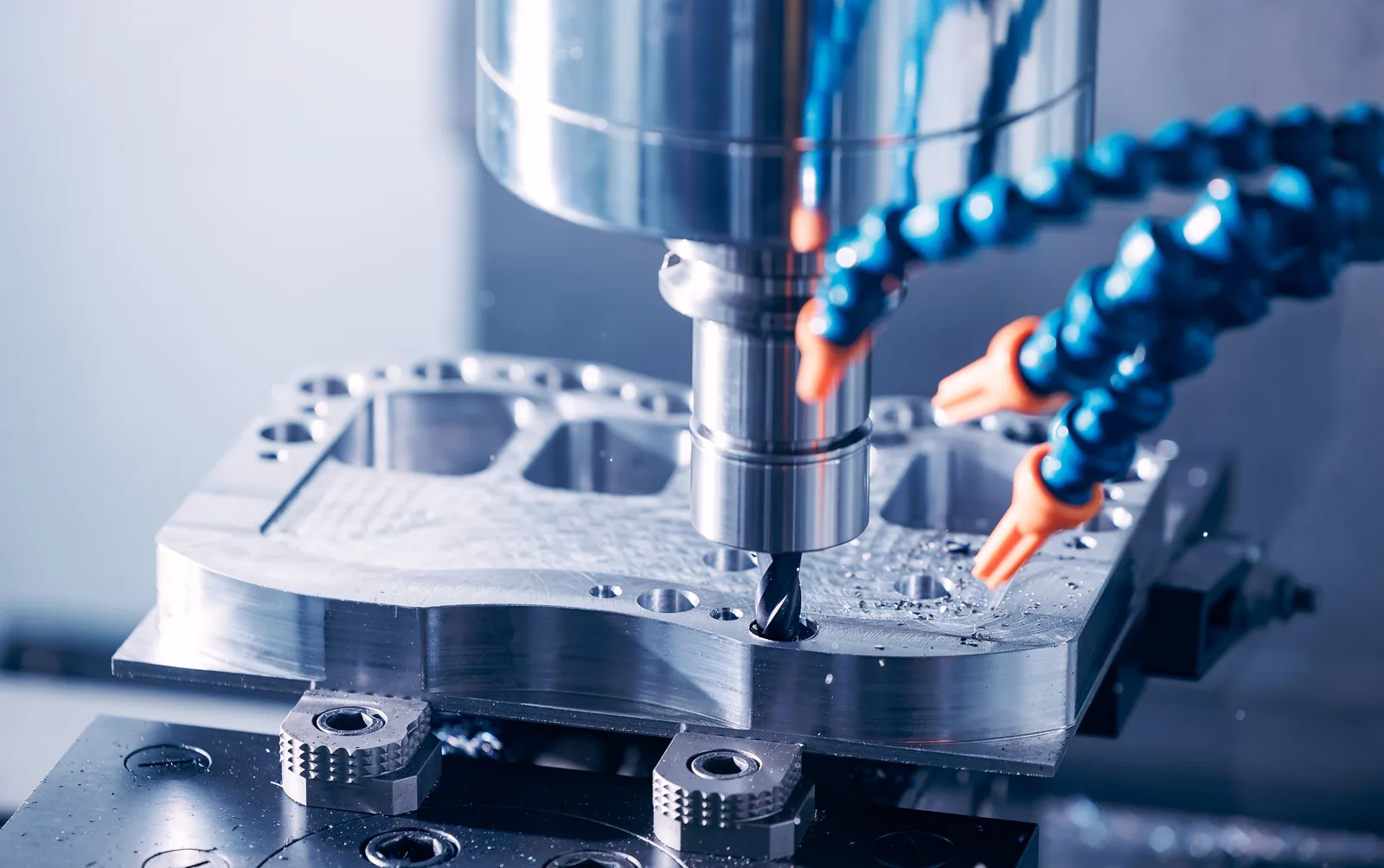

Minnesota’s manufacturers lean toward high-tech work, and our clients reflect that: medical-device and life-science companies, computer and electronics makers, builders of vehicles and specialty equipment, clean-tech and renewable energy manufacturers, food producers and agricultural processors, and the precision machine shops and contract manufacturers that feed all of them. Many of these products are regulated, tightly toleranced, or both, which moves a Minnesota program toward products, recall, and design coverage.
Four Minnesota rules shape these programs. The Minnesota Occupational Safety and Health Administration (MNOSHA) runs a State Plan that applies to private-sector workplaces. Strict liability actions arising from the manufacture, sale, use, or consumption of a product must be commenced within four years under Minn. Stat. § 541.05, subd. 2. Minnesota also recognizes a defense when an injury is sustained after a product’s ordinary useful life has expired, in § 604.03. And the Minnesota Pollution Control Agency issues air emission permits. Each is covered below.
Minnesota pricing, input by input
Every Minnesota quote rests on the operation’s basics: payroll by kind of work, values for machinery, tooling, the building, and inventory, the markets your products end up in, and several years of claims. For regulated products, the end market is the heaviest factor on the liability side. A component in an implantable device, a circuit board in a vehicle, a part in a wind or solar installation, and a food ingredient each present a different kind of products exposure.
Minnesota specifics then refine the price. Device and life-science customers impose quality and insurance requirements that flow down to every supplier. The four-year strict liability period gives injured parties considerable time, which argues for keeping products coverage continuous. The useful-life defense can help a manufacturer whose products are used far past their expected life, but only as a defense, not as an automatic cutoff. And the MNOSHA inspection record is part of the file on comp and general liability. We price from your operation rather than a rate table; for the drivers every state shares, see our explanation of manufacturing insurance costs.
Quality systems play an unusual role in Minnesota underwriting. Because Minnesota manufacturing is strong in device, electronics, and vehicle work, underwriters often ask about certifications, traceability, and how nonconforming product is handled. Those systems are part of what a carrier prices, and they are also what defense counsel relies on to show a part left the plant as specified. Our article on how certifications affect manufacturing businesses discusses the business side of that investment.
High-tech sectors in Minnesota and their insurance
The Minnesota Department of Employment and Economic Development describes a diverse, technology-driven advanced manufacturing sector that is strong in high-tech manufacturing, including computers and electronics, medical devices, and vehicles, and it lists life sciences, clean tech and renewable energy, and food production and agriculture among the state’s key industries.
For device makers the governing agency is the U.S. Food and Drug Administration. Its establishment registration and device listing requirement sits in 21 CFR 807.20, and its quality management system regulation for finished devices is 21 CFR Part 820. Food producers fall under the agency’s food rules, with facility registration in 21 CFR Part 1, Subpart H and human-food preventive controls in 21 CFR Part 117. In both groups, product recall coverage is a practical necessity. It is worth checking what a given recall policy actually pays for, since forms differ on whether they cover the customer’s costs, your own costs of notification and disposal, replacement product, or lost profit, and a device or food company usually needs more than one of those.
Computer and electronics makers concentrate value in automated lines and test equipment, where equipment breakdown and business income are central. Vehicle and clean-tech manufacturers carry design and performance exposure, since a system that runs safely but underdelivers creates a financial loss that manufacturers errors and omissions covers. Contract shops supplying any of these customers take on the customer’s requirements, so we begin with who you sell to.
MNOSHA inspects Minnesota’s private employers
Minnesota operates an OSHA-approved State Plan for the private sector. Federal OSHA’s Minnesota State Plan page states that the plan applies to private-sector workplaces in the state, and the plan, the Minnesota Occupational Safety and Health Administration (MNOSHA), is administered by the Minnesota Department of Labor and Industry. For a private Minnesota shop or plant, MNOSHA is the inspector.
State plans must match or exceed federal OSHA’s effectiveness, so the federal machinery rules remain the reference point: 29 CFR 1910.212 on machine guarding and 29 CFR 1910.147 on hazardous-energy control. Those rules reach CNC centers and presses, automated assembly and test cells, and food processing equipment alike. Carriers ask about guarding and lockout because failures there produce the most severe injuries, so a Minnesota submission from us includes your written programs and any MNOSHA findings.
Clean rooms and electronics lines bring less obvious injury patterns than a machining bay. Chemical handling in cleaning and plating steps, repetitive motion in hand assembly and inspection, and ergonomic strain at microscopes and workstations produce claims that build slowly and can be expensive when they mature. Underwriters for these classes look for chemical hygiene plans, ergonomic assessments, and job rotation, and a plant that can show those practices in writing usually presents better than one that relies on a clean loss history alone.
Comp placement for Minnesota manufacturers
Minnesota employers purchase workers compensation from private carriers in a competitive market. The number an employer pays turns on classification and on its own claims experience. Machinists, electronics assemblers, device production technicians, food workers, warehouse staff, and office employees are rated in separate classes, and an error in that split is fixed at audit with an adjustment that can be large.
The employers liability portion of a comp policy handles lawsuits that grow out of workplace injuries, and we coordinate it with general liability so the two policies meet cleanly. The workers compensation page covers classes and audits, and our guide to reducing comp costs lists what carriers reward. Minnesota companies with staff working in Wisconsin, Iowa, or the Dakotas should report that payroll by state.
Four years under § 541.05, and the useful-life defense
Minnesota’s limitation rule for strict liability product claims is Minn. Stat. § 541.05, subd. 2: “Unless otherwise provided by law, any action based on the strict liability of the defendant and arising from the manufacture, sale, use or consumption of a product shall be commenced within four years.” Four years is a long window, and it runs on claims that can arrive long after a product ships.
Minnesota also gives manufacturers and sellers a specific defense tied to product age. Under Minn. Stat. § 604.03, subd. 1, “it is a defense to a claim against a designer, manufacturer, distributor or seller of the product or a part thereof, that the injury was sustained following the expiration of the ordinary useful life of the product.” It is a defense to be raised and proved, not a fixed expiration, so it does not remove the need for coverage on older products; it gives defense counsel an argument when a product has been used far beyond its expected life.
For a manufacturer, the combination points to continuous products-completed operations coverage and careful records. Documentation of design life, maintenance instructions, and service recommendations helps establish what a product’s ordinary useful life was. On the policy side, an occurrence form covers injuries that happened during the policy period regardless of when they are claimed, while a claims-made form covers claims reported during the period back to a retroactive date, which means a new carrier or a sale needs tail coverage. We compare the forms in occurrence versus claims-made for manufacturers, and explain the limit that pays product claims in the products-completed operations aggregate.
MPCA air emission permits
The Minnesota Pollution Control Agency (MPCA) issues air permits in Minnesota. It describes an air emission permit as a legal document that sets out how a facility must operate to meet state and federal air regulations, and it notes that construction permits address the impact of newly constructed facilities. Coating and cleaning operations, soldering and reflow, boilers, and food processing equipment such as dryers and fryers are common reasons to check permit status before a project goes ahead.
Permits do not solve the insurance side of pollution. General liability and property forms both exclude most pollution, so a solvent release, a spill to a drain, or an emissions problem at your plant generally requires a dedicated pollution or environmental policy. That policy sits next to the rest of the Minnesota program when we place it. Underwriters for manufacturing insurance accounts with coating, cleaning, or process equipment will ask about MPCA permits, and having them documented helps.
Laid out together, the four Minnesota rules and their program effects look like this.
Most Minnesota programs also carry commercial property for owned and leased facilities, machinery, and stock, including clean-room improvements, and an umbrella for the higher limits device, vehicle, and energy customers routinely require.
Minnesota ports and terminals that matter
We place Minnesota shops and plants across the state. At each of these four locations, a specific feature changes what the program needs.
Minneapolis
CBP’s Minneapolis-St. Paul port office is in Bloomington. Device and electronics makers shipping high-value product through it need transit coverage matched to declared values, and property limits for goods held before shipment.
Saint Paul
The Port of Saint Paul runs the Saint Paul River Terminals. Manufacturers moving bulk materials or heavy equipment by river should confirm who bears the risk of loss at the terminal and set cargo limits to match each load.
Duluth
The Duluth Seaway Port Authority describes the Port of Duluth-Superior as North America’s farthest-inland freshwater seaport. Plants importing or exporting heavy goods through it need marine cargo terms that follow the shipment from the westernmost tip of Lake Superior onward.
Rochester
Rochester International Airport is a CBP port of entry. Medical and precision manufacturers near Rochester that fly components or finished devices should schedule them on inland marine coverage rather than rely on property coverage at the dock.
We are licensed in Minnesota, one of 48 states on our license list. Companies with sites nearby can also read our pages for Wisconsin, Iowa, North Dakota, and South Dakota, or open the full state directory.
Contract manufacturing or branded products
Minnesota operations often mix contract manufacturing with their own product lines. Shops whose work is mostly machining, molding, or assembling to a customer’s specifications should look at our page on machine shop insurance, which is built around equipment, tooling, and floor exposures. Companies that design and sell devices, electronics, vehicles, or food products under their own name should look at our page on manufacturing insurance, which puts products liability, recall, and errors and omissions first. When a Minnesota business does both, we write a single program that keeps the two kinds of revenue separate for rating. For device contract manufacturers in particular, the quality agreement with each customer usually allocates responsibility for design, validation, and recall, and we read those agreements to decide whether the shop needs products coverage alone or errors and omissions and recall coverage as well.
Minnesota manufacturers’ coverage questions
Is my Minnesota plant inspected by MNOSHA?
Yes. Minnesota’s State Plan applies to private-sector workplaces, and it is administered by the Minnesota Department of Labor and Industry as MNOSHA. Because a state plan must be at least as effective as federal OSHA, the federal guarding and hazardous-energy control standards still set the baseline, and those written programs are what carriers ask to see.
How long can a strict liability product claim wait in Minnesota?
Minn. Stat. § 541.05, subd. 2 requires any action based on strict liability and arising from the manufacture, sale, use, or consumption of a product to be commenced within four years, unless otherwise provided by law. That is a long window, so manufacturers should keep products-completed operations coverage continuous from one carrier to the next.
What is Minnesota’s useful-life defense?
Minn. Stat. § 604.03, subd. 1 makes it a defense to a claim against a designer, manufacturer, distributor, or seller that the injury was sustained after the product’s ordinary useful life expired. It must be raised and proved, so it does not replace coverage. Records of design life and maintenance guidance make the defense easier to use.
Does an MPCA permit affect our insurance?
Indirectly. The MPCA issues air emission permits and construction permits, and underwriters ask about them because processes that need permits are often where pollution exposure lives. General liability and property forms exclude most pollution, so a release from a coating, cleaning, or processing line calls for a separate pollution or environmental policy.
Why does a Minnesota device supplier need recall coverage?
Because a nonconforming component can force a device recall even if no patient is hurt, and device makers often pass recall costs to suppliers by contract. General liability covers injury and damage, not the cost of retrieving and replacing product. Recall coverage fills that gap, and we check your supply agreements for cost-sharing terms.
Can Minnesota manufacturers buy comp from private insurers?
Yes. Minnesota’s comp market is competitive, and private carriers write it. Premium depends on how payroll is classified and on your own claims history. We check that machinists, assemblers, device technicians, food workers, and office staff each sit in the correct class, and we keep employers liability coordinated with general liability.
Get a Minnesota device, electronics, or machine shop quote
Tell us what your Minnesota operation builds, which customers and regulators it answers to, and we will bring it to carriers that write the class.