

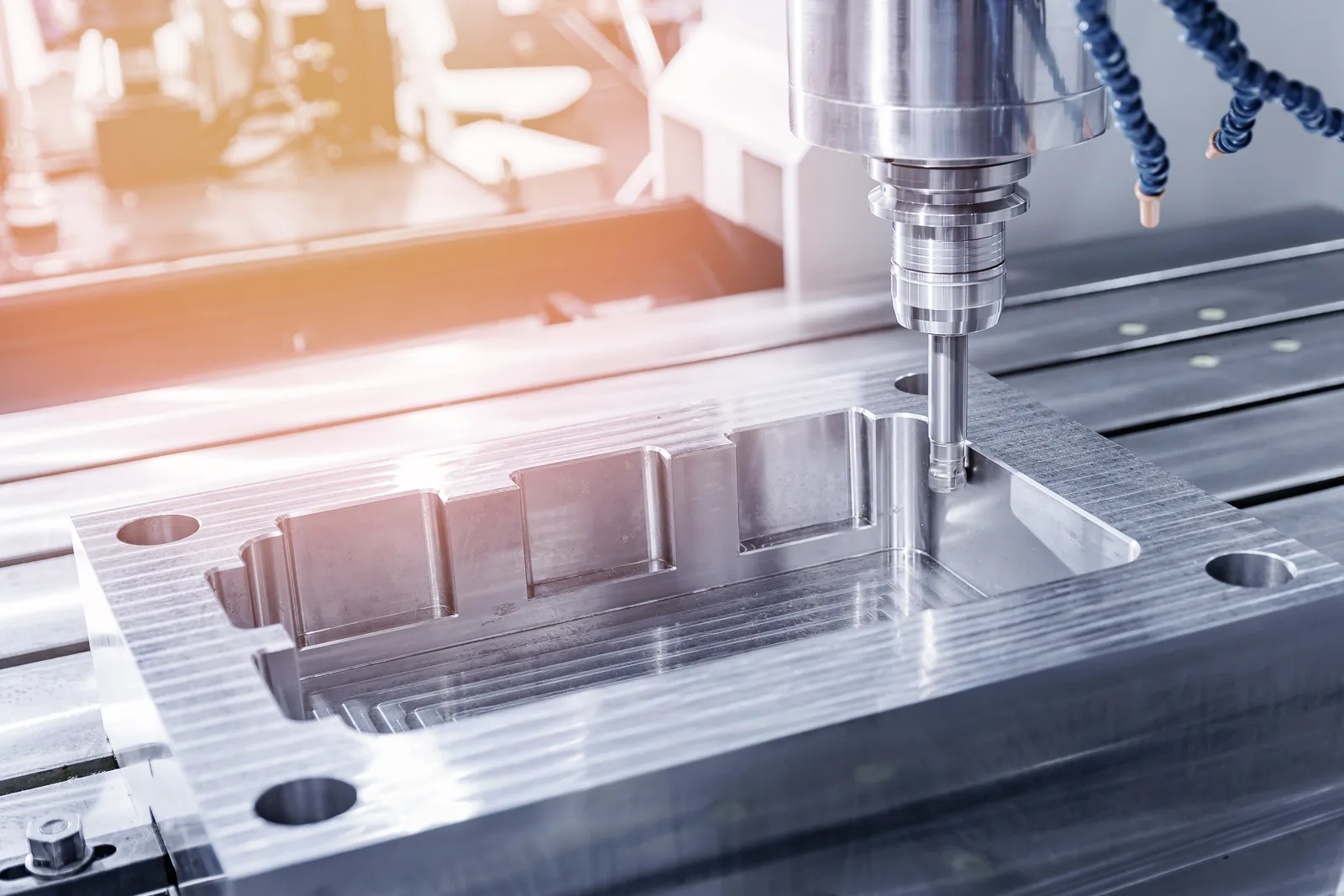
A business owners policy for machine shops is usually a package form that bundles commercial property, general liability, and business income in a single policy, with eligibility and wording varying by carrier and by the shop’s operations. It handles the building-and-contents side reasonably well, but workers compensation, professional liability, and auto sit outside it.
What a business owners policy bundles
A business owners policy, usually shortened to BOP, puts commercial property, general liability, and business income under a single form, with a shared premium and a shared renewal date. Package forms were designed for small, lower-hazard businesses such as offices, shops, and stores, so they read more naturally for a retailer than for a production floor. That design history is why a machine shop has to read the form more carefully than a retailer would.
Many forms add small built-in extensions, such as limited coverage for valuable papers, money and securities, or newly acquired property, and the list depends on the form. None of those extensions changes the basic shape. A BOP is a structure for the common exposures of a small business, and it assumes the business fits the form.
Business owners policy insurance for machine shops is best treated as a starting point for a conversation, not a finished program. Machine shop commercial insurance is rarely a single policy. It is usually a package plus several policies written beside it, and the work is deciding which exposures belong where. Our page on machine shop operations shows how we think about that split.
The property side and the shop floor
The property part of a BOP usually covers the building, if you own it, and your business personal property: machines, tooling, fixtures, inventory, and stock. Whether it fits a shop depends on how the values are set. A shop floor can hold a great deal of equipment value in a small space, and a package form may cap or sublimit certain categories, so check how machinery is treated rather than assuming the total limit covers it.
Customer-owned material needs its own question. Bar stock, castings, and finished parts that a customer sends you are often in your care, and many forms treat property of others differently from your own. Ask whether it is covered, up to what limit, and on what valuation basis. The distinction between replacement cost and actual cash value matters here, and our guide to replacement cost versus actual cash value walks through how that choice changes a loss payment.
Also look at what the property form does not treat as a fire-and-theft loss. A spindle that burns out, a drive that fails, or a controller that shorts is a mechanical or electrical breakdown, and standard property forms often do not respond to it. That gap is covered in detail in our article on equipment breakdown versus property insurance, and the page on property coverage and our machine and equipment coverage page explain how the fixed side is built.
Liability inside the package and the products question
The liability part of a BOP is general liability: bodily injury and property damage to third parties arising from your premises and operations. A visitor who slips in the lobby, a delivery driver hurt on the dock, or damage a technician causes at a customer’s site are the claims it is built around. Our page on general liability covers that coverage on its own, so this section stays with how it behaves inside a package.
Machine shop liability insurance has a wrinkle that retail liability does not: the products. A shop that makes parts has an exposure that continues after the part leaves the building. If a component fails in the customer’s equipment and someone is hurt, the claim traces back to the shop. Many package forms handle that exposure narrowly, through a sublimit, a manufacturing exclusion, or a classification that only fits certain kinds of work. It depends on the form, and the endorsements are where the answer usually lives.
The practical test is simple. Ask your agent to show you, on the actual form, how products and completed operations are treated for the parts you make. If the answer is a restriction or an exclusion, you have learned that the package is not carrying that exposure, and it needs to be placed elsewhere. Our article on products liability versus general liability for manufacturers explains the difference in detail.
Real-World Scenario: A small shop that cuts brackets for local equipment builders buys a package policy because it looks tidy, and the shop owner assumes the liability part covers everything the shop does. Months later a bracket cracks in a customer’s assembly and a worker is hurt. The claim lands on the shop, and the policy turns out to restrict manufacturing and products exposure. The owner learns that the package was written for the premises and the shop floor, and that the parts leaving the building were never really inside it.
Income protection when the shop goes quiet
The business income part of a BOP usually pays for lost net income and continuing expenses when a covered loss, such as a fire, shuts down all or part of the shop. For a machine shop, the question is what stops production. Fire in the building is the obvious case. A failed machine, a utility interruption, or a supplier problem is less obvious, and whether those count depends on how the form is written and what it lists as a covered cause of loss.
Read the waiting period, the length of the restoration period, and whether the form includes extended business income, since a shop that restarts production does not recover revenue the same day. Lead times matter in this trade: a replacement machine, a custom fixture, or a customer who moves its work elsewhere can stretch the real downtime past the physical repair. The article on business interruption for manufacturers covers how that exposure plays out, so here the point is only to confirm that the package contains it and how it triggers.
What the package leaves to other policies
A BOP leaves out whole categories of exposure, and the important thing is knowing which. Workers compensation is usually written as its own policy. It is written on payroll and classification, and a shop with employees generally needs it beside the package. Our page on workers compensation covers the mechanics.
Professional liability, sometimes written as errors and omissions, is usually separate too. It responds to claims that your design, advice, or specification caused a customer’s financial loss, which general liability tends not to cover. Shops that engineer, design, or hold to a customer’s specification should read our piece on professional liability for machine shops and the page on manufacturers errors and omissions.
Commercial auto, for trucks that deliver parts, is written on its own, and so is the cargo exposure that rides with it. Equipment breakdown is often an endorsement or a separate policy. Product recall is a different coverage again, and it is described on our product recall page. Umbrella limits, when a contract asks for them, sit above the package, not inside it.
Inside the package
Commercial property for building and contents
General liability for premises and operations
Business income after a covered loss
Beside the package, written separately
Workers compensation for employees
Professional liability for design and specification claims
Commercial auto for delivery vehicles
Often an add-on or its own policy
Equipment breakdown for machine failure
Products and completed operations for shipped parts
Recall and umbrella limits above the program
How eligibility gets decided
Eligibility is decided at underwriting, and it varies by carrier. A package form is written for businesses that fit a carrier’s appetite, so an underwriter first asks whether the shop belongs in it. The questions are practical: what the shop makes, what materials it works, whether it ships its own products or only machines to customer prints, how the building is built and protected, how much equipment value sits on the floor, and what the loss history looks like.
Operations that look like manufacturing rather than service often change the answer. A shop that does job work to a customer’s print may fit a package form more easily than a shop that designs and ships its own product line. Processes that raise fire or hazard concerns, such as heat treating, plating, or heavy welding, can push a shop toward separately written policies or a specialty market. Nobody can promise in advance that a given shop qualifies, because the carrier makes that call from the application.
The way to get a clean answer is to describe the shop as it actually runs, including products, processes, and subcontracting, then see what each market says. A shop that understates its operations to fit a package risks a claim dispute later. Our guide for a small machine shop looks at how smaller operations tend to be placed.
Signs a shop has outgrown the package
A package that fit when the shop had a few machines may stop fitting as the business changes. The signs show up in the details. Equipment values grow past the sublimits the form allows. The shop starts shipping its own product, so products exposure becomes real. Customers begin asking for specific endorsements, additional insured status, or higher limits that the package cannot carry. A larger share of revenue depends on a few machines, so a breakdown would stop the business even if the building is untouched.
Other signs are subtler. The shop takes on design work and starts answering for how a part performs, not just how it was machined. A new process adds fire or chemical exposure. Payroll climbs and the program needs closer attention. None of these means the package was a mistake. They mean the shop is ready for a program built around its own exposures, with each coverage set by its own limits and wording.
Review the program when any of these appear, not only at renewal. If you want us to look at how your shop fits, send us your details: what you make, the processes you run, the equipment on the floor, and the customers you ship to.