
Starting a machine shop means deciding what work you will take, registering the business and getting an EIN, buying the machines that work requires, guarding them before the first job runs, lining up the certifications your customers need, and insuring the shop before you accept an order. Each step is manageable when you take them in order.
This is general education, not legal, tax, or financial advice. Registration, licensing, and tax rules vary by state and city, so confirm the steps for your location with an attorney and a CPA. What follows is the sequence we see new owners work through, with the federal sources that apply at each step and the insurance decisions that come with them.
Decide what kind of shop you are starting
A machine shop is defined by its work before its machines. A job shop that takes one-off and short-run parts to a customer’s print needs flexible equipment and fast setups. A production shop running repeat parts for a small number of customers needs capacity, fixtures, and consistency. A shop aiming at aerospace, medical, or defense customers needs tight inspection and a documented quality system from the start.
Write down the parts you expect to make, the materials, the tolerances, and the customers you plan to approach. That short description drives every later decision: which machines to buy, how much space you need, what certifications to pursue, and how your insurance is rated. It also becomes the first page of the business plan a lender or equipment finance company will ask for. If you intend to make and sell a product under your own name as well as run contract work, say so now, because the two carry different exposures and are insured differently. If the work you have in mind is cutting, forming, and welding rather than machining, our guide on starting a metal fabrication business covers that path.
Register the business and get your EIN
The federal and state paperwork is short, but it has to be done before you sign leases and customer contracts in the company’s name. The U.S. Small Business Administration’s guide to launching a business lays out the order: choose a business structure, register the business with your state, get a tax ID number, and apply for the licenses and permits your activity needs. The SBA notes that most small businesses need a combination of federal and state licenses and permits.
Your federal tax ID is the Employer Identification Number. The IRS issues it directly through its EIN application, and the IRS is explicit that you never have to pay a fee for an EIN, so skip any site that charges for one. The SBA adds that business activities regulated by a federal agency need a federal license or permit, so check whether any of yours are on that list. Local zoning, building, and fire permits can apply to the space itself, so check with your city or county before you commit to an address.
Choose the machines and set up the space
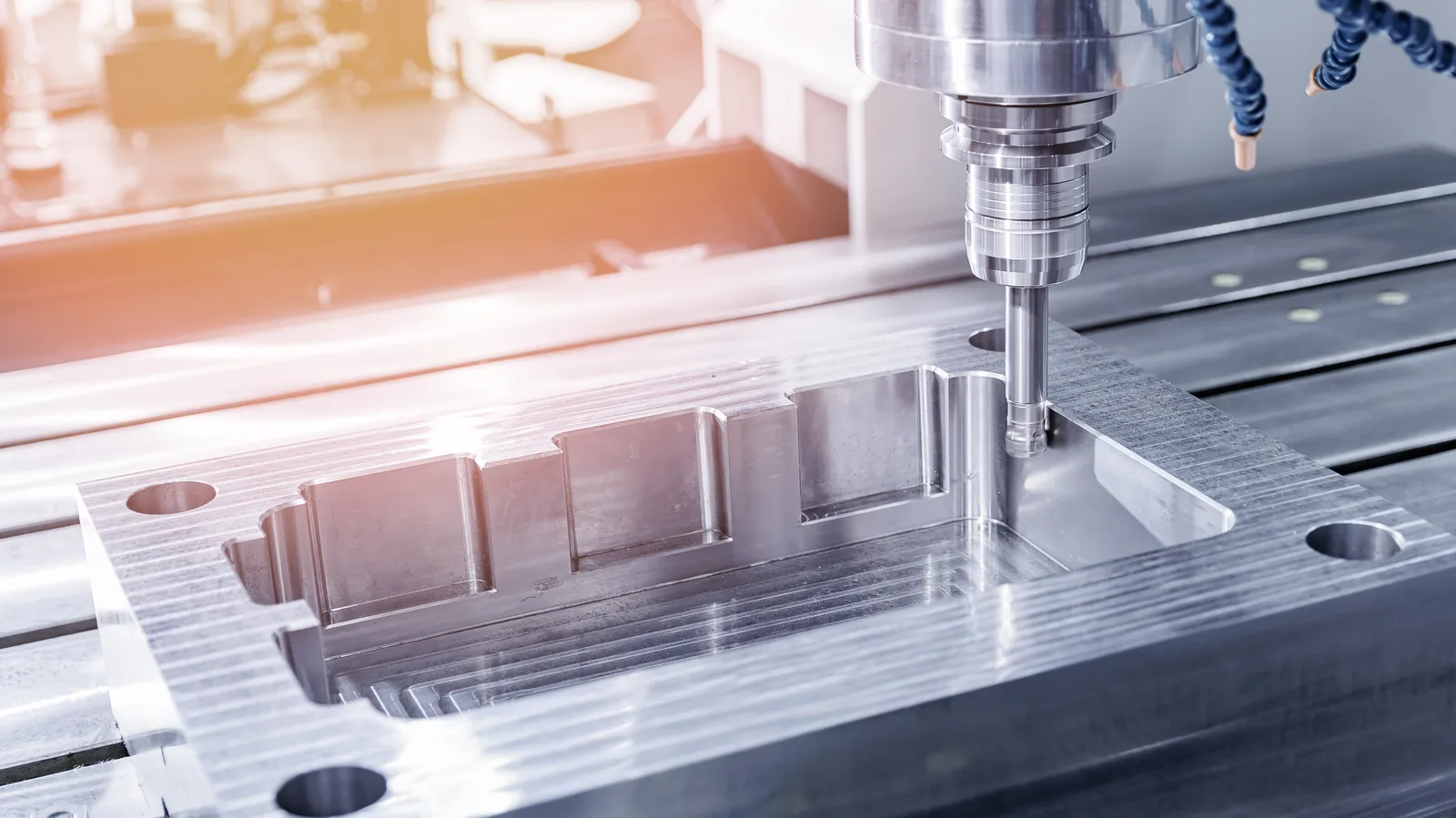
Buy for the work you described, not for the shop you might run someday. A CNC vertical machining center and a CNC lathe cover a wide range of job-shop parts; manual machines, saws, and a surface grinder fill in around them. Inspection equipment belongs on the first purchase list, not the last, because a part you cannot measure is a part you cannot certify. Budget for CAM software, tooling, workholding, and the time it takes to learn them.
The space has to fit the machines. Check the electrical service, floor load, ceiling height for installation and service, compressed air, and ventilation for coolant mist before you sign a lease. Plan the floor so material comes in one side, moves through machining and inspection, and ships from the other without crossing paths. Keep an equipment list with serial numbers, purchase dates, and values; it is the backbone of your property and equipment breakdown insurance, and it keeps the values on your policy in step with the machines on your floor.
Build safety into the floor from day one
Federal OSHA’s general machine guarding rule, 29 CFR 1910.212, requires one or more methods of guarding to protect the operator and others in the machine area from hazards such as the point of operation, ingoing nip points, rotating parts, and flying chips and sparks. The lockout and tagout standard, 29 CFR 1910.147, covers servicing and maintenance of machines where unexpected start-up or a release of stored energy could injure someone. Some states run their own OSHA-approved plans.
Put the guarding in place before the first job runs, write a lockout procedure for each machine, and train everyone who touches the equipment. Written programs and working guards are also what a workers compensation underwriter will ask to see.
Real-World Scenario: A two-person shop opens with a used machining center and a manual lathe, planning to add guards once the first orders pay for them. A few weeks in, a helper clearing chips reaches into the lathe while it is still coasting. The injury is a workers compensation claim, the missing guard becomes the center of the inspection that follows, and the shop’s first comp renewal is written against that record. Guarding and a written lockout procedure before the first job would have cost less than any part of what followed.
Starting small and with limited capital
You do not need a full floor of new equipment to open. With limited capital you can begin with one versatile CNC machine, buy used equipment after an inspection by someone who knows that model, or lease rather than buy so that cash stays available for tooling, material, and payroll. Taking work that fits the machines you have, and subcontracting the operations you cannot do yet, lets real orders pay for the next machine.
Starting small changes the insurance too. A one-machine shop in a leased bay still needs general liability, coverage for its equipment, and property coverage for material and customer parts in its care, and a landlord will usually ask for proof of insurance before you move in. We price a start-up from its actual plan, and our guide to machine shop and manufacturing insurance costs explains the factors that move the premium.
Certifications and registrations for aerospace and defense work
If you plan to sell to aerospace, defense, or medical customers, ask them early which quality certifications their purchase orders require. AS9100 for aerospace and ISO 9001 for general quality management are two to ask about. Our quality certification walkthrough for machine shops covers what the ISO standard asks of a job shop. The International Organization for Standardization lists ISO 9001:2015, Quality management systems — Requirements, as withdrawn and replaced by ISO 9001:2026, so a new shop building its quality system now should work to the current edition.
Defense work adds a federal registration. Under 22 CFR 122.1, anyone in the United States in the business of manufacturing or exporting defense articles must register with the Directorate of Defense Trade Controls. The regulation states that a single occasion of manufacturing a defense article is enough to count as being in the business, and that a manufacturer who does not export must still register. Our ITAR registration guide takes that process step by step. Certifications also shape what a shop is worth later, and when the day comes to exit, our guide on how to sell a machine shop covers the whole sale.
Finding your first customers
First customers usually come from relationships rather than advertising. Former employers, engineers you have worked with, and larger shops that need overflow capacity are the natural starting points, and a clean first job for each of them is worth more than a long list of prospects. Keep inspection reports and certificates of conformance for every part you ship; they answer the questions a new customer’s quality department will ask. Pricing those first jobs carefully matters as much as winning them; our guide to quoting CNC jobs builds an estimate from the drawing to the terms, and our guide on marketing a machine shop covers reaching buyers beyond your first relationships.
Expect customers to send insurance requirements with their first purchase order: specific liability limits, additional insured status, and sometimes a waiver of subrogation. Our guide to what insurance manufacturing customers require walks through the common terms. As the book grows, avoid letting a single customer become most of your revenue; a shop that depends on one buyer carries that buyer’s schedule, terms, and risk.
The insurance a new machine shop needs
A new shop’s program is built around its machines and its work. General liability with products-completed operations answers a part that fails after it ships. Commercial property covers the building, stock, tooling, and customer parts in your care, and manufacturing machine and equipment coverage adds equipment breakdown for the machines themselves. Workers compensation covers your employees, and your state’s rules decide when you must carry it. Manufacturers errors and omissions answers the out-of-spec part that costs a customer money without hurting anyone.
Put the program in place before the first purchase order, not after, because customers and landlords will ask for certificates before work begins. Our page on machine shop insurance explains how we build programs for job shops and contract machining, and you can request a quote with your equipment list and the work you plan to take.