

There is no published price for machine shop or manufacturing insurance in Missouri, and any number you see quoted before an underwriter has looked at your operation is a guess. What a carrier actually does is build the cost from your specific business — your payroll, what you make or machine, the equipment that runs your floor, the products you ship, your record, and the coverage you carry. This guide walks the drivers that decide what you pay.
That answer frustrates owners who just want a number, but it is the honest one, and understanding the drivers is far more useful than a fake average. A small job shop turning brackets to a customer’s print and a product manufacturer selling its own finished goods into the market are the same class only in name — and a carrier prices them nothing alike. Below is what moves the number, in roughly the order it matters, and what you can do about each.
Why there is no published price for Missouri manufacturing insurance
A premium is the output of an underwriting model, not a sticker. The carrier takes your specific exposures — how many people you employ and what they do, what you make and how it could fail downstream, the equipment that is your floor, your loss history, and the limits your contracts require — and prices each line against them. Change any input and the number moves. That is why a real quote requires real details, and why the most valuable thing you can do is understand which inputs carry the most weight. The rest of this guide is those inputs.
Missouri makes a statewide “average” especially misleading because its manufacturing base runs from aerospace and defense to automotive assembly and parts, food and beverage production, chemicals, and machinery. The spread between a small contract shop machining to a print and a regulated-sector maker shipping its own product is wide, because the products-liability exposure, the equipment, and the recall picture all swing. A blended Missouri number bundles operations a carrier would never price the same way, which is exactly why a published figure tells you almost nothing about your own.
For the full Missouri market picture — the state’s manufacturing economy, the competitive workers-compensation market, the federal sector regulation a shop or plant carries, and the major manufacturing markets we place across — see our Missouri machine shop and manufacturing insurance page. This guide is the companion to it: that page is the market and regulatory overview, this one is the cost explainer.
Payroll and your operator classifications
Payroll is usually the single biggest driver, because it scales both your workers compensation and a large part of your general liability. It is not just the dollar figure — it is which work the payroll covers. A machine operator running a press is a different classification than an assembler or a shipping clerk, so a carrier rates each by what it actually does. The injury profile a carrier is pricing is real on a manufacturing floor: machine guarding around presses and powered equipment, cutting and grinding, welding, lifting, and material handling. Missouri places workers compensation with a private carrier in a competitive market rather than a state fund — the admitted market is overseen by the Missouri Department of Commerce and Insurance — so reading your operator classifications and your safety record against the work the payroll actually covers is part of getting this driver right.
Your sales, and the end-use of what you make
Your sales are a rating basis for the products side, but the end-use is what a carrier really prices. A product that reaches consumers, ends up in a safety-critical assembly, or falls in a regulated sector — food, medical device, firearm, auto part — carries a deeper products-liability exposure than a low-risk industrial component, because the way it could fail downstream is the exposure. A contract machine shop working to someone else’s print carries a different version: the risk turns on the precision and the equipment, with an out-of-spec part running to the financial-loss line and a defective part running to products liability. A manufacturer selling its own product carries the full version, under its own name. What you make and who uses it move the number more than the headcount alone.
Your products and recall exposure
This is the exposure that defines the class, which is why it is a signature cost driver. A product you make keeps existing after it leaves your dock, and a defect can become a serious claim long after the sale — a part that fails in the field and injures someone, a component blamed for a failure up the supply chain, or a contaminated or defective product that has to come back off the market. The downstream harm is the general liability products-completed operations exposure; the cost of pulling the product back is a separate product recall exposure that general liability does not cover; and a product that simply fails to perform as specified, with no injury, runs to manufacturers errors and omissions. A carrier weighs how your products could fail, your quality and traceability record, and your recall history when it prices these lines — and a regulated-sector maker carries a recall picture a general manufacturer does not.
Real-World Scenario: A St. Louis shop machines a run of fittings to a customer’s print while a Kansas City manufacturer ships a batch of its own finished components to a distributor. The shop’s exposure turns on the equipment, the precision, and a part that could fail in the customer’s assembly; the manufacturer’s turns on the product in the market, the recall if a defect surfaces, and the products-liability claim if it causes harm downstream. Same Missouri, same general class — but a carrier prices the two from completely different pictures. The owner who can describe that picture clearly gets a sharper quote than the one who cannot.
The equipment on your floor, and your property
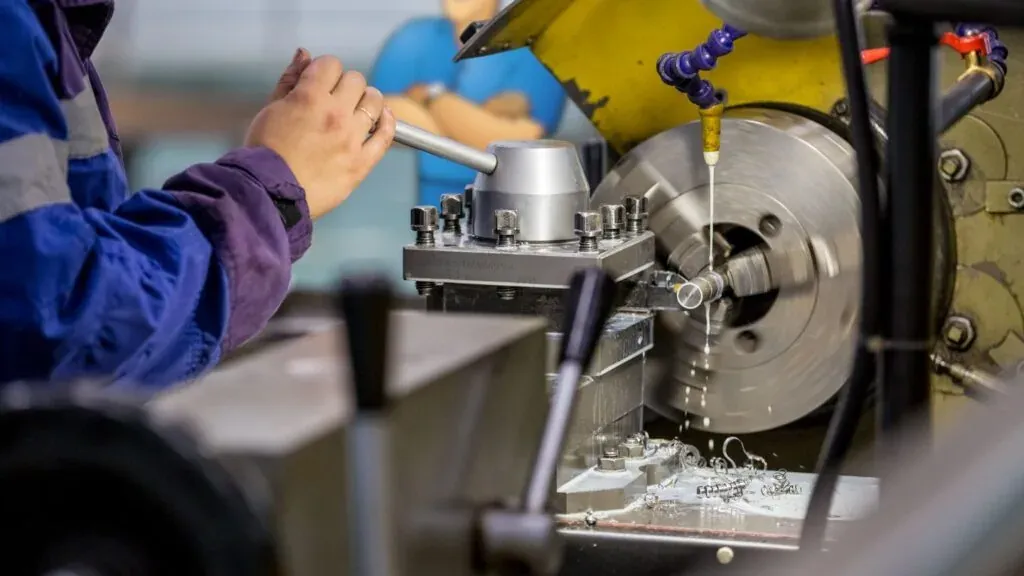
For a machine shop the CNC machines, lasers, presses, and welding cells are the operation, so their value and age feed both the property line and the machine and equipment line with its equipment-breakdown coverage — the response when a machine fails from the inside, which standard property excludes. For a manufacturer the production equipment sits alongside the building, contents, raw materials, work-in-process, and finished goods that make up the property exposure. How much equipment you run, what it is worth, how it is maintained, and the value of the stock moving through your floor are real inputs, and scheduling your equipment to its real value is where this driver is won.
Claims history and how carriers read it
Your loss record is a driver you have already been writing for years. A clean history opens more markets and prices better; a serious products-liability, recall, general liability, or workers-compensation loss in the last several years narrows the field and raises the number, and a frequency pattern of small claims can matter as much as one large one. Carriers read the story behind the losses too — a single claim with corrected quality-control and inspection procedures reads differently than repeated, similar incidents. The durable lever here is operational discipline: documented quality control and traceability, machine guarding and lockout-tagout, material certification, and worker-safety practices under OSHA standards all show up in the record a carrier prices.
The coverage choices that move your premium
Finally, what you buy is a driver. The limits your customers, distributors, and supply contracts require push you toward an umbrella, and higher limits cost more than lower ones — which matters for a manufacturer because a single products-liability claim can run well above a primary limit. Whether you carry general liability with the products-completed operations aggregate your sales actually call for, whether you schedule your equipment to value, whether you carry recall and errors-and-omissions coverage for the products exposures that sit just outside general liability, and how your limits are set all feed the number. None of these are places to under-buy blindly — they are places to buy deliberately, which is the difference between a cheap policy and the right one.
How to get an accurate Missouri quote
The path to a real number is to describe your real operation. Tell a broker your payroll and the work it covers, your sales and the end-use of what you make, the equipment on your floor and your building and stock values, your products and recall exposure, your claims history, the limits your contracts require, and where in Missouri you operate. From there a carrier with genuine machine-shop and manufacturing appetite can price it — and you can compare apples to apples instead of chasing a headline rate. When you are ready, start a quote and tell us what you make or machine, or browse the full coverage overview to see how each line fits together. For the market and regulatory picture behind these drivers, see the Missouri machine shop and manufacturing insurance page, and for how these drivers play out nationally, see the national cost guide. The number at the end will reflect your business, which is the only number worth having.