
Owners often know they need something for the machines, but not what it actually answers. Equipment breakdown is the line written for the way a machine most commonly fails — not a fire or a theft from the outside, but the machine breaking on its own from the inside — and it reaches further than the repair invoice most people picture. This post lays out exactly what it responds to, and the downtime piece that is often the larger half of the loss.
The short version: equipment breakdown — the modern name for boiler and machinery — answers the internal failure of your covered equipment, and, where the form provides, the business interruption and extra expense that follow. It is written to sit against the property form’s exclusion for internal breakdown, picking up exactly what that exclusion leaves out.
What equipment breakdown actually answers
The coverage responds to sudden and accidental internal failure of covered equipment — the machine failing with no external peril touching it. In practical terms, an equipment breakdown form typically answers:
- Mechanical breakdown. A drive, a spindle, a bearing, a gear set, or a hydraulic component fails internally — the machine breaks itself, with no fire, no collision, no outside cause.
- Electrical breakdown. An arc, a short circuit, or an insulation failure inside the machine’s electrical system damages the equipment from within.
- Power surge. A surge off the utility line or from within the facility damages drives, controllers, and motors — a cause property typically does not answer.
- Motor burnout. A motor fails and burns out, one of the most common breakdown claims in a shop full of motor-driven equipment.
- Operator error, where the form provides. Some forms extend to damage the operator causes the machine — a real and frequent cause of loss a narrow form may leave out.
- Electronic-circuitry impairment, where carried. An enhancement for electronic failure with no detectable physical damage — the controller is impaired, the machine is down, but nothing is visibly broken.
Every one of these is the machine failing from the inside. None is a fire, a theft, or a storm — and that is the point: this is the line that answers the way a machine actually breaks most of the time.
The machine is the high-value, breakdown-vulnerable asset
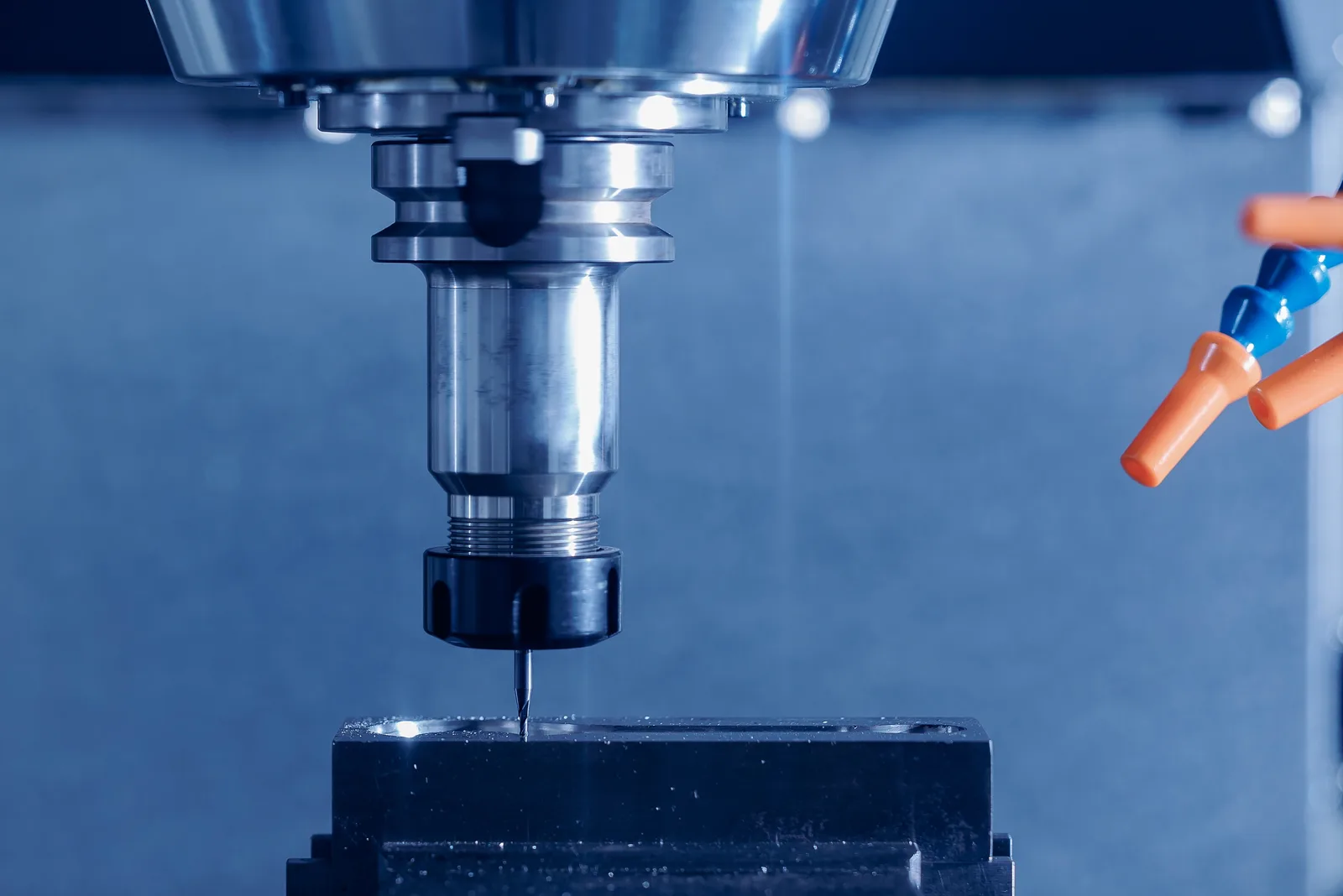
The reason this coverage matters more for a shop today than a generation ago is the machine itself. A modern CNC, a fiber laser, a servo press, or an automated welding cell is no longer a purely mechanical asset. It pairs high-torque mechanical components — spindles, drives, hydraulics, ball screws — with sensitive electronic controllers, programmable logic, and increasingly with network connectivity. Each of those layers is a distinct way the machine can fail.
That is the quiet shift: a more capable machine is a machine with more internal failure points. The mechanical side can seize or break; the electrical side can arc or short; the control side can fail on a surge or an internal fault. A single machine can be taken down by a worn bearing one month and a failed controller the next, and neither has anything to do with the fire-and-theft perils commercial property is built for. The electronic-circuitry-impairment enhancement is the answer to one corner of this — extending the trigger to a pure electronic failure where the older requirement of detectable physical damage would leave a gap.
The half owners miss: the downtime that follows
The most common mistake is to picture equipment breakdown as a repair policy and stop there. For a manufacturer, the repair is frequently the smaller half of the loss. When the machine that runs the line goes down, two things happen at once: you have a repair bill on an expensive, often long-lead-time machine, and you stop earning the income that pays for everything else.
A well-built equipment breakdown form responds to both. Beyond repairing or replacing the damaged equipment, where the form provides it answers the business interruption — the income lost while production is stopped — and the extra expense of renting machine time, outsourcing the run, or expediting a part to keep an order moving. Some forms also extend to spoilage, where material or work-in-process is ruined as a consequence of the breakdown. The damaged machine and the downtime are one covered loss, not two, and structuring the income piece to how central each machine is to your output is where the coverage earns its place.
Real-World Scenario: A motor burns out on the one machine every job passes through. The repair is straightforward, but the replacement part is on a lead time, and the line sits idle for days while orders back up. Equipment breakdown answers the burnout itself, and where the form provides, it picks up the income lost during the downtime and the extra expense of outsourcing the urgent runs to keep customers supplied. Had the shop pictured this as a simple repair policy, it would have insured the smaller half of the loss and carried the larger half alone.
Why it matters for your operation
Equipment breakdown is the line that decides whether an internal failure on your floor is a repair bill and a few lost days or a loss you carry alone. The detail that matters is the form: whether it carries operator error, whether it carries the electronic-circuitry-impairment enhancement a modern electronic machine needs, and how the business-interruption piece is sized against the machines your work actually depends on. We read those against the real floor rather than a default, and write the coverage so the repair and the downtime are both answered. From here, equipment breakdown versus property insurance draws the internal-versus-external seam that keeps the two lines straight, and business interruption for manufacturers goes deeper on the downtime piece. When you are ready, start a quote and tell us what you run, or read the equipment breakdown page for the full treatment. Forms and enhancements vary by carrier, so the right move is always to confirm what your policy actually carries rather than assume.