

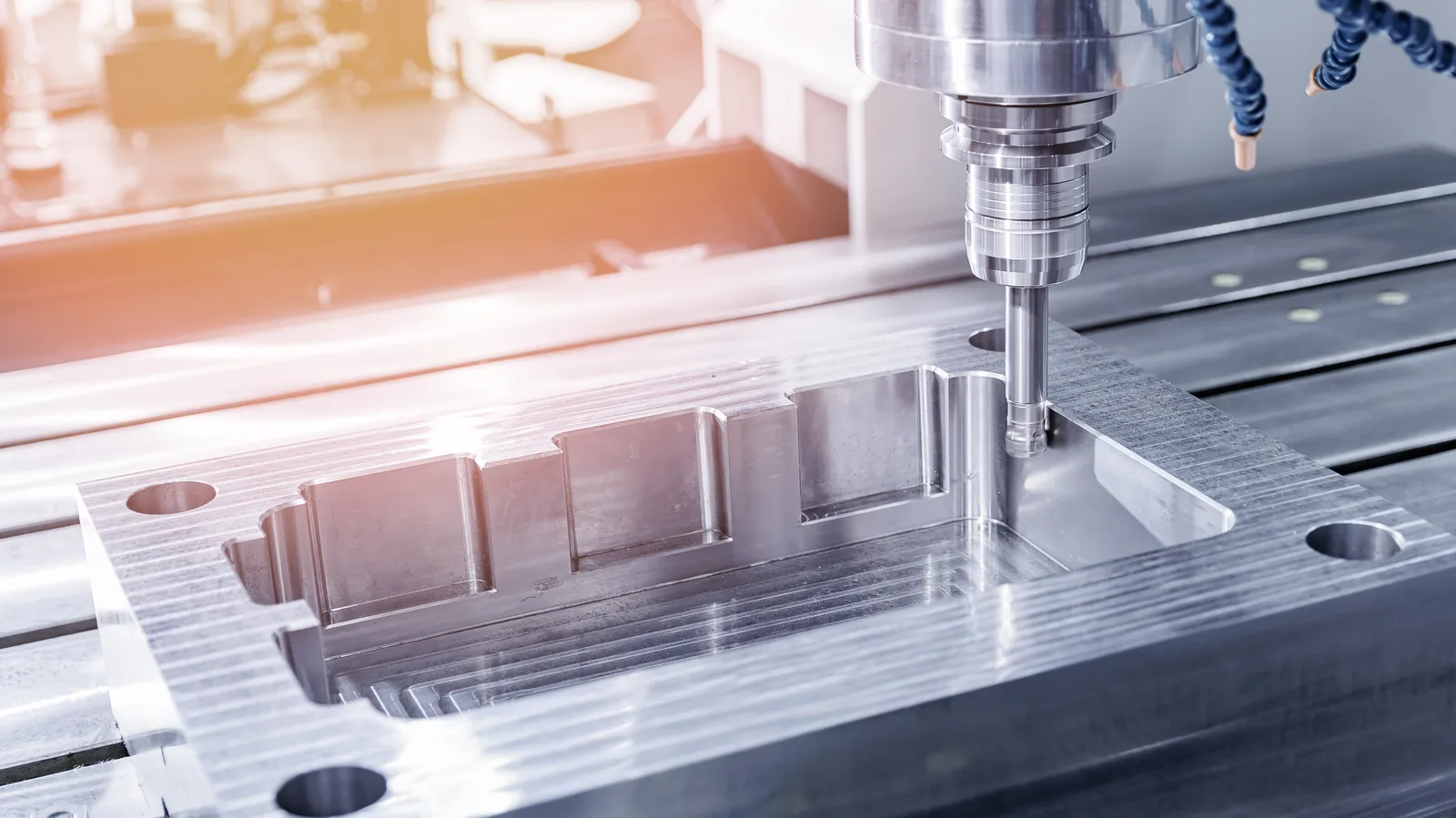
A machine shop or manufacturing business is worth what its durable, transferable earnings can carry forward to a new owner, expressed as a valuation multiple that the underlying drivers move up or down — not a single number you read off a chart. This is general education, not legal, tax, or financial advice; confirm any valuation of your specific business with your own certified business appraiser, M&A advisor, and CPA. What this guide does is teach the drivers and the methods, so the eventual conversation with those advisors is a sharp one rather than a guess.
Owners on both sides of a sale want the same thing: a number. But the honest path to a defensible number runs through the drivers first, because two shops with identical revenue can be worth very different amounts depending on what they make, what they are qualified to make, and how durable and transferable that work is. Understand why, and a quoted multiple becomes a tool you can use rather than a figure you have to take on faith — and selling is not the right move for every owner, so understanding your value is useful whether you ever sell or not.
Certifications and specialization are the engine of the multiple
In most industries the headline driver is recurring revenue. In manufacturing there is a lever that is more distinctive still, and it is the one owners most often undervalue in their own shops: what you are certified and qualified to make. A general job shop that machines to a customer’s print competes largely on price and capacity, and it is valued accordingly. A shop that holds AS9100 for aerospace, NADCAP accreditation on its special processes, ISO 13485 for medical devices, or ITAR registration for defense work has something a buyer cannot quickly replicate — a qualified position on programs that took years to win. That qualification is the moat, because it is scarce, slow to earn, and it tends to come wrapped in exactly the revenue buyers pay the most for.
The mechanism is worth understanding, because it explains the size of the gap. Certifications are scarce by design, the OEM qualification cycles behind them commonly run eighteen to thirty-six months, and once a supplier is qualified on a program it tends to stay there under multi-year agreements — so a certified, specialized shop carries durable, contracted revenue that a price-competitive job shop has to re-win every year. That is why what you make and what you are qualified for moves the multiple more than raw size does, and why two shops of the same revenue can sit a wide distance apart.
The value drivers buyers weigh
Certifications open the door, but a buyer reads several more lenses that tell them how durable and transferable the earnings really are. Contracted backlog versus job-shop work is often the next: a shop running multi-year long-term agreements and a visible, funded backlog carries revenue a buyer can count on keeping, while one living quote-to-quote on spot work has to re-earn it every year — the same revenue is worth more when it is contracted than when it is not. Customer concentration and mix cuts both ways: a book spread across many customers and more than one end market is resilient, while one where a single customer carries most of the revenue is discounted for the risk that the account leaves with the sale. Management depth and owner-dependence is the lens buyers care about most — a shop that runs on a trained team, a plant manager, and documented quoting and scheduling transfers cleanly, while one held together by the owner’s relationships, the owner’s quoting, and the owner’s name on the certifications walks out the door when the owner does. Automation and equipment matter as the modern capacity story — a well-maintained, capable machine base that conveys with the deal reduces a buyer’s reinvestment risk. And clean books, margins, and add-backs decide how much of the revenue reaches the bottom line and how confidently a buyer can rely on the numbers. None of these is a number on its own; together they are what a real multiple is built from.
SDE vs EBITDA: how buyers measure the earnings
A multiple has to be applied to an earnings figure, and manufacturing deals use two. Seller’s discretionary earnings (SDE) takes the business’s profit and adds back the owner’s salary and discretionary expenses — it answers “what does this business produce for one owner-operator,” and it is the common measure for smaller, owner-run shops, roughly those under one to two million dollars of owner earnings. EBITDA — earnings before interest, taxes, depreciation, and amortization — measures the business’s earnings with a hired management team in place, and it is the measure for larger plants and most private-equity acquisitions. Advisory commentary, including from firms such as Sofer Advisors and the pattern visible in BizBuySell’s sold-business data, often puts the crossover near two million dollars of EBITDA. The distinction matters because the same business carries a different multiple on each, so a figure you hear is meaningless until you know which earnings measure it applies to — and quietly comparing a quoted SDE multiple to a quoted EBITDA multiple is the single most common mistake owners make reading the market.
What multiple do machine shops and manufacturers sell for?
This is the question everyone arrives with, and it can be answered honestly only with attribution and a hedge. The business-for-sale marketplace BizBuySell, which tracks completed small-business sales, has reported an all-industry median selling price on the order of 2.7 times SDE in recent quarterly insights, with manufacturing among the stronger categories. Advisory commentary from M&A firms that work the sector — among them CT Acquisitions and The Precision Firm — puts general, owner-operated machine shops in a rough 3 to 5 times SDE range, a band that has stayed remarkably stable from 2019 into 2026 because it is governed largely by what an SBA-backed individual buyer can finance. Broader lower-middle-market manufacturing tends to trade on EBITDA and higher: advisory commentary frames a rough 5 to 7 times EBITDA consensus, while research-style sources such as First Page Sage and valuation platforms like Equidam report manufacturing averages in a wider 4.5 to 8 times EBITDA band, scaling with size from roughly 4 to 6 times for the smallest businesses upward.
The certifications are where that spread widens the most. The same advisory commentary discusses a general machine shop with no special certifications nearer that 3 to 5 times SDE / 4 to 6 times EBITDA range, an AS9100- or NADCAP-certified aerospace supplier commonly nearer 5.5 to 10 times, and an ISO 13485 or FDA-registered medical-device manufacturer higher still, in a rough 8 to 12 times band — with a single AS9100 certification sometimes described as adding one to two turns on its own. Those are reported industry ranges, not a quote for your business, and the caveats matter more than the numbers: they vary by source and methodology, they are quoted on different earnings measures, they move with how much of the revenue is certified and contracted, and they scale with deal size. Treat a published multiple as a starting reference for understanding the drivers, never as a valuation of your operation — a figure pulled from a chart and applied to your revenue without reading the drivers is a guess dressed up as a number.
The buyer-type spread is the part that matters most
Here is the insight a single industry average hides: who is buying moves the multiple as much as what you make, because different buyers underwrite the same shop differently. An individual owner-operator or an SBA-backed search buyer is buying a job and a cash flow, and underwrites conservatively — typically on SDE and at the lower end. A private-equity add-on — folding your shop into an existing platform — can pay more, because your earnings join a bigger, more valuable book and may fill a capability or certification gap the platform needs. A PE platform deal, where a firm makes your business the base it builds a regional roll-up on, is underwritten differently again and at a stronger multiple. And a public strategic consolidator sits at the top of the range. The same business is genuinely worth different amounts to those buyers, which is why the spread between the BizBuySell owner-operator figure and the certified-platform tier is so wide — it is not one market, it is several, and your eventual buyer type is part of your value.
That spread exists because manufacturing is a large, fragmented sector that acquirers prize, and the demand is documented. Advisory and buy-side commentary has described private equity closing on the order of $8 billion or more in U.S. manufacturing platform investments across 2024 and 2025, with manufacturing among the most active M&A sectors. Firms with active industrial practices — among them the Sterling Group, Audax, and AE Industrial Partners on the aerospace-and-defense side — have built manufacturing platforms by acquiring independent operators, and public strategic acquirers such as HEICO (NYSE: HEI) and Roper Technologies (NYSE: ROP) are documented buyers of precision and specialty manufacturers. The supply side of that demand is the succession wave: a large cohort of owner-operators is reaching retirement without an internal successor, a trend Deloitte and BDO manufacturing-outlook commentary has flagged for years. Name those buyers as evidence the demand is real and sophisticated — not as a headline multiple that applies to you. That active market is a reason to understand your value clearly, not a reason to assume a roll-up number is your number; your drivers still set it.
Real-World Scenario: Two machine shops come up for sale with the same annual revenue. One holds AS9100 and runs multi-year long-term agreements for a handful of aerospace and medical OEMs, with a plant manager, a trained team, documented quoting and scheduling, and the certifications held by the company rather than the owner. The other is a general job shop machining to print on spot work, with one customer at nearly half its revenue and the owner personally quoting, scheduling, and holding the relationships. A buyer reads them in an afternoon and values them very differently: the certified, contracted, owner-independent shop earns a stronger multiple, while the concentrated, owner-dependent one is discounted for everything that leaves with the seller. Same revenue, different worth — and the gap is the drivers, not the formula.
Turning the drivers into a defensible number
The drivers in this guide are the language a real valuation is spoken in, but the number itself belongs to professionals who can see the actual figures. A certified business appraiser or M&A advisor builds a defensible value from your real financials read through these lenses; a CPA handles the tax and earnings normalization; an attorney handles the structure and what transfers. Their work is what turns “roughly the industry range” into “this business, this number.” If you are building toward a sale rather than running one now, the same drivers are the levers — winning and keeping the certifications your end markets require, growing contracted backlog, cutting customer concentration, and deepening the management bench to reduce owner-dependence raise the multiple over the twelve-to-twenty-four months before a sale far more than any last-minute move can. The insurance side meets the deal quietly but matters: the shop being sold carries a loss history that shapes how it underwrites under a new owner, so clean general liability and products-liability loss runs help the sell side and are worth reading on the buy side, the manufacturing machinery and equipment schedule is part of what conveys, and when the deal closes the new policy has to be issued to the entity that actually closes it. For the cost side of running the operation in the meantime, see what drives machine shop and manufacturing insurance costs, and browse more owner resources as the library grows. When you are ready to make sure the operation is insured to the way it actually runs, start a quote. For the sale process itself, see how to sell a machine shop. This is general education to sharpen the conversations with your own appraiser, M&A advisor, and CPA — not a substitute for their advice on your specific business.