

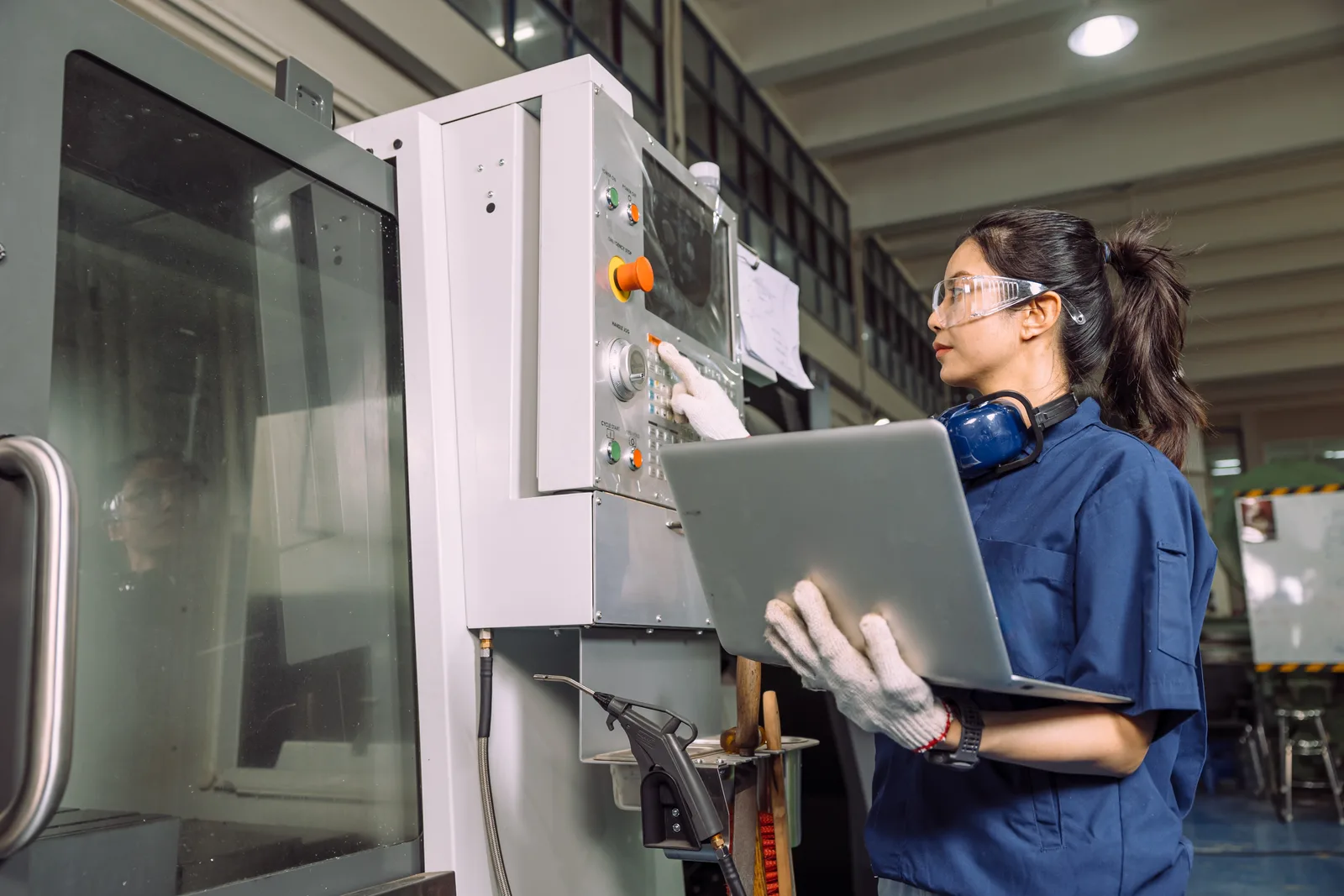
Nationwide, small machine shops can expect to pay anywhere from $600-$2,500+ a year for general liability, and larger machine shops pay $2,000-$7,000+ a year just for general liability, and Massachusetts shops start from those ranges. Machine shop insurance in Massachusetts then moves within or above them based on end use, customer contracts, machine values and payroll.
Nationwide, the other core lines have ranges as well. Property coverage for machines can run as little as $200 a year for smaller machines up to over $1,000. Workers compensation usually ranges from $500-$800 a year per $30K in payroll. These are nationwide figures, not Massachusetts rates and not a quote. The sections below take each cost bucket in turn and show what in Massachusetts tends to push it.
How to read the nationwide ranges for a Massachusetts shop
The ranges are a starting point for each line, not a price for your shop. Each describes a single line of insurance, so a full program adds them together, along with whatever coverages your customers ask for on top. A carrier prices your shop from your own application: sales and what your parts go into, the values of your machines and building, payroll by classification, and your loss history. The national drivers behind each range are covered in our guide to what goes into machine shop and manufacturing premiums, so this post stays with what Massachusetts adds.
What it adds comes mostly from who your customers are and which rules frame your claims. The Commonwealth names advanced manufacturing, research and development, and life science among its key industries, and much of the manufacturing insurance work in Massachusetts sits where those overlap: contract machinists supplying instrument and lab equipment makers, device companies building from their own research, and precision shops running prototypes for engineering teams. Each of those presses on a different cost bucket. Our Massachusetts page has the state detail and its sources.
General liability
Sales and the end uses of your parts
Customer contracts and the limits they ask for
Property for machines
Machine values and how long they take to replace
Building, tooling and stock values
Workers compensation
Payroll across the floor and the office
How each job is classified
What Massachusetts adds
Federal OSHA inspection of private plants
No privity defense in warranty and negligence claims
Life-science and device customer requirements
Air rules that can reach new equipment
General liability: end use and a wider claimant pool
General liability is usually the bucket where a Massachusetts shop moves furthest within the nationwide range, because the carrier rates it on sales and on what your parts end up inside. A bracket for a filing cabinet and a machined component for a diagnostic instrument can carry the same sales and still price very differently, since a failure inside the instrument can hurt someone. Life-science and device work tends to sit toward the upper end of a range for that reason alone.
Massachusetts law then widens who can bring the claim. Under G.L. c. 106, § 2-318, lack of privity is no defense in warranty or negligence actions against a manufacturer, seller, lessor or supplier of goods. A patient injured by a device containing your part, or a worker hurt by equipment your customer installed, can come straight to you.
Timing matters too. Tort claims, which include most product injury claims, run on the limitation period in G.L. c. 260, § 2A, and a claim can arrive well after the part ships. That favors keeping products-completed operations coverage continuous, which is a cost you carry every renewal rather than a line you drop when a product slows down. The choice between an occurrence and a claims-made form also changes what you pay over time, and our piece on occurrence versus claims-made for manufacturers explains that trade. The general liability page covers the coverage itself.
Real-World Scenario: A precision shop that has long made fixtures for local equipment builders picks up a device company as a customer. The parts look like the shop’s usual work, so the owner reports the added sales at renewal without describing them. The underwriter asks what the parts go into, learns they sit inside a medical device, and reprices the general liability. Then the device company’s supply agreement asks for recall coverage and higher limits than the shop carries. The owner learns that a single new customer moved several lines of the program, and that describing the work up front would have kept renewal from turning into a scramble.
Customer contracts can push a shop above the range
Supply agreements are often what takes a Massachusetts shop above the nationwide general liability ranges, because they add coverages and limits the base line does not include. Device makers register and list their devices with the FDA and work under a federal quality system for finished devices, and their quality and insurance expectations usually flow down to the shops that supply them. Those expectations commonly include products liability at stated limits, product recall coverage, and sometimes professional coverage.
Research-led manufacturers bring design risk with them. When you engineer the part, a claim can allege that the design was wrong, or that the part met its print but did not do what the customer needed. That second kind of claim is a financial loss, and it usually belongs to manufacturers errors and omissions rather than general liability. Higher limit requirements are commonly met with an umbrella above the primary lines. None of this sits inside the general liability range; each is a separate premium written beside it.
Property for machines: precision equipment and where it sits
Property cost follows the values you insure, and Massachusetts precision shops often run expensive, slow-to-replace equipment. Five-axis centers, EDM machines and metrology gear push machine values up, and the time it takes to replace them pushes the business income side up with them. Those values, more than the state itself, decide where a shop lands within the nationwide property figure, and why some land above it.
Breakdown is a separate question from fire and theft. Standard property forms often do not respond to a mechanical or electrical failure of a machine, so equipment breakdown is commonly added as an endorsement or written as its own policy, with its own cost. Our article on equipment breakdown versus property insurance explains the split, and the property coverage page covers the building, machines and stock.
Location adds some detail. Boston, Worcester, New Bedford and Fall River are ports of entry, and shops that import tooling or raw stock directly should make sure goods sitting at a port or in transit are scheduled with limits that match their declared values. Waterfront fabricators who work on customers’ vessels should look closely at how property in their care is treated.
Workers compensation: classification and the federal inspection record
Workers compensation is often the bucket a Massachusetts shop can influence most, because the state places it with private insurers in a competitive market and the price follows your payroll split and your claims history. Shops with the same total payroll can pay quite differently. Machinists, assemblers, production technicians, shipping staff and office employees each belong in a classification, and a wrong split can raise the premium or produce an unwelcome surprise at audit.
Safety oversight feeds the rate as well. The Massachusetts plan approved by OSHA covers public employees only, so private shops are inspected by federal OSHA, which has area offices in Springfield and Andover. Carriers ask about the federal machine guarding and lockout standards, because unguarded machines and servicing without lockout lead to the severe hand and arm injuries that shape a comp record. A clean inspection history and written procedures strengthen the submission.
Research-led manufacturers in the state often bring in temporary technicians or contract engineers during a build-out or validation run, and whose comp policy covers those people depends on the staffing agreement, not on who supervises them. Review that agreement before the first temporary worker arrives. The workers compensation page covers the mechanics, and our guide to lowering manufacturing workers comp costs lists the controls underwriters tend to credit.
Costs that sit outside the main buckets
A Massachusetts program often carries a cost the nationwide ranges do not touch: pollution. The Department of Environmental Protection adopts air pollution rules under G.L. c. 111, § 142A, and a new coating line, degreaser or heat-treat oven can raise the question of a plan approval before it runs. General liability and property forms both carry broad pollution exclusions, so a release from your own process usually calls for a separate pollution or environmental policy. Shops with finishing or chemical processes should expect underwriters to ask about permits and to price that exposure on its own.
Growth by acquisition is another. When a Massachusetts company buys a smaller shop, the seller’s past products and open comp claims do not automatically follow the buyer’s policy, and closing that gap on purpose adds cost to the deal.
Keeping a Massachusetts shop toward the lower end
The most reliable way to keep a shop toward the lower end of the ranges is a clean, specific application backed by controls a carrier can credit. Separate contract machining from branded products, since contract work is rated largely on payroll and equipment while branded products are rated on sales and end use; blending them can mean paying product-maker rates on job-shop work.
- Describe end uses plainly, especially any medical, instrument or research work.
- Check payroll classifications before renewal and after each round of hiring.
- Collect written guarding and lockout procedures before the file goes to market.
- Set machine values deliberately and choose deductibles the shop can carry.
- Answer permit and plan approval questions with documents, not memory.
- Read customer supply agreements before signing, so required limits are priced in advance.
If you want us to price your Massachusetts shop against those ranges, send us your details: what you make, who buys it, what your machines are worth, and how payroll splits across the floor. We will take the file to carriers that write the class.