
States we serve · Massachusetts
Machine Shop and Manufacturing Insurance in Massachusetts
For Massachusetts contract machinists, life-science and device manufacturers, and R&D-driven producers, with programs set against federal OSHA, c. 260 § 2A, and DEP rules.
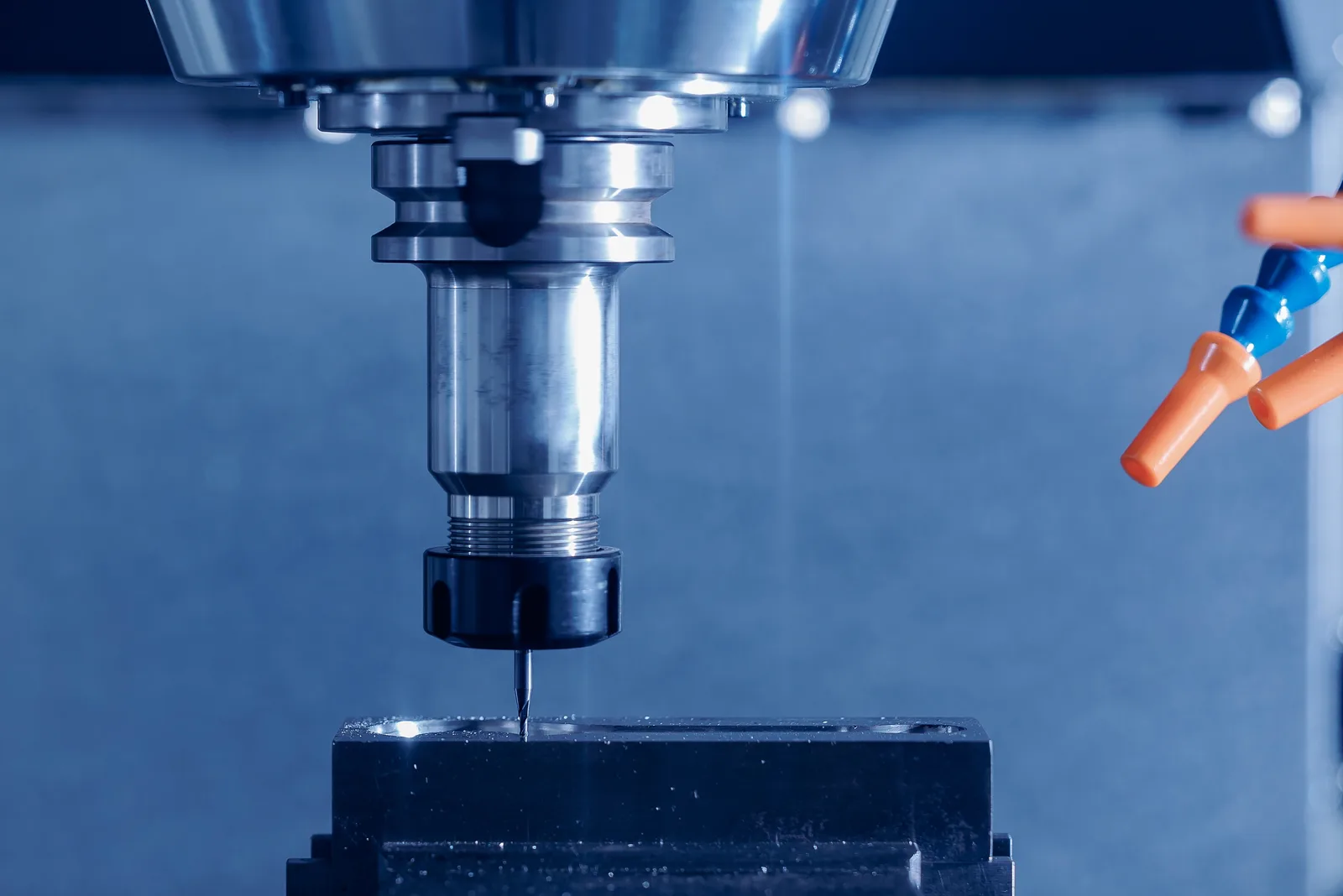

In Massachusetts we cover machine shops, precision machinists, fabricators, and the manufacturers they supply, from contract shops working to a customer’s print to companies that design and build life-science instruments, medical devices, and research equipment under their own name. The common thread is a floor full of machines and a product that leaves the building with your name attached to it somewhere along the chain. The program follows that product as far as it goes.
A handful of Massachusetts rules set the terms. Private employers are inspected by federal OSHA, because the Commonwealth’s own plan covers public employees only. Tort claims, including most product injury claims, run on the three-year period in G.L. c. 260, § 2A. The Commonwealth has removed lack of privity as a defense in warranty and negligence actions against manufacturers and sellers. And air rules adopted by the Department of Environmental Protection can require a plan approval before new equipment operates. Each has a section below.
The pieces an underwriter adds up in Massachusetts
Every Massachusetts quote starts from the same ledger. Payroll by class, equipment and tooling values, building and inventory values, the industries your parts end up in, and your loss runs are the inputs. For the liability side, end use dominates: a machined component inside a diagnostic instrument or an implant carries more weight than one inside a filing cabinet, because a failure there can hurt someone.
Several local factors then move the result. Life-science and device customers often require their suppliers to carry products liability, recall, and sometimes professional coverage at stated limits, and those requirements arrive in supply agreements rather than conversations. Research-led manufacturers ship prototypes and small batches, which can make a single customer a large share of revenue and a single failure a large share of exposure. The absence of a privity defense widens the circle of people who can bring a warranty or negligence claim. And a federal inspection history, good or bad, follows the file. Our quotes come from your operation, not from a rate table; our article on what goes into machine shop and manufacturing premiums covers the national picture.
Life science, R&D, and advanced manufacturing
The Commonwealth’s Executive Office of Economic Development names advanced manufacturing, research and development, and life science among the key industries it works to strengthen. In practice, much of the Massachusetts manufacturing we see sits where those three meet: contract machinists supplying lab and instrument makers, small companies building devices out of their own research, and precision shops that do prototype runs for engineering teams.
Device manufacturers work under a federal framework. Establishments that make devices register and list them with the U.S. Food and Drug Administration under 21 CFR 807.20, and 21 CFR Part 820 sets the quality management system for finished devices. A device maker’s program therefore leans toward products liability and product recall, and a contract shop supplying that maker should expect the maker’s quality and insurance requirements to flow straight down to it.
Research-driven manufacturers carry a different weight: design risk. When you engineer the product, a claim can allege that the design itself was wrong, or that a part met its specification but did not do what the customer needed. That second kind of claim is a financial loss, and it belongs to manufacturers errors and omissions rather than general liability. Precision equipment is the third pressure point. Five-axis centers, EDM machines, and metrology gear are expensive and slow to replace, so equipment breakdown and the income lost while a machine is down belong in the conversation early.
Private plants answer to federal OSHA here
The Massachusetts plan approved by OSHA is a public-sector plan. Federal OSHA’s Massachusetts State Plan page explains that it covers state and local government workers only, and the Commonwealth runs it through the Massachusetts Department of Labor Standards (DLS), Workplace Safety and Health Program for Public Employees. Private employers, including every private machine shop and plant, fall under federal OSHA, which has area offices in Springfield and in Andover for the Boston North area.
That makes the federal machinery standards the working rulebook for a private Massachusetts floor. Point-of-operation guarding is set by 29 CFR 1910.212, and hazardous-energy control by 29 CFR 1910.147. Carriers ask about both because unguarded equipment and servicing without lockout lead to the severe hand and arm injuries that shape a comp record. We collect your written procedures before we go to market so the underwriter reads your controls, not an assumption.
How Massachusetts comp is placed
Massachusetts employers buy workers compensation from private insurers in a competitive market. Two companies with the same total payroll can pay very different amounts, mostly because of how that payroll is split among classes and how their claims history has run. Machinists, assemblers, lab technicians who work on the production side, shipping staff, and office employees each have a place in the classification system, and a mistake in that split is expensive to correct at audit.
We also check the employers liability part of the policy, which answers lawsuits that grow out of workplace injuries, and we coordinate comp with the liability lines so there is no gap between them. The workers compensation page covers the mechanics, and our guide to lowering manufacturing comp costs lists the controls underwriters credit. Companies that also run a site in New Hampshire or Rhode Island should schedule that state’s payroll separately.
Two Massachusetts patterns deserve a specific check. Research-led manufacturers often bring in temporary technicians or contract engineers during a build-out or a validation run, and whose comp policy covers those people depends on the staffing agreement, not on who supervises them day to day. We read those agreements and confirm the answer before the first temporary worker steps onto the floor. The second pattern is growth by acquisition: when a Massachusetts company buys a smaller shop, the seller’s past products and its open comp claims do not automatically follow the buyer’s policy, and the gap has to be closed on purpose. Our article on preparing a manufacturing business for sale covers the insurance side of a transaction from the seller’s point of view.
No privity defense, and three years to sue
Massachusetts law does not let a manufacturer escape a claim just because the injured person never bought from it. Under G.L. c. 106, § 2-318, “Lack of privity between plaintiff and defendant shall be no defense in any action brought against the manufacturer, seller, lessor or supplier of goods to recover damages for breach of warranty, express or implied, or for negligence.” A worker hurt by a machine your customer installed, or a patient injured by a device that contains your part, can bring a warranty or negligence claim against you directly.
The time allowed is set by G.L. c. 260, § 2A, which provides a limitation period of three years for actions of tort. Together, the two rules mean the pool of possible claimants is wide and claims can arrive some time after the injury. For a Massachusetts manufacturer the practical response is continuous products-completed operations coverage with limits that reflect the end use of your parts.
Policy trigger is the other decision. An occurrence policy answers for injury that happened while it was in force, no matter when the claim is made, which suits a manufacturer whose products stay in service for years. A claims-made policy answers for claims first made while it is in force, back to a retroactive date, so switching carriers, selling the company, or closing a product line needs continuity or an extended reporting period. We explain the choice in occurrence versus claims-made for manufacturers, and our article on three products coverages separates liability, recall, and errors and omissions.
DEP plan approvals and pollution exposure
Under G.L. c. 111, § 142A, the Department of Environmental Protection adopts regulations to prevent pollution of the atmosphere, and the statute refers to permits and plan approvals issued under those rules. For a manufacturer, the practical question is whether a new coating line, degreaser, furnace, or other emission unit needs a plan approval before it runs. That question belongs at the purchasing stage, not after installation.
The insurance question runs in parallel. General liability and property policies both carry broad pollution exclusions, so a solvent release, a spill to a drain, or an emissions event from your own process usually needs a dedicated pollution or environmental policy. We can place one with the rest of the program. Underwriters for manufacturing insurance accounts with finishing or chemical processes ask about permits and plan approvals, and a documented answer keeps the file on track.
The chart summarizes how the Massachusetts rules above land in a program.
The rest of a typical Massachusetts program covers what those rules do not. Commercial property covers the building, machines, stock, and tenant improvements in a leased space. General liability covers premises injuries and products claims together. An umbrella sits above the primary lines, which is where a device or instrument customer’s higher limit requirements are usually met.
Six Massachusetts locations we watch
We write Massachusetts accounts statewide. These locations each carry a named feature that changes something in the program.
Boston
U.S. Customs and Border Protection runs the Port of Boston and a separate Logan Airport port. Manufacturers moving instruments or components by air through Logan should schedule them on transit coverage with limits matched to declared values.
Worcester
Worcester has its own CBP port of entry. Central Massachusetts shops that import tooling or raw stock directly need property limits that account for goods sitting at the port or in transit before they reach the floor.
Springfield
Federal OSHA’s Springfield Area Office is here. For a Springfield-area plant, that office’s inspection findings, if any, are part of the comp submission.
New Bedford
New Bedford is a CBP port of entry. Marine and waterfront fabricators here often work on customers’ vessels, so the exclusion for property in your care is the first wording we read.
Fall River
CBP lists Fall River as a port of entry under New Bedford. Plants in Fall River that ship heavy product by water should confirm who bears the risk of loss at each handoff, and set cargo limits to match.
Andover
OSHA’s Boston North Area Office sits in Andover. For a precision shop inspected from that office, a clean record supports both comp pricing and the general liability conversation.
Massachusetts is among the 48 states where we are licensed. Businesses operating across state lines can also read our pages for Connecticut, New Hampshire, New York, Rhode Island, and Vermont, or view all our states.
Contract machining and branded products
Massachusetts companies often do both kinds of work under one roof. Shops that machine or finish parts to someone else’s drawing should start with our page on machine shop insurance, which covers the equipment-heavy side of contract work. Shops that weld or fabricate, especially those that install what they build, belong on our page on metal fabrication and welding shop insurance. Companies that design and sell instruments, devices, or equipment under their own name should read our page on manufacturing insurance, which covers products, recall, and design exposures in more depth. We write a single program when a business does both. The split still matters inside that program: the contract work is rated largely on payroll and equipment, the branded products on sales and end use, and a carrier will ask for each separately. Keeping those figures clean on the application is the simplest way to avoid paying product-maker rates on job-shop work, or the reverse.
What Massachusetts manufacturers ask us
Does the Massachusetts state plan cover my private plant?
No. Federal OSHA describes the Massachusetts plan as covering state and local government workers only; it is run for public employees by the Department of Labor Standards. Private employers, including machine shops and manufacturing plants, fall under federal OSHA, which has area offices in Springfield and Andover. The federal guarding and lockout standards are the ones your carrier will ask about.
Can someone who never bought from us bring a claim in Massachusetts?
Yes. G.L. c. 106, § 2-318 provides that lack of privity is no defense in actions against a manufacturer, seller, lessor, or supplier of goods for breach of warranty or negligence. An end user of a product containing your part can therefore sue you directly. That makes your products-completed operations limits and the end use of your parts central to the program.
How long is the limitation period for an injury claim in Massachusetts?
G.L. c. 260, § 2A sets a limitation period of three years for actions of tort, which covers most injury claims involving products. Because a claim can arrive well after a part ships, and the injury itself may happen years after that, we recommend keeping products-completed operations coverage continuous and choosing between occurrence and claims-made forms deliberately.
Do we need DEP approval before running a new coating line?
Possibly. Under G.L. c. 111, § 142A the Department of Environmental Protection adopts air pollution regulations, and the statute refers to permits and plan approvals issued under them. New coating, degreasing, and furnace equipment are common triggers, so check before installation. Separately, general liability excludes most pollution, so a release from that line calls for a pollution policy.
Does a Massachusetts device maker need recall coverage?
It usually should. Device establishments register and list devices with the FDA under 21 CFR 807.20, and 21 CFR Part 820 governs the quality system for finished devices. When a device has to come back, general liability does not pay to locate, remove, and replace it; product recall coverage does. Many device customers also require it of their suppliers.
Who writes workers compensation for Massachusetts shops?
Private carriers, since Massachusetts is a competitive comp state. Your premium depends on how payroll is split among classes and on your claims history. We check that machinists, assemblers, production technicians, and office staff are each classed correctly, and we keep employers liability in place so an injury that turns into a lawsuit still has coverage.
Ask for a Massachusetts manufacturing or machine shop quote
Tell us what your Massachusetts operation builds, who buys it, and whether you design what you make, and we will take it to carriers that write the class.