States we serve · New Hampshire
Machine Shop and Manufacturing Insurance in New Hampshire
Coverage for New Hampshire precision machinists, electronics and board makers, aerospace and device suppliers, written to federal OSHA, RSA 507-D, and state air permits.
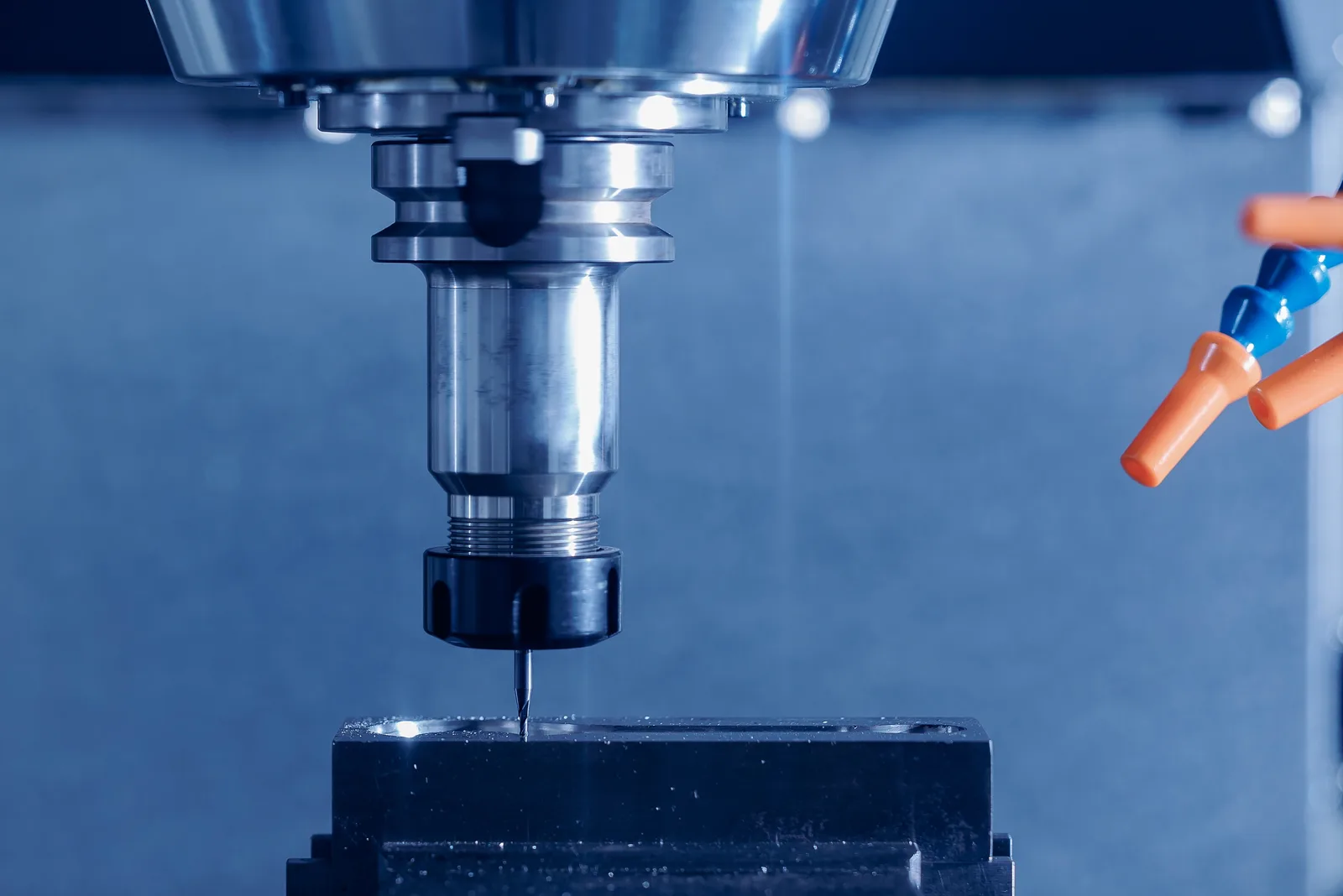

We place insurance for New Hampshire machine shops, precision machinists, fabricators, and manufacturers, including electronics and circuit-board makers, machinery builders, and suppliers of aerospace parts and medical devices. Most of our New Hampshire clients make something small, precise, and destined for someone else’s product, which means the liability they carry depends on where that product ends up as much as on what happens inside their own building.
Four New Hampshire rules shape how we build those programs. There is no state-run safety program for private employers, so federal OSHA inspects the floor. The product liability chapter, RSA 507-D, sets a three-year limitation period. The same chapter limits a manufacturer’s liability for harm caused by someone else’s alteration of the product. And the Department of Environmental Services issues the state’s air permits. Each is covered below, with the coverage it moves.
Where a New Hampshire premium comes from
Underwriters work from a standard set of inputs: payroll by type of work, the replacement value of machines and tooling, building and inventory values, what your products become once they leave you, and your claims record. End use is the heaviest of these on the liability side. A connector that ends up in an aircraft or a surgical device draws far more scrutiny than a bracket that ends up in office furniture, because the consequence of a failure is so different.
New Hampshire factors then adjust the picture. Many of the state’s precision shops sell into aerospace, defense, and medical supply chains whose buyers write insurance requirements into their purchase terms, including specific products limits, additional-insured wording, and umbrella limits. Electronics assemblers carry a concentration of value in a few pick-and-place lines and reflow ovens, which makes breakdown and income coverage a larger share of the program. The alteration rule in RSA 507-D:3 can matter to a defense, and your federal OSHA history is read on both comp and liability. We price from your operation, not from a table; for the drivers every state shares, read our breakdown of machine shop and manufacturing insurance costs.
Electronics, fabricated metal, machinery, and devices
The New Hampshire Department of Business and Economic Affairs describes the state’s modern manufacturing as ranging from computer and electronic parts to fabricated metal and machinery, and it also names pharmaceutical and medical device manufacturing and aerospace product and parts manufacturing. For insurance, those groups pull in different directions.
Electronics and board makers face exposures that are easy to overlook: a latent defect in a board can surface only after it is installed in a customer’s system, and a problem with a batch can mean a large recall even when no one is hurt. Product recall coverage and manufacturers errors and omissions belong in those conversations. Fabricated metal and machinery builders carry more of the classic floor exposures, including heavy cutting, forming, and welding, where workers compensation and equipment values dominate.
For medical-device makers the regulator is the U.S. Food and Drug Administration. Device establishments register and list their devices under 21 CFR 807.20, and 21 CFR Part 820 governs the quality management system for finished devices. Aerospace parts suppliers face aircraft-products questions that some general liability forms exclude outright. In both cases, a contract shop feeding the customer inherits the customer’s standards, so we begin with who you sell to and what they require.
Federal OSHA and the Concord Area Office
New Hampshire private employers are inspected by federal OSHA. The agency’s Concord Area Office describes itself as the federal OSHA office covering private sector employers and workers in New Hampshire, so a private machine shop or plant here deals directly with the federal agency and its standards.
On a machine floor, two of those standards come up constantly. 29 CFR 1910.212 requires machine guarding to protect operators from point-of-operation and other hazards, and 29 CFR 1910.147 sets the procedures for controlling hazardous energy during service and maintenance. Carriers ask about both because failures there produce the most serious injuries in a shop. We collect your written guarding and lockout programs, training records, and any inspection history before we approach the market.
Electronics and board assembly floors look cleaner than a machining bay, but they carry their own injury patterns. Wave and selective soldering bring burn exposure, conformal coating and cleaning bring chemical handling, and automated placement and test equipment still needs guarding and energy control during changeovers and maintenance. Repetitive-motion claims from hand assembly and inspection are common in this class and tend to develop slowly, which makes them harder to spot early. An underwriter who sees a documented ergonomics and job-rotation practice alongside the guarding and lockout programs will usually read the account more favorably than one who sees only a machine list.
Private carriers write New Hampshire comp
Workers compensation in New Hampshire is sold by private insurers in a competitive market. The largest influence on price is classification: machinists, electronics assemblers, welders, shipping staff, and office workers are each rated differently, and payroll placed in the wrong class will be moved at audit, usually with a bill attached. After classification, your own loss experience adjusts the premium up or down.
Employers liability, the second part of the comp policy, answers when a workplace injury turns into a lawsuit, for example one brought by the injured worker’s family or through a third party. We confirm it is in place and coordinated with your general liability. The workers compensation coverage page covers audits and classes in detail, and our article on cutting manufacturing comp costs lists what underwriters reward. Companies with staff who also work in Massachusetts should report that payroll by state.
RSA 507-D: a three-year period and an alteration defense
New Hampshire’s product liability chapter sets the time allowed and limits what a manufacturer answers for. Under RSA 507-D:2, I, the limitation period for a product liability action is 3 years. And RSA 507-D:3 provides: “In any product liability action, the defendant may be held liable only for harm that would have occurred if the product had been used in its unaltered and unmodified condition and shall not be held liable for harm arising in any part from alteration or modification of the product by another.”
The alteration rule is worth understanding before a claim ever arrives. Precision parts and assemblies are often modified after sale: a customer grinds a fitting, changes a firmware setting, or adapts a component for a use it was not designed for. Under RSA 507-D:3, harm that arises from that kind of alteration by someone else is not the manufacturer’s liability. Good records help a manufacturer show what condition a part left in, so drawings, inspection records, and shipping documentation have real defense value.
The limitation period, meanwhile, makes the timing of coverage important. An occurrence policy responds to injury that happened while it was in force, even if the claim comes later, which suits a manufacturer whose parts stay in service for years. A claims-made policy responds to claims first made during its term, back to its retroactive date, so a change of carrier or a sale needs continuous coverage or an extended reporting period. See occurrence versus claims-made for manufacturers, and our explanation of products-completed operations, for the details.
Air permits from the Department of Environmental Services
New Hampshire’s air permitting statute, RSA 125-C, assigns air resources to the Department of Environmental Services, whose air resources division issues temporary permits and operating permits. For a manufacturer the question usually comes up with a new coating line, a solvent-cleaning system, a soldering or reflow process with emissions, or new fuel-burning equipment. Raising it before the equipment is ordered avoids a stalled installation.
Insurance treats the permit and the pollution exposure as separate issues. General liability and property forms exclude most pollution, so a spill, a release to a drain, or an emissions problem from your own process generally needs a dedicated pollution or environmental policy. We place that coverage alongside the rest of the program. A manufacturing insurance underwriter looking at an account with finishing or cleaning processes will ask about permits, and a clear answer helps.
The chart below maps the four New Hampshire rules on this page to the part of a program each one changes.
The rest of a New Hampshire program covers what the chart does not. Commercial property insures the building, machines, and stock. Equipment breakdown covers the internal failure of a machine, oven, or line, which property forms do not. An umbrella sits above general liability, employers liability, and auto, and is usually where an aerospace or device customer’s higher limit requirement is met.
Business income is the line New Hampshire precision shops most often underinsure. A shop that supplies one or two large customers can lose those accounts if it cannot ship for a few months after a fire or a major breakdown, even after the building is repaired. We look at how long it would take to replace your most specialized machines and to requalify parts with your customers, and we size the business income and extra expense coverage to that timeline rather than to a round number. Our article on business interruption for manufacturers explains how that coverage is calculated.
New Hampshire places that change a program
We write accounts across New Hampshire. In each of these four places, a specific local feature affects what the program needs.
Concord
Federal OSHA’s Concord Area Office covers private sector employers across New Hampshire. Any Concord plant’s inspection history with that office is part of what a comp or liability underwriter reviews.
Portsmouth
U.S. Customs and Border Protection operates a port of entry in Portsmouth. Manufacturers shipping finished assemblies or importing materials through it need transit coverage that matches declared values and contingent income cover for key overseas suppliers.
Manchester
CBP runs a user fee airport port in Manchester. Makers of small, high-value parts that move by air should schedule those shipments on an inland marine form rather than rely on property coverage that stops at the dock.
Nashua
The City of Nashua counts precision machined mechanical parts and printed circuit boards among the goods made there. Board makers and precision shops in Nashua should treat recall and errors and omissions as core lines, not add-ons.
We are licensed in New Hampshire and in each of the 48 states we serve. Companies with sites across state lines can also see our pages for Massachusetts, Maine, and Vermont, or go to the state list.
Working to print versus selling a product
New Hampshire manufacturers often do both. If your shop machines or assembles to a customer’s drawing, our page on machine shop insurance covers the equipment-heavy side of contract work. Fabrication and welding work, in the shop or on a customer’s site, is covered on our page on metal fabrication and welding shop insurance. If you design and sell boards, machinery, devices, or components under your own name, our page on manufacturing insurance covers the products, recall, and design exposures in more depth. Where one company does both, we write one program and keep the two sides rated correctly within it. That matters at audit time, because contract work is usually rated on payroll while product sales are rated on revenue, and a carrier that cannot tell the two apart will often assume the more expensive answer for all of it.
New Hampshire shop and manufacturer questions
Does New Hampshire have its own OSHA program for private shops?
No. Private employers in New Hampshire are covered by federal OSHA, and the agency’s Concord Area Office handles private sector employers and workers in the state. The federal machine guarding and lockout standards therefore apply on a private shop floor, and those are the programs your carrier will ask to see when it prices workers compensation and general liability.
What is the limitation period for a product claim in New Hampshire?
RSA 507-D:2, I sets a limitation period of 3 years for a product liability action. Because a part can be in service for a long time before an injury happens, and a claim can follow later still, we recommend continuous products-completed operations coverage and a deliberate choice between occurrence and claims-made forms when you change carriers.
Is a manufacturer liable when a customer modifies its product?
Not for harm arising from someone else’s alteration. RSA 507-D:3 limits liability to harm that would have occurred with the product in its unaltered and unmodified condition, and excludes harm arising in any part from alteration or modification by another. Keeping records that show a part’s shipped condition, such as drawings and inspection data, helps a manufacturer use that rule.
Who issues air permits to New Hampshire manufacturers?
The Department of Environmental Services, through its air resources division, issues temporary permits and operating permits under RSA 125-C. Coating, solvent cleaning, and some soldering and fuel-burning processes are common reasons to check. Keep in mind that general liability and property forms exclude most pollution, so a release from your process needs a separate pollution policy.
Should a New Hampshire circuit-board maker buy recall coverage?
Usually, yes. A defect in a batch of boards can force a recall even when no one is hurt, and general liability pays for injury or damage, not for finding, removing, and replacing product. Product recall coverage fills that gap, and manufacturers errors and omissions covers a board that works as built but fails the purpose the customer bought it for.
Who sells workers compensation in New Hampshire?
Private insurance carriers, since New Hampshire runs a competitive comp market. Your price depends mainly on how payroll is classified and on your claims history. We check that machinists, assemblers, welders, and office staff are each in the right class, and we pair comp with employers liability so an injury that becomes a lawsuit is still covered.
Sources
- OSHA — Concord Area Office
- New Hampshire RSA 507-D, product liability
- New Hampshire RSA 125-C, air pollution control
- NH Department of Business and Economic Affairs — Advanced manufacturing
- U.S. Customs and Border Protection — Port of Portsmouth
- City of Nashua — Advanced manufacturing
- eCFR — 21 CFR Part 820
Start a New Hampshire quote for your machine shop or plant
Tell us what your New Hampshire operation makes, who it ships to, and whether you design the product, and we will take it to carriers that write that class.