States we serve · Maine
Machine Shop and Manufacturing Insurance in Maine
Programs for Maine boatbuilders, defense and aerospace suppliers, metal and composites shops, and medical-device makers — written to federal OSHA and Maine DEP licensing.
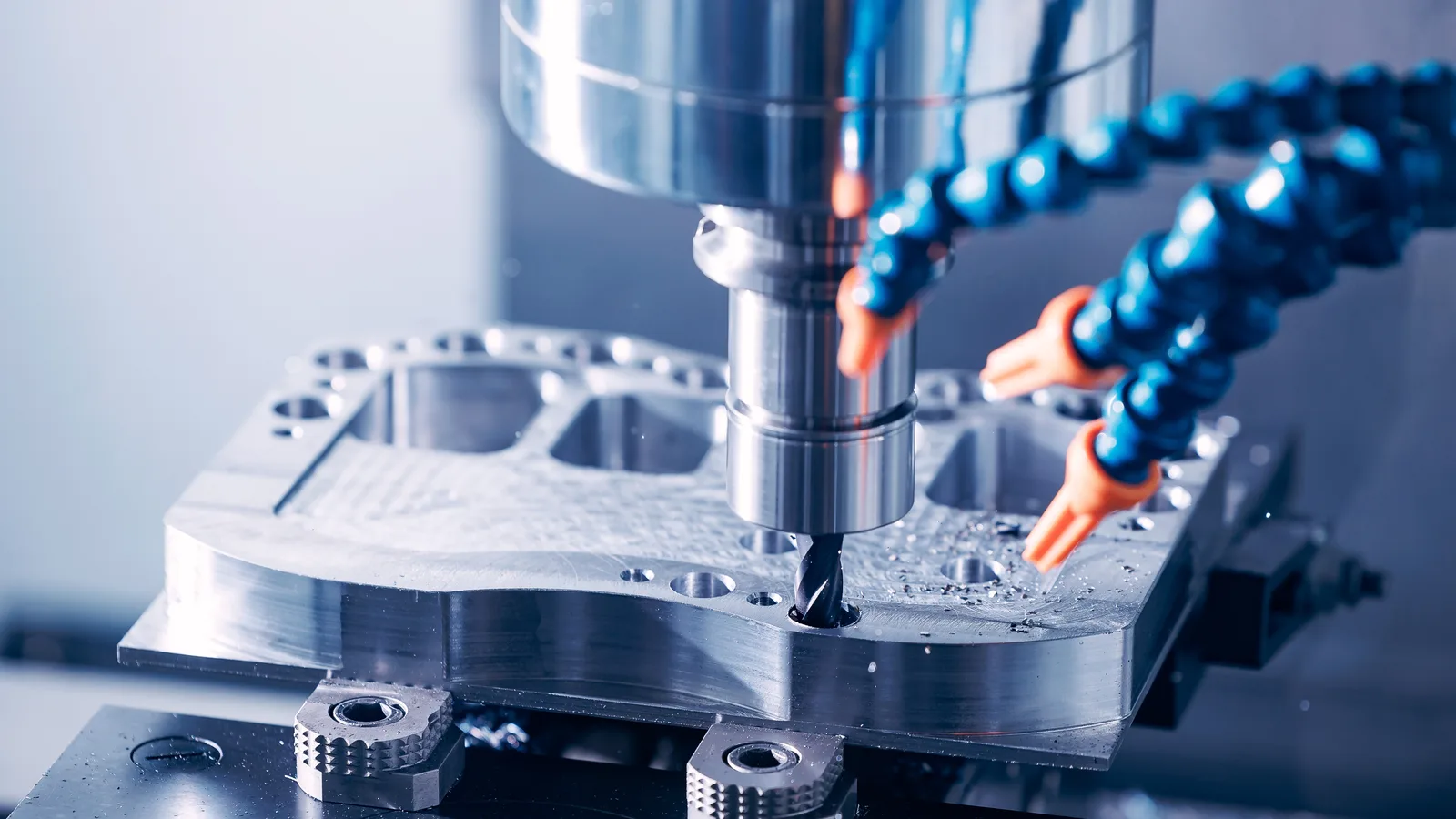

Our Maine clients are the machine shops, fabricators, and manufacturers that make up much of the state’s industrial base: yards that build and fit out boats, suppliers to military, defense, and aerospace programs, metalworkers, firms that build equipment for paper mills, plastics and composites molders, and makers of medical devices and electronics. We build each program from the work on the floor and the path a finished part takes to its buyer, since a composite hull section and a stamped bracket raise very different liability questions.
Maine has a short list of rules that change how those programs are written. Its public-employee safety plan does not reach private workplaces, so federal OSHA inspects private plants. A strict-liability statute makes sellers of defective products answerable for the physical harm they cause. And the Department of Environmental Protection licenses air emission sources statewide. Each gets its own section below, tied to the coverage it affects.
Pricing a Maine shop: the inputs that count
The raw material of a Maine quote is familiar: payroll by class of work, the value of machinery and tooling, the building and stored stock, what your products end up inside, and your recent claims. Of these, end use carries the most weight on the liability side. Parts bound for a vessel, an aircraft, or an implanted device draw a different kind of underwriting attention than parts bound for furniture or packaging, because the harm a failure could cause is of a different order.
Maine-specific pressures sit on top of that base. Defense and aerospace buyers generally set insurance minimums in their contracts, so a supplier’s limits, additional-insured endorsements, and umbrella are often fixed before a carrier offers a price. The strict-liability statute means a product claim can proceed without proof of fault, which raises the value of solid products-completed operations coverage. Marine work brings property of others into the shop, and the question of who insures a customer’s boat while you work on it. We quote from the facts of your operation and never from a published table. For the factors that apply everywhere, see how insurers price machine shops and manufacturers.
From boatyards to composites: Maine’s key industries
The state’s Office of Business Development lists military and defense, aerospace, metal, paper, marine and boat building, semiconductors, medical devices, electronics, plastics, and composites and bio-plastics among Maine’s key manufacturing industries. Few Maine shops sit in only one of those. A metal fabricator may cut plate for a boatyard in the morning and machine a housing for an electronics customer in the afternoon.
Boat builders and marine fabricators work on property that belongs to someone else, which raises the care, custody, and control question: many liability forms exclude damage to property in your hands, so a hull that is scratched or burned during work may need a separate coverage part. Medical-device makers answer to the U.S. Food and Drug Administration: device establishments must register and list their devices under 21 CFR 807.20, and the quality management system regulation in 21 CFR Part 820 governs how finished devices are made. That regulatory weight tends to put product recall and products liability near the top of a device maker’s program.
Paper-industry equipment builders and composites molders carry concentrated value in a small number of machines, presses, and ovens. For them equipment breakdown and the lost income that follows a breakdown are often the lines that decide whether a bad month becomes a bad year. Electronics and semiconductor work adds contamination and clean-process concerns, and defense work adds contract flow-downs. Because any contract shop inherits its customers’ demands, we start by asking who buys from you.
Plastics molders and electronics assemblers in Maine tend to sell into longer supply chains than a local fabricator does, and their buyers increasingly ask for proof of coverage before the first order ships. That usually means a certificate naming the customer as an additional insured, a stated products-completed operations limit, and sometimes a waiver of subrogation. Each of those is an endorsement on your policy, not a promise on a certificate, so we match the policy wording to the contract before the certificate goes out. Our guide to what manufacturing customers require lists the requests we see most often, and our note on additional-insured status explains how the endorsement actually works.
Which inspectors cover a private Maine plant
Maine runs an OSHA-approved plan, but only for the public sector. Federal OSHA’s Maine State Plan page describes a plan limited to state and local government workers, administered through the Maine State Plan for public employees. A private machine shop, fabricator, or plant is inspected by federal OSHA, which keeps an area office in Augusta and a district office in Bangor.
The federal rules an inspector brings onto a Maine floor are the ones a carrier will ask about. Guarding at the point of operation is governed by 29 CFR 1910.212, and lockout and tagout during maintenance by 29 CFR 1910.147. Unguarded press brakes, shears, and saws, and machines serviced without energy isolation, account for many of the injuries that stay on a comp record for years. We ask for your written guarding and lockout programs up front and include them with the submission.
Maine comp is a private-carrier purchase
Workers compensation in Maine is written by private insurers in a competitive market, so two shops with similar payroll can pay quite different premiums. Classification drives most of that difference. Machinists, welders, boat carpenters, assemblers, and clerical staff belong in separate classes, and payroll recorded in the wrong one is corrected, often expensively, at the year-end audit. Experience then shifts the price up or down, which gives a shop with a steady safety record a real advantage.
Employers liability sits beside comp in the same policy and responds when an injury leads to a lawsuit rather than a benefits claim. We check both parts at every renewal. The workers compensation coverage page explains classes and audits, and a Maine shop that also staffs work across the line in New Hampshire should list that payroll separately so each state is handled correctly.
Six years under § 752, and strict liability under § 221
Two Maine statutes frame a product claim. The first is Maine’s general limitation statute for civil actions, 14 M.R.S. § 752, which sets a period of 6 years. The second is the strict-liability rule in 14 M.R.S. § 221: “One who sells any goods or products in a defective condition unreasonably dangerous to the user or consumer or to his property is subject to liability for physical harm thereby caused.” Under that rule a claimant does not have to show that the seller was careless; the defect and the harm are the heart of the case.
For a manufacturer the combination is worth planning around. A long limitation period gives an injured party time to bring a claim, and the strict-liability standard means the defense turns on whether the product was defective rather than on how carefully it was made. Both point toward continuous products-completed operations coverage with limits sized to what your products could do if they failed. The trigger on the policy matters too. Under an occurrence form, the policy in force when the harm happened responds, even years later. Under a claims-made form, the policy in force when the claim is first made responds, subject to a retroactive date, so a change of carrier or a sale needs careful handling. We cover the trade-offs in our comparison of occurrence and claims-made forms and in how products liability relates to general liability.
Air emission licenses from Maine DEP
The Maine Department of Environmental Protection (DEP) licenses air emission sources throughout the state through its air emission license program. Finishing lines, spray booths, resin and composite layup areas, and fuel-burning equipment are the places a Maine manufacturer most often has to check whether a license or an amendment is required. Composites and boatbuilding operations in particular should settle the question before a new process starts.
From an insurance point of view, the license and the coverage are separate questions. Standard general liability and property policies exclude most pollution, so a resin spill, a release to a storm drain, or an emissions problem at your own site generally falls to a separate pollution or environmental policy. We place that coverage alongside the rest of a program when the operation calls for it, and a clear record of your DEP licensing makes the underwriting conversation shorter for any manufacturing insurance program with finishing or molding work.
The chart below lines up the Maine rules on this page with the coverage each one touches.
A few lines sit outside that chart but belong in most Maine programs. Commercial property covers the building, machines, and stock. Manufacturers errors and omissions covers a part that meets its drawing but fails the purpose it was sold for, which is a financial loss rather than an injury. An umbrella adds limits above the primary policies, which is usually where a defense or shipyard customer’s contract minimums are met. Business income deserves its own look as well. A fire or a failed compressor can stop a Maine line for weeks, and the payroll, loan payments, and fixed costs keep running while it is down. We size that coverage to how long your own equipment would realistically take to replace, which for specialized machinery can be far longer than a default restoration period assumes.
Four Maine locations that shape a program
We work with shops and plants throughout the state. In these four places, a specific local feature changes what the program needs.
Augusta
Federal OSHA’s Augusta Area Office and the Maine Department of Labor’s Workplace Safety and Health Division are both here. A private plant in the capital region answers to the federal office, and its inspection record travels with each comp submission.
Bangor
OSHA keeps a district office in Bangor. When a Bangor shop builds or rebuilds heavy equipment for paper or other industrial customers, we look closely at transit limits for the finished machine and at breakdown cover for the shop’s own presses.
Portland
U.S. Customs and Border Protection runs a port of entry in Portland. Manufacturers importing materials or exporting finished goods through it need cargo coverage that follows the shipment across the water, and contingent income cover if a key overseas supplier stops.
Bath
Bath has its own CBP port of entry. Marine fabricators there regularly work on vessels they do not own, so the care, custody, and control exclusion in a standard liability form is the first thing we check.
We are licensed in Maine and in 48 states in all. Manufacturers with a second site across the state line can compare our New Hampshire page, or browse every state we serve.
Job shop, product maker, or both
Maine businesses often straddle the line between contract work and their own products. If you machine or finish to a customer’s drawing, our page on machine shop insurance covers the equipment-intensive side of that work. If you fabricate or weld, our page on metal fabrication and welding shop insurance covers the hot-work side. If you design and sell boats, equipment, or components under your own name, our page on manufacturing insurance covers the products, recall, and errors and omissions exposures that come with it. When a Maine company does both, we write one program that covers each part of the business.
Maine machine shop and plant insurance, answered
Is my private Maine shop under the state safety plan?
No. Maine’s OSHA-approved plan covers state and local government workers only, so it applies to public employees. A privately owned machine shop, fabricator, or plant is inspected by federal OSHA, which has an area office in Augusta and a district office in Bangor. The federal machine guarding and lockout standards are therefore the ones your carrier will ask you about.
How long does a person have to sue over a product in Maine?
Maine’s limitation statute for civil actions, 14 M.R.S. § 752, sets a period of 6 years. That is a long window compared with many states, so a manufacturer should keep products-completed operations coverage in force without gaps and think carefully before moving from an occurrence form to a claims-made form, since a gap can leave older claims without a policy to answer them.
Does Maine hold manufacturers liable without proof of negligence?
Yes, for defective products. Under 14 M.R.S. § 221, one who sells goods in a defective condition unreasonably dangerous to the user or consumer is subject to liability for physical harm those goods cause. The claim centers on the defect rather than on the seller’s care. Products-completed operations coverage is what defends and pays those claims, so its limits deserve real attention.
Does a Maine composites shop need an air emission license?
It may. The Maine Department of Environmental Protection licenses air emission sources throughout the state, and resin work, spray finishing, and fuel-burning equipment are common triggers. Check before a new process starts. Keep in mind too that general liability and property forms exclude most pollution, so a release from your process needs a separate pollution policy.
What should a Maine medical-device maker carry beyond general liability?
Device makers register their establishments and list devices with the FDA under 21 CFR 807.20, and 21 CFR Part 820 governs how finished devices are manufactured. With that level of oversight, product recall coverage and strong products-completed operations limits usually come first. Recall coverage pays to find, remove, and replace product; general liability pays for injury the product causes.
Who sells workers compensation to Maine manufacturers?
Private insurance carriers write it, because Maine runs a competitive comp market. Price therefore depends heavily on how your payroll is classified and on your own loss history. We make sure machinists, welders, boat carpenters, assemblers, and office staff are each in the right class, and we keep employers liability in place so an injury that becomes a lawsuit is still covered.
Price a Maine shop or plant program with us
Tell us whether your Maine operation builds to a customer’s drawing, sells its own products, or works on vessels, and we will bring it to carriers suited to that work.