States we serve · Delaware
Machine Shop and Manufacturing Insurance in Delaware
Programs for Delaware chemical and materials processors, bioscience and device makers, metal fabricators, and equipment builders — written to federal OSHA and DNREC rules.
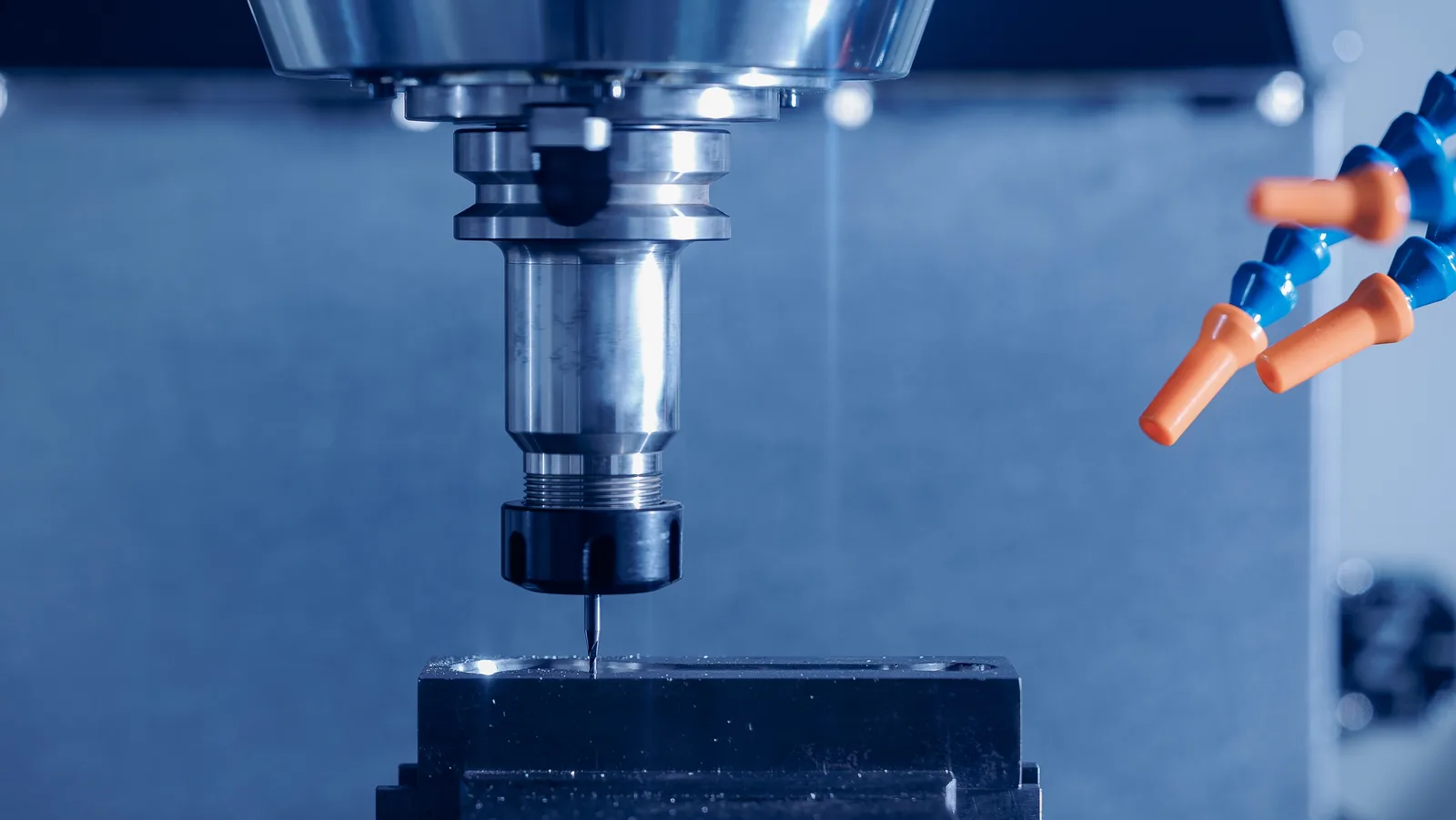

Delaware machine shops and manufacturers are the businesses we write here: contract machinists and structural metal fabricators, chemical and advanced-materials producers, bioscience and medical-device companies, builders of transportation and electrical equipment, and paper products converters. The state is compact, but its plants often ship into regulated, high-consequence supply chains, and that end use shapes the insurance more than the size of the building does.
Delaware adds a short set of rules to the picture. Federal OSHA, through its Wilmington Area Office, inspects private employers because the state has no plan of its own for them. Claims for personal injuries must be brought within two years under 10 Del. C. § 8119. And the Department of Natural Resources and Environmental Control (DNREC) oversees air permitting, including Title V permits for major sources. Each rule gets a section below, connected to the coverage it moves.
Reading a Delaware quote
An underwriter building a Delaware price uses the same core data as anywhere: payroll sorted into classes of work, the values of machines, tooling, buildings, and inventory, what your products become, and several years of claims. End use tends to decide the liability picture. A fitting that goes into a chemical process line, a component in a medical device, and a bracket in an office fixture sit in very different risk tiers because the harm a failure can cause is so different.
Delaware characteristics then shift the result. Chemical and advanced-materials operations carry process hazards, hazardous-material storage, and pollution exposure that most machine shops never face. Bioscience and device makers answer to federal regulators whose oversight makes products and recall coverage central. The two-year limitation period changes how quickly a claim tends to surface after an injury. Customers in chemical, defense, and transportation supply chains write insurance requirements into purchase orders, which sets minimum limits before price is discussed. And your federal OSHA record is read on both comp and general liability. We price from the facts of your operation, never from a published table. For the cost factors common to every state, read our article on what drives the price of machine shop and manufacturing coverage.
One more Delaware pattern is worth naming. Many firms here are small plants or single-site suppliers selling to much larger companies, so a customer’s contract terms often carry more weight in the program than any rating factor. Indemnity clauses, additional-insured requirements, waivers of subrogation, and primary and noncontributory wording all appear regularly. We read those terms before we quote, because the right endorsements have to be on the policy for the contract to be met.
Chemicals, materials, bioscience, and metals
The Delaware Prosperity Partnership describes manufacturing in Delaware as spanning chemicals, advanced materials, bioscience, transportation equipment, electrical equipment manufacturing, structural metals, and paper products. Each of those sectors pulls a program toward different coverage.
Chemical and advanced-materials producers need a program that treats process safety, storage, and environmental exposure as core issues. Standard general liability and property forms exclude most pollution, so a release from a reactor, a tank, or a transfer line generally falls to a separate pollution or environmental policy. Property programs for these plants also need careful attention to valuation and to the income lost while a specialized process unit is rebuilt, which is where equipment breakdown and business income coverage earn their place.
Bioscience and medical-device manufacturers work under the U.S. Food and Drug Administration. Under 21 CFR 807.20, an establishment that makes devices registers with the agency and lists its devices, and 21 CFR Part 820 sets the quality management system that governs how finished devices are made. With that oversight, products liability and product recall coverage usually lead the program, and a contract machinist supplying a device maker should expect those requirements to flow down to it.
Structural metal fabricators, transportation-equipment builders, and electrical-equipment makers carry the heavier floor exposures: cutting, forming, welding, lifting, and testing. Workers compensation and equipment values dominate their programs, and customers frequently ask for higher products limits than a small shop would otherwise buy. Paper products converters add high fire loads from stock and dust, which makes property valuation and fire protection central to the underwriting conversation.
Federal OSHA oversees Delaware’s private floors
Private employers in Delaware are covered by federal OSHA. The agency’s Wilmington Area Office describes itself as the federal office covering private sector employers and workers in Delaware, so a private machine shop or plant here deals with federal inspectors and federal standards directly.
Two of those standards matter most on a machine floor. 29 CFR 1910.212 requires guarding to protect operators from point-of-operation and other machine hazards, and 29 CFR 1910.147 sets out how hazardous energy must be controlled while equipment is serviced. In a chemical or materials plant, energy control extends to pumps, agitators, and process equipment as well as machine tools. Carriers ask about both standards on the application because guarding and lockout failures cause the most serious injuries. We gather your written programs and any inspection history before we approach the market.
Comp for Delaware employers
Delaware employers buy workers compensation from private carriers in a competitive market, and the price for a given business depends heavily on classification and loss history. A machinist, a chemical operator, a welder, a device assembler, a warehouse worker, and a clerical employee each belong in a different class. Payroll recorded in the wrong class is moved at the premium audit, and the correction can be expensive when a higher-rated class was understated.
Employers liability, the second part of the comp policy, answers when a workplace injury leads to a lawsuit rather than a benefits claim. We confirm it is coordinated with general liability so nothing falls between the two. The workers compensation page covers classes and audits in detail, and our guide to reducing manufacturing workers comp costs lists the controls underwriters credit. Delaware firms with employees working in Pennsylvania, Maryland, or New Jersey should report that payroll by state.
Two years for injury claims under § 8119
Delaware sets a short limitation period for personal injury claims. 10 Del. C. § 8119 provides that no action to recover damages for alleged personal injuries may be brought after the expiration of 2 years from the date on which the injuries are claimed to have been sustained. For a manufacturer, that means an injury claim tied to a product generally surfaces within a relatively short window after the injury itself.
A short period does not shorten the life of the exposure. A part can sit in service for many years before it fails and injures someone, and the two-year clock only starts from the injury. Products-completed operations coverage therefore needs to stay continuous for as long as your products are in use. The trigger of the policy matters. An occurrence policy responds to injury that happened while it was in force, no matter when the claim arrives, which suits a manufacturer whose products have long service lives. A claims-made policy responds to claims first made during its term, subject to a retroactive date, so switching carriers, selling the business, or closing a product line needs continuity or an extended reporting period.
We explain the choice in our comparison of occurrence and claims-made forms, and our article on the products-completed operations aggregate shows how the separate limit for those claims works. For chemical and materials producers, it is also worth confirming how the policy treats a claim that involves both a product defect and a release, since the pollution exclusion can shift part of that claim to a different policy.
DNREC air permitting and pollution coverage
Air permits for Delaware manufacturers come from the Department of Natural Resources and Environmental Control (DNREC), whose Division of Air Quality oversees the regulations and permits governing the control of air pollution, including Title V permits for major air sources. Coating and finishing lines, solvent use, boilers and process heaters, and chemical process equipment are the places a Delaware plant most often needs to check permit requirements. Those questions belong at the planning stage for any new line.
Pollution coverage is a separate decision from the permit. General liability and property forms exclude most pollution, so a release from a tank, a spill to a drain, or an emissions event from your own process usually falls to a dedicated pollution or environmental policy. For a chemical or advanced-materials plant, that policy is often as important as general liability. Underwriters for manufacturing insurance accounts with process or finishing operations ask about DNREC permits directly, and documented answers keep the review moving.
The chart below pairs each Delaware rule on this page with the part of a program it changes.
Most Delaware programs also include commercial property for the building, machinery, and stock; manufacturers errors and omissions for products that meet their specification but fail the customer’s purpose; and an umbrella for the higher limits that chemical, defense, and transportation customers often require.
Five Delaware places that matter to a program
We write Delaware shops and plants statewide. At each of these five locations, a named feature changes what the program needs.
Wilmington
The Delaware Prosperity Partnership points to the Port of Wilmington as part of the state’s manufacturing base. Plants that import raw materials or export finished goods through it need cargo coverage that follows each shipment and contingent income cover for key suppliers overseas.
New Castle
CBP’s office for the Wilmington port of entry is located in New Castle. Manufacturers clearing imported equipment or components there should make sure goods waiting on clearance are covered by property or transit limits, not left between policies.
Dover
CBP lists Dover Air Force Base among the facilities of the Wilmington port of entry. Suppliers supporting defense customers in central Delaware should expect contract flow-downs that set higher limits and specific additional-insured wording.
Newark
The University of Delaware is in Newark. Manufacturers working with university labs on prototypes or testing should look at how their errors and omissions and products coverage respond to design work done with outside partners.
Georgetown
Delaware Coastal Airport is in Georgetown. Shops near the airport that move parts or equipment by air should schedule those shipments on inland marine coverage with limits matched to declared value.
Delaware is one of the 48 states where we are licensed. Companies with operations across state lines can also read our pages for Maryland, New Jersey, and Pennsylvania, or view the complete state list.
Making to print or selling your own product
The split between contract work and branded products decides where a Delaware program carries its weight. A shop that machines or finishes to a customer’s drawing should start with our page on machine shop insurance, which covers the equipment-heavy side of contract work. For fabrication and welding, including work your crew installs on site, see metal fabrication and welding shop insurance. A company that formulates, designs, or sells materials, devices, or equipment under its own name should read our page on manufacturing insurance, where products liability, recall, and errors and omissions do more of the work. Many Delaware firms do both, and we write them as one program with each side rated on its own basis.
Delaware manufacturers’ insurance questions
Is there a Delaware safety agency that inspects private plants?
Not for private employers. Delaware’s private sector is covered by federal OSHA, and the agency’s Wilmington Area Office handles private employers and workers in the state. That means the federal machine guarding and hazardous-energy control standards apply on a private floor, and those are the programs a carrier will ask to see when it prices workers compensation and general liability.
How long do people have to file an injury lawsuit in Delaware?
Under 10 Del. C. § 8119, an action for personal injuries cannot be brought after 2 years from the date the injuries are claimed to have been sustained. The clock runs from the injury, not from when your product was made or sold, so products-completed operations coverage should stay in force for as long as your products are in service.
Does a Delaware chemical plant need a separate pollution policy?
In most cases, yes. General liability and property forms exclude most pollution, so a release from a tank or process line, or an emissions problem from your own operation, usually needs a dedicated pollution or environmental policy. DNREC’s Division of Air Quality oversees air permits, including Title V permits for major sources, and underwriters will ask about your permit status.
What does a Delaware device maker need beyond general liability?
The FDA requires device establishments to register and list their devices (21 CFR 807.20), and 21 CFR Part 820 governs how finished devices are manufactured. Product recall coverage is usually next after general liability, because it pays to locate, remove, and replace product. Manufacturers errors and omissions is also worth considering for devices that work as built but miss the buyer’s purpose.
Why do Delaware customers ask for primary and noncontributory wording?
Larger customers often want your policy to respond first, without asking their own insurer to share the loss, when a claim involves your work or product. That requires specific endorsements on your general liability and umbrella, not just a certificate. We compare the contract to your policy wording before you sign so the endorsement you need is actually in place.
Is Delaware workers compensation written by private carriers?
Yes. Delaware runs a competitive comp market, so private carriers write it, and your price depends mostly on classification and loss history. We make sure machinists, chemical operators, welders, device assemblers, and office staff are each in the right class, and we keep employers liability in place for injuries that turn into lawsuits.
Request a Delaware quote for your plant or shop
Tell us what your Delaware operation produces, who buys it, and whether it handles chemicals or regulated products, and we will take it to carriers that write the class.