States we serve · New Jersey
Machine Shop and Manufacturing Insurance in New Jersey
For New Jersey precision machinists, aerospace component makers, medical-device manufacturers, and port-side fabricators, written to federal OSHA, N.J.S.A. 2A:58C, and NJDEP.
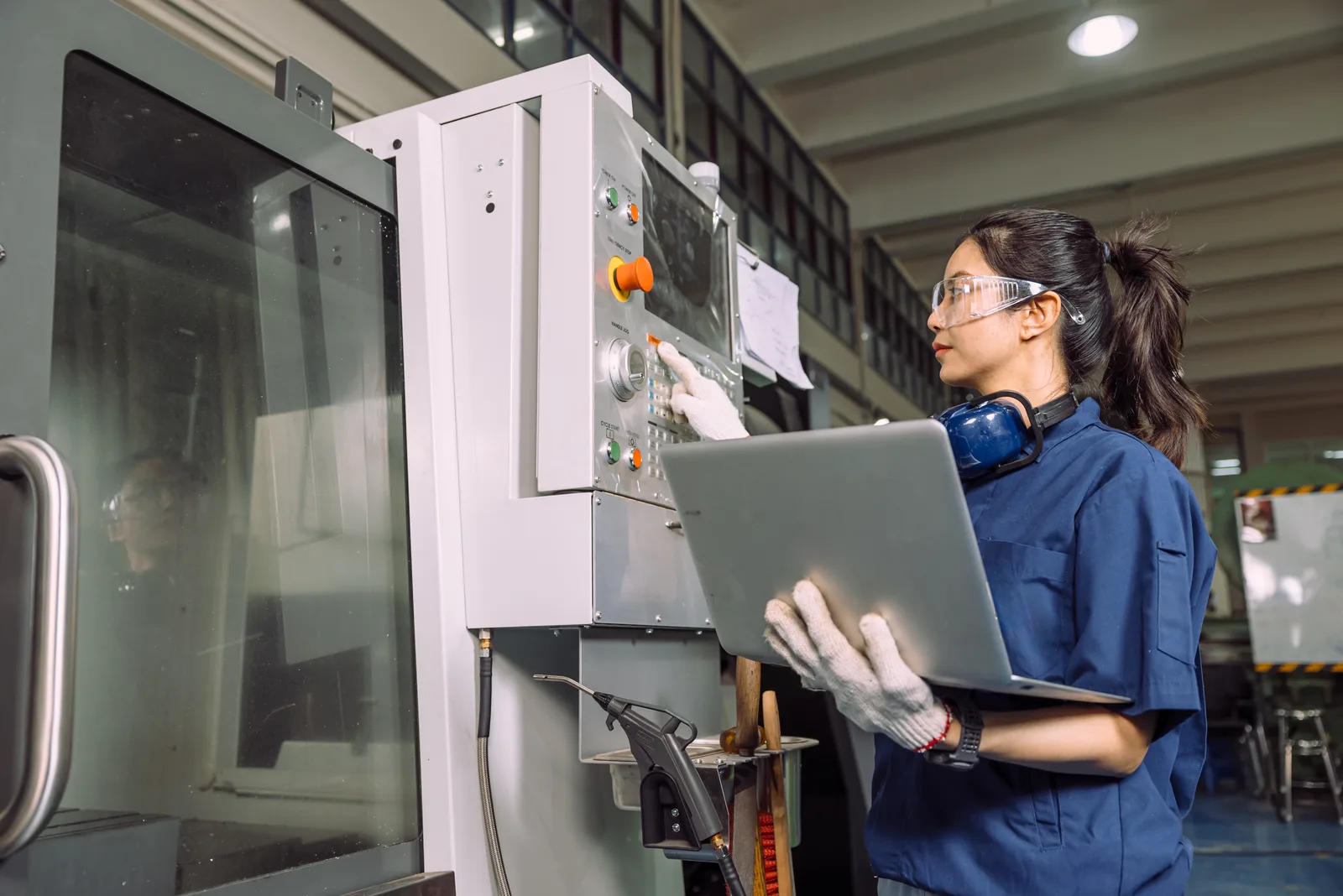

This page is for New Jersey machine shops, fabricators, and manufacturers: contract machinists holding tight tolerances for aerospace and medical customers, device makers selling under their own name, fabricators and assemblers working near the ports, and product companies that rely on distributors to reach buyers. New Jersey operations tend to sit inside dense supply chains, with many sellers between the plant and the end user, and that chain decides who gets sued when something goes wrong.
Four New Jersey rules frame our programs here. The state’s own OSHA-approved plan covers public employees only, so private plants are inspected by federal OSHA. Injury actions must be brought within two years under N.J.S.A. 2A:14-2. The state’s product liability chapter, N.J.S.A. 2A:58C, lets a seller that identifies the manufacturer by affidavit be relieved of strict liability claims, which pushes those claims up the chain. And the Department of Environmental Protection permits stationary sources of air pollution. The sections below cover each one and the insurance it affects.
Building a New Jersey price
An underwriter starts a New Jersey quote with payroll by class of work, values for machinery, tooling, the building, and stock, a clear description of what your products become, and several years of claims. The end use of your parts dominates the liability side. A component that flies, one that is implanted or used in surgery, and one that goes into a shelving unit carry very different potential harm, and the price reflects that.
Local factors then do their work. Because distributors and retailers can shift strict liability claims back to the manufacturer through the seller affidavit rule, a New Jersey manufacturer should expect to be the defendant that stays in a products case. Aerospace and device customers write specific insurance requirements into their supply agreements, which often fixes products limits, additional-insured terms, and umbrella limits in advance. Port-area operations carry transit and property exposures tied to imported materials and exported goods. And a federal OSHA inspection history is part of the file. We price from the operation itself, not from any published rate; for the drivers every state shares, read our explanation of machine shop and manufacturing insurance costs.
There is also the question of who in the chain holds the coverage. Distributors and larger customers often ask a New Jersey manufacturer to add them as additional insureds under a vendors endorsement, so that the manufacturer’s policy defends them in a products suit. That request fits naturally with the seller affidavit rule, and it deserves careful wording: a broad vendors endorsement is valuable to the customer, and a narrow one may not satisfy the contract. We match the endorsement to the agreement before the certificate is issued.
Aerospace components and medical devices
The New Jersey Economic Development Authority (NJEDA) calls manufacturing a driver of New Jersey’s innovation economy and highlights advanced aerospace components and lifesaving medical devices among the products made here. Those two groups account for much of the precision work we see from New Jersey clients, and both bring demanding customers.
Aerospace component makers face aircraft-products exposure that some general liability forms exclude and that some carriers write only on dedicated forms. A shop taking a first order for a flight-critical part should confirm its policy responds before shipping. Traceability matters too: certifications, material records, and inspection data are what a defense attorney uses to show a part left the shop in conformance, so the records system is part of the insurance program in a practical sense.
The regulator for device makers is the U.S. Food and Drug Administration. An establishment that manufactures devices must register and list them under 21 CFR 807.20, and the quality management system requirements for finished devices are in 21 CFR Part 820. With that oversight, products liability and product recall coverage move to the front of the program, and manufacturers errors and omissions covers a device that performs as designed but fails the purpose a customer bought it for. Contract machinists supplying either group inherit their customers’ requirements, so we start with who buys your parts.
PEOSH is public-sector only; federal OSHA inspects plants
New Jersey’s OSHA-approved plan covers public workplaces, not private ones. Federal OSHA’s New Jersey State Plan page describes New Jersey Public Employees Occupational Safety and Health (PEOSH) as covering state and local government workers, with its main office in Trenton, and confirms that federal OSHA exercises authority over private sector employers and that federal standards apply to their workers. A private New Jersey machine shop or plant therefore deals with federal OSHA.
The federal machinery rules an inspector applies are the same ones a carrier asks about. 29 CFR 1910.212 requires machine guarding, including at the point of operation, and 29 CFR 1910.147 requires energy-control procedures when equipment is serviced. Unguarded presses and cutting equipment, and maintenance done without lockout, are behind most of the serious injuries on a machine floor. We collect your written programs and any inspection history before approaching the market, so the underwriter sees your controls on paper.
New Jersey comp is written by private carriers
Workers compensation in New Jersey is sold by private insurers in a competitive market, and your price depends on classification and loss history. Machinists, assemblers, welders, clean-room technicians on the production side, warehouse staff, and office workers each belong in a separate class. Payroll reported under the wrong class is corrected at audit, and the correction can be large if a higher-rated class was understated.
Employers liability, the second part of the comp policy, answers lawsuits arising from workplace injuries, and we coordinate it with general liability. The workers compensation page covers classification and audits, and our guide to reducing manufacturing comp costs explains the controls carriers reward. New Jersey firms with staff working in New York, Pennsylvania, or Delaware should report that payroll by state.
Two years to sue, and the seller affidavit rule
New Jersey’s limitation period for injury claims is set in N.J.S.A. 2A:14-2, which requires every action at law for an injury to the person caused by the wrongful act, neglect, or default of any person to be commenced within two years after the cause of action accrues. For a manufacturer, the two years generally begin with the injury, not the sale, so a part can be in service for a long time before the clock ever starts.
The product liability chapter adds a rule about who stays in a case. Under N.J.S.A. 2A:58C-9(b), “Upon filing the affidavit pursuant to subsection a. of this section, the product seller shall be relieved of all strict liability claims, subject to the provisions set forth in subsection d. of this section.” The affidavit identifies the manufacturer. In practice, a distributor or retailer that names you can step out of the strict liability claims, leaving the manufacturer to defend them. That makes products-completed operations coverage, and its limits, the core of a New Jersey manufacturer’s program.
Continuity and trigger follow from both rules. An occurrence policy responds to injury that happened while it was in force, no matter when the claim comes, which suits parts with long service lives. A claims-made policy responds to claims first made during its term, subject to a retroactive date, so changing carriers or selling the business needs continuity or an extended reporting period. Our comparison of occurrence and claims-made coverage for manufacturers explains the choice, and what products-completed operations covers describes the coverage that answers these claims.
NJDEP stationary-source permits
Air permitting for New Jersey manufacturers runs through the Department of Environmental Protection (NJDEP), whose Bureau of Stationary Sources is responsible for permitting stationary sources of air pollution through the air pollution control permit program. Coating and finishing operations, degreasers, heat-treating and plating lines, and fuel-burning equipment are common reasons a New Jersey plant needs to check whether a permit applies. The time to ask is when equipment is being chosen, not after it arrives.
The pollution exposure itself sits outside most insurance. General liability and property forms exclude most pollution, so a spill, a release to a drain, or an emissions problem from your own process generally calls for a dedicated pollution or environmental policy. We place that coverage with the rest of the program when the operation needs it. Underwriters for manufacturing insurance accounts with finishing processes ask about NJDEP permits directly, and a documented answer keeps the file moving.
The chart pairs each New Jersey rule on this page with the program decision it drives.
Beyond those four, most New Jersey programs include commercial property for the building, machinery, and inventory; equipment breakdown for internal failures of CNC machines, presses, and clean-room systems; and an umbrella for the higher limits that aerospace and device customers usually require.
New Jersey ports, airports, and offices in the program
We insure operations across New Jersey. Each of these six locations carries a named feature that changes what the program needs.
Newark
CBP’s New York/Newark port office is in Newark. Manufacturers importing materials or exporting finished goods through the port need cargo coverage that tracks each shipment and contingent income cover for key overseas suppliers.
Elizabeth
CBP’s Elizabeth Seaport facility serves the same port area. Fabricators near the seaport that take in heavy imported steel or components should confirm who carries the risk of loss while goods sit on the terminal.
Perth Amboy
Perth Amboy has its own CBP port of entry. Plants that clear materials there benefit from transit terms that define when a shipment becomes their property, and from property limits that include goods awaiting pickup.
Morristown
CBP operates a port at Morristown Airport. Precision and device manufacturers that ship small, high-value parts by air should schedule them on an inland marine form with a limit matched to declared value.
Trenton
PEOSH, the public-employee safety plan, has its main office in Trenton. Private plants in and around the capital are still inspected by federal OSHA, so their records should be kept to the federal standards carriers ask about.
Camden
South Jersey Ports, including the Broadway Marine Terminal, is based in Camden. Fabricators and manufacturers moving bulky goods through the terminal need cargo terms and loading-dock liability that match how their shipments are handled.
We are licensed in New Jersey, one of the 48 states we write. Companies with operations across state lines can also read our pages for New York, Pennsylvania, and Delaware, or browse the state directory.
Which service page fits your operation
The choice between contract work and your own products decides where a New Jersey program carries its weight. If your New Jersey floor mostly turns or mills parts that other companies design, machine shop insurance is the page that matches your exposure: heavy equipment values, contract terms, and payroll-driven comp. If your floor mostly welds or fabricates, metal fabrication and welding shop insurance is the closer match, since hot work and installed work lead there. A company that designs and sells devices, components, or equipment under its own name should read our page on manufacturing insurance, where products liability, recall, and errors and omissions do more of the work. Given the seller affidavit rule, New Jersey product companies in particular should read the manufacturing page closely. When a business does both, we write one program.
New Jersey manufacturing insurance FAQs
Does PEOSH inspect private New Jersey machine shops?
No. PEOSH, New Jersey Public Employees Occupational Safety and Health, covers state and local government workers. Federal OSHA exercises authority over private sector employers in New Jersey, and federal standards apply to their workers. A private machine shop or plant is therefore inspected by federal OSHA, and the federal guarding and lockout standards are the ones carriers ask about.
How long does a person have to bring an injury claim in New Jersey?
N.J.S.A. 2A:14-2 requires an action at law for an injury to the person, caused by the wrongful act, neglect, or default of another, to be commenced within two years after the cause of action accrues. Because a product can be in service for years before an injury, manufacturers should keep products-completed operations coverage continuous.
Can a New Jersey distributor pass a products claim back to us?
It can shift strict liability claims. Under N.J.S.A. 2A:58C-9(b), a product seller that files the affidavit identifying the manufacturer is relieved of all strict liability claims, subject to subsection d. of that section. The manufacturer then carries the defense, which is why products-completed operations limits and vendors endorsements are central to a New Jersey program.
Who permits air sources at a New Jersey plant?
NJDEP’s Bureau of Stationary Sources is responsible for permitting stationary sources of air pollution through the air pollution control permit program. Coating, degreasing, plating, and fuel-burning equipment are common reasons to check. General liability and property forms exclude most pollution, so a release from those processes needs a separate pollution or environmental policy.
What should a New Jersey device maker carry?
Products liability and product recall usually lead. Device establishments register with the FDA and list devices under 21 CFR 807.20, and 21 CFR Part 820 governs how finished devices are made. General liability pays for injury a device causes; recall coverage pays to locate and replace it. Errors and omissions covers devices that work as built but miss the buyer’s purpose.
Is workers compensation in New Jersey bought from private insurers?
Yes. New Jersey runs a competitive comp market, so private carriers write it, and your premium depends on classification and loss history. We check that machinists, assemblers, welders, production technicians, and office staff are each in the right class, and we pair comp with employers liability so an injury lawsuit still has coverage.
Request a New Jersey manufacturing or machine shop quote
Tell us what your New Jersey operation makes, who sells it on, and which customers set your insurance terms, and we will take it to carriers that write your class.