States we serve · Nevada
Machine Shop and Manufacturing Insurance in Nevada
For Nevada aerospace and defense suppliers, technology and advanced manufacturers, clean-tech producers, mining-equipment shops, and the fabricators that serve them.
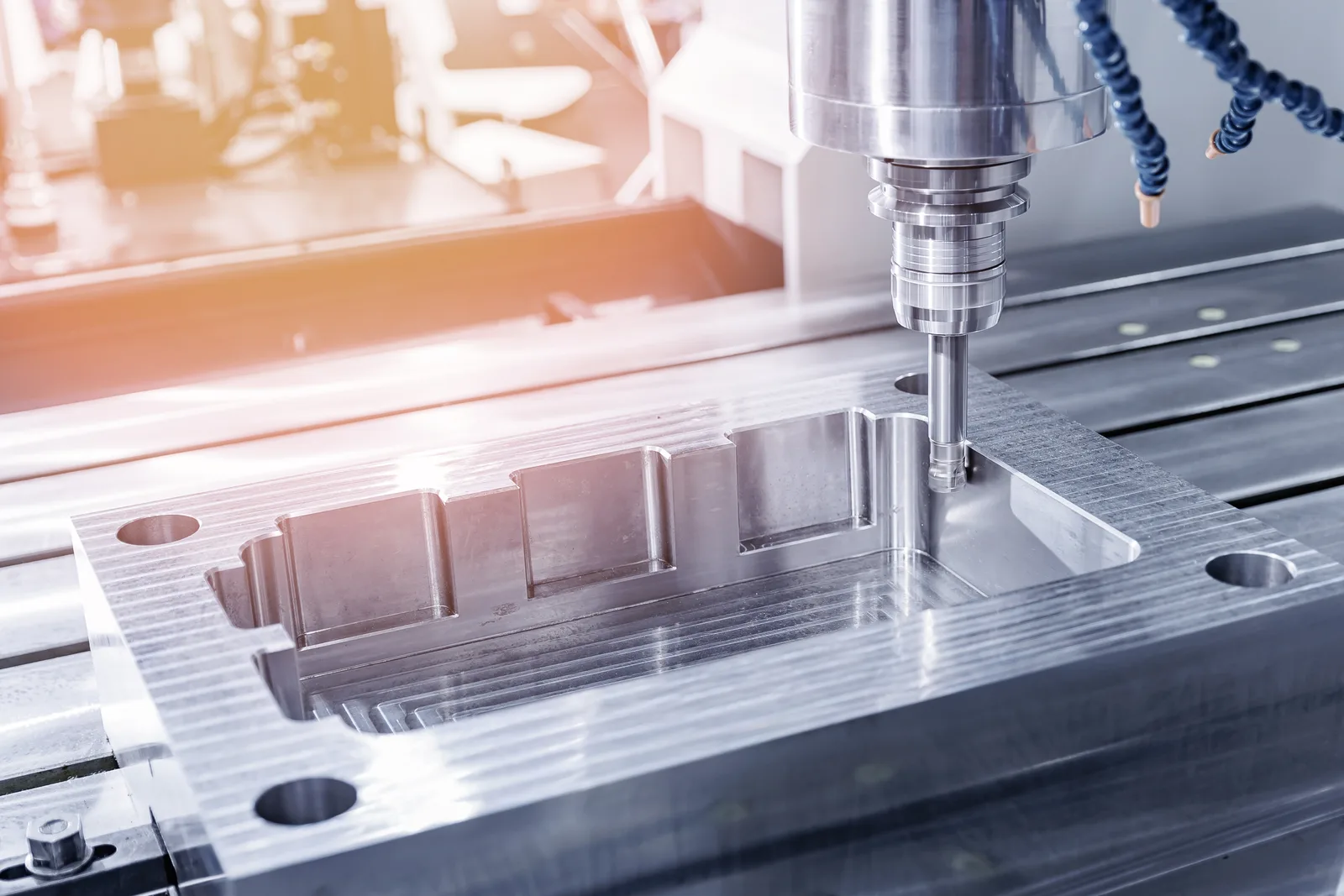

Nevada manufacturing is where we insure aerospace and defense suppliers, technology-manufacturing and advanced-manufacturing companies, clean-technology producers, and the machine shops, fabricators, and repair shops that support mining and industrial customers. When a Nevada operation ships high-value goods by air or depends on long supply lines, those logistics shape the program as much as what happens on the floor.
Three Nevada rules shape the program. The Nevada Occupational Safety and Health Administration (Nevada OSHA) runs an OSHA-approved State Plan covering most private sector workers, so it is the inspector for a private Nevada shop. Injury actions carry a 2-year limitation period under NRS 11.190(4)(e). And air permitting is split three ways: the Nevada Division of Environmental Protection handles most of the state, while Clark County and Washoe County each run their own programs. The sections below take each rule in turn.
What a Nevada underwriter asks for
An underwriter pricing a Nevada account needs payroll by class, the values of machinery, tooling, buildings, and stock, the markets your products serve, and your claims record. The market decides most of the liability picture: an aerospace component, a battery or clean-tech module, an electronics assembly, and a mining-equipment part each carry a different potential for harm.
Several features of doing business in Nevada push on that price. Aerospace and defense customers write detailed insurance terms into their contracts. Technology and clean-tech manufacturers concentrate value in specialized equipment and, for battery work, fire exposure. Mining-equipment suppliers and repair shops often work at customers’ sites, which brings on-site liability and contract terms that shift risk. Which agency issues your air permits depends on the county you operate in. And your Nevada OSHA record is read on both comp and liability. We price from your operation, not a table; our guide to what drives manufacturing insurance premiums explains the general factors.
Mining-sector work deserves its own look. A shop that rebuilds heavy equipment, fabricates wear parts, or sends technicians to a mine site takes on exposures a plant-only program may not reach: damage to a customer’s equipment in the shop, injuries and property damage during field work, and contract terms from mine operators that require specific additional-insured wording and waivers. We read those agreements before the first job, and we write field and repair work with coverage designed for it.
Air freight and long supply lines raise their own property questions for Nevada manufacturers. Components flown in for a production run, and finished assemblies flown out to customers, spend time in carriers’ hands, at airport cargo facilities, and in transit between them, and a standard property form may cover none of that. Inland marine coverage can follow goods through each of those stages, with a per-shipment limit set to the declared value of a typical load. We also look at contingent business income, because a single late or lost shipment from a sole-source supplier can stop a line as surely as a fire.
Defense and government work adds contractual layers for some Nevada suppliers. Contracts that reach a shop through a defense prime can require specific limits, certificates naming the prime and sometimes the government, and coverage for government-furnished tooling or material held in the shop. Those requirements are usually met with the right endorsements and property schedules, and we review them before the first delivery rather than after a certificate request arrives.
Aerospace, technology, clean tech, and mining
Nevada’s Governor’s Office of Economic Development lists aerospace and defense, advanced manufacturing, technology-manufacturing, clean technologies, and mining among the state’s target industries. Each moves a program in a different direction.
Aerospace and defense suppliers need their general liability confirmed for aircraft products, which some forms exclude, and must meet contract flow-downs with higher limits. Technology-manufacturing and advanced-manufacturing companies concentrate value in automated lines and test equipment, where equipment breakdown and business income matter most. Clean-technology producers, including battery and energy-storage makers, carry fire exposure in production and storage that shapes property underwriting, and customers that often require product recall coverage.
Mining-sector suppliers carry heavy-equipment exposures and the contract terms that come with mine operators. Across all five sectors, a product that meets its specification but misses the performance a customer was promised creates a financial loss for manufacturers errors and omissions rather than general liability. Contract shops supplying any of these customers inherit their terms, which is why our first question is who you sell to.
Nevada OSHA on the private-sector floor
Nevada operates an OSHA-approved State Plan covering most private sector workers and all state and local government workers. Federal OSHA’s Nevada State Plan page describes the plan, which applies to private sector workplaces with listed exceptions, and the Nevada Occupational Safety and Health Administration (Nevada OSHA), part of the Division of Industrial Relations in the Department of Business and Industry, administers it. For a private Nevada shop or plant, Nevada OSHA is the inspector.
Because Nevada’s plan must be at least as effective as federal OSHA, the federal machinery rules remain beneath it: 29 CFR 1910.212 on machine guarding and 29 CFR 1910.147 on hazardous-energy control. They reach CNC cells, heavy fabrication, battery assembly, and equipment rebuild bays alike. Guarding and lockout failures are behind the most serious injuries, so a Nevada submission from us carries your written programs and any inspection history.
How Nevada comp is priced and placed
Nevada workers compensation is written by private carriers in a competitive market. Price turns on how payroll is classified and how claims have developed. Machinists, heavy-equipment mechanics, battery and electronics assemblers, fabricators, and office staff each sit in a different class, and payroll recorded in the wrong class is reassigned at audit.
The employers liability section of the comp policy responds when a workplace injury becomes a lawsuit, and we align it with the general liability program. The workers compensation page explains classification and audits, and our article on cutting comp costs in manufacturing lists what carriers reward. Nevada companies with technicians or staff working in California, Utah, Arizona, Idaho, or Oregon should report that payroll by state.
NRS 11.190(4)(e) and a Nevada products program
Nevada’s limitation period for injury claims is in NRS 11.190(4)(e), which sets 2 years for an action to recover damages for injuries to a person or for the death of a person caused by the wrongful act or neglect of another, subject to exceptions set out elsewhere in the chapter. For product injuries, the period generally runs from the injury, which can come long after a part ships.
For a Nevada manufacturer, that means products exposure lasts as long as its products are in use, and products-completed operations coverage is what answers it. Three choices matter. Size the products limit to what your parts go into, not to your own headcount. Keep the coverage unbroken when carriers change. And the trigger should be picked deliberately: occurrence wording attaches a claim to the policy in force when the injury took place, however late the suit, while claims-made wording attaches it to the policy in force when the claim is first made, after a retroactive date, so a carrier change or sale calls for an extended reporting period.
Records support each of those choices. Drawings, inspection data, lot tracing, and shipping documents show the condition in which a product left your plant, and manuals and warnings show what users were told. For rebuilt mining equipment, records of what was replaced and tested matter just as much. Our comparison of occurrence and claims-made forms explains the trigger, and products liability versus general liability explains how the coverage fits.
NDEP, Clark County, and Washoe County air permits
Air permitting in Nevada depends on location. For most of the state, the Nevada Division of Environmental Protection (NDEP), through its Bureau of Air Pollution Control, issues air quality permits for stationary and temporary sources. In Clark County, the county Division of Air Quality issues stationary source permits, and in Washoe County the Northern Nevada Public Health Air Quality Management Division permits sources that emit regulated air pollutants. A plant should confirm which of the three governs its site before installing coating lines, battery processes, boilers, or other emission sources.
Pollution coverage is separate from any of those permits. General liability and property forms exclude most pollution, so a spill, a release to a drain, or an emissions event from your own process generally requires a dedicated pollution or environmental policy. Mining-sector suppliers doing field work may also need contractors pollution coverage under their customers’ contracts. Underwriters for manufacturing insurance accounts with chemical or finishing processes will ask which agency permits your site.
Here the Nevada rules on this page meet the program decisions they drive.
Most Nevada programs also include commercial property for buildings, machinery, and stock, with fire protection documented carefully for battery and clean-tech operations, and an umbrella for the higher limits aerospace, defense, and mining customers require.
Reno and Las Vegas
We write Nevada shops and plants statewide. Two verified locations are listed below, each with a named feature that changes something in the program. We list only locations we could verify from official or economic-development sources, which is why this Nevada list is short.
- Reno. The Greater Reno-Sparks-Tahoe region counts manufacturing as significant to its recent growth, and Reno-Tahoe International Airport offers multiple air cargo options. Plants shipping high-value parts by air should schedule them on inland marine coverage matched to declared value.
- Las Vegas. U.S. Customs and Border Protection operates a port of entry in Las Vegas. Manufacturers importing components or equipment through it need property and transit terms that cover goods before they are installed, and Clark County air permitting for their site.
Nevada is one of the 48 states on our license roster. Companies with operations across state lines can also read our pages for California, Arizona, Utah, Idaho, and Oregon, or view the whole state list.
Contract work, rebuild work, or your own products
Nevada companies often mix three kinds of work: contract machining or fabrication to a customer’s drawing, equipment rebuild and field repair, and products sold under their own name. Contract and rebuild shops should start with our page on machine shop insurance, focused on equipment, tooling, and floor exposures. Companies designing and selling components, systems, or equipment under their own name should start with our page on manufacturing insurance, where products liability, recall, and errors and omissions do more of the work. A business doing all three gets one program with each part rated appropriately.
Equipment breakdown deserves attention in every one of those models. A failed spindle, a burned-out drive on a press, or a damaged control cabinet on a five-axis machine is often excluded from standard property wording as mechanical or electrical breakdown, yet it can idle a Nevada line for weeks while replacement parts are sourced. Equipment breakdown coverage answers the repair or replacement and, when scheduled, the income lost during the outage. For shops running high-value CNC equipment or battery formation lines, we set that limit alongside the property schedule instead of leaving it to a default endorsement.
Nevada shop and manufacturer coverage questions
Is a private Nevada shop inspected by Nevada OSHA?
Yes, in most cases. Nevada operates an OSHA-approved State Plan covering most private sector workers, administered by Nevada OSHA within the Division of Industrial Relations. Because the plan must be at least as effective as federal OSHA, the federal machine guarding and hazardous-energy control standards remain the baseline carriers ask about.
How long does Nevada allow for an injury claim?
NRS 11.190(4)(e) sets 2 years for an action to recover damages for injuries to a person caused by the wrongful act or neglect of another, subject to exceptions elsewhere in the chapter. The period generally starts at the injury, not the sale, so products-completed operations coverage should stay continuous for as long as your products are in use.
Which agency issues air permits for a Nevada plant?
It depends on the county. NDEP’s Bureau of Air Pollution Control issues air quality permits for stationary and temporary sources in most of the state, Clark County’s Division of Air Quality issues stationary source permits there, and Washoe County’s air program permits sources in Washoe County. Pollution itself still needs a separate policy.
What coverage does a Nevada mining-equipment rebuilder need?
More than a plant-only program. Rebuild and field work bring exposure to damage of customers’ equipment in your shop, injuries and property damage at mine sites, and contract terms from operators that require specific additional-insured wording and waivers. We write field and repair work with coverage designed for it and review each operator agreement before work begins.
Do Nevada battery and clean-tech makers face special property questions?
Yes. Cells, modules, and packs concentrate fire exposure in production and storage, and property underwriters look closely at separation, detection, suppression, and the handling of damaged cells. Documented controls make a real difference to the terms a carrier offers, and customers in the sector often expect recall coverage alongside products liability.
Where does a Nevada plant buy its comp?
From private insurers; Nevada runs a competitive comp market. Premium follows the classification of your payroll and your own loss history. We check that machinists, heavy-equipment mechanics, battery and electronics assemblers, fabricators, and office staff are each in the right class, and we coordinate employers liability with general liability so the two policies meet without a gap.
Request a Nevada manufacturer, rebuilder, or shop quote
Tell us what your Nevada operation makes or rebuilds, which county it runs in, and who buys the result, and we will take it to carriers that write the class.